Behind the Scenes of The Odyssey: Christopher Nolan’s Cinematic Odyssey and the Quest for Awards Glory

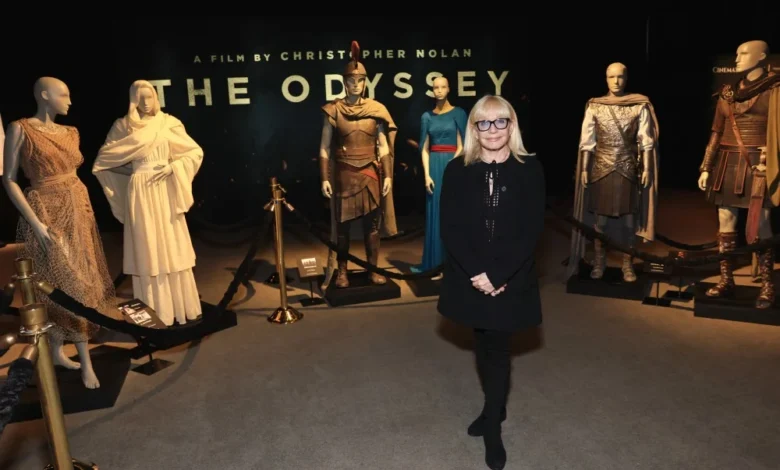
Making movies is difficult, but crafting a $1.8 billion blockbuster that redefines the boundaries of practical filmmaking is an entirely different caliber of challenge. This reality was front and center Tuesday night at the Spielberg Theater on the Universal Studios lot, where a select audience of guild voters and industry insiders were treated to a 75-minute documentary chronicling the Herculean production of Christopher Nolan’s latest epic, The Odyssey. As the highest-grossing film of Nolan’s storied career, the project has now entered a critical phase: a high-stakes, two-week awards-season campaign aimed at challenging the record-breaking 16 Oscar nominations recently set by Ryan Coogler’s Sinners.

The screening served as more than just a promotional event; it was a masterclass in the technical and logistical intensity that defines a Nolan production. Upon taking the stage to introduce the documentary, the director offered a characteristically dry self-assessment of his public persona. “I have absolutely mastered the art of talking a lot and revealing absolutely nothing,” Nolan joked, prompting laughter from the packed house. “And so I’m told I need to get out of the way.”
The 75-minute cut presented at the Universal lot is a singular artifact; a shorter, edited version is scheduled for the film’s digital home release on November 17. While the studio has remained tight-lipped regarding which sequences will be omitted from the public version, the raw, behind-the-scenes footage provided a rare glimpse into the friction between artistic vision and physical reality.

The Anatomy of a Practical Masterpiece
Following the screening, the film’s star, Matt Damon, who portrays the legendary hero Odysseus, moderated a wide-ranging, hour-long panel discussion with 12 key department heads. The list of participants—including producer Emma Thomas, production designer Ruth De Jong, editor Jennifer Lame, and composer Ludwig Göransson—highlighted the collaborative, multi-disciplinary nature of the film.
A recurring theme throughout the evening was the rigorous, almost obsessive commitment to practical effects and authentic sound capture. Perhaps the most surprising revelation was the total absence of Automated Dialogue Replacement (ADR). In an industry where major blockbusters rely heavily on re-recording dialogue in controlled studio environments to fix audio issues, Nolan’s set was a fortress of live capture.

“I did not loop a line for this movie,” Damon stated, turning to production sound mixer Willie Burton. Burton confirmed that this was a non-negotiable directive from the director. “There’s no ADR with Chris,” Burton explained. “He does not want to do it, and he also wants the boom mic to be on a cable.” This dedication forced the crew into extreme scenarios, including Burton running cables under ship floorboards and mounting microphones on hulls while water from simulated storms poured over him. The result is a sonic landscape that is entirely organic, from the authentic sounds of oar strokes to the visceral, human-forged ringing of bronze gongs.
Technical Ingenuity and the Challenges of Scale
The documentary highlighted how the film’s most iconic visuals often began as humble, low-tech experiments. When tasked with designing the Cyclops, Polyphemus, Nolan rejected the "cartoony" CGI renderings of the past. Instead, he drew inspiration from Francisco Goya’s "Saturn Devouring His Son." The visual effects team, led by Andrew Jackson, tested the look using a simple desk lamp in a darkened office, digitally manipulating actor Bill Irwin’s features to achieve a haunting, asymmetrical effect.

This spirit of adaptation was necessary throughout production. What was originally intended to be a soundstage sequence involving a simple puppet evolved into a complex location shoot on a Greek mountain, requiring the construction of a rigid physical structure within a punishing two-month window. Similar logistical hurdles occurred in Morocco, where the production of the massive Trojan horse prop was complicated by customs delays. When the sea threatened the stability of the film’s primary vessel, the production’s marine coordinator, Neil Andrea, was told by Nolan, "I don’t accept that," when informed that repairing the ship was physically impossible. By the next day, the ship was functional, and filming resumed.
The Nolan Methodology: Constraints as Creativity
The documentary and the accompanying Q&A also shed light on the strict boundaries imposed by the director, which often serve as a catalyst for creative problem-solving. Whether it was the rejection of Robert Pattinson’s request for a long wig or the reversal of Tom Holland’s attempt to modify his costume to appear taller, Nolan’s vision remained fixed.

This extends to the production’s visual identity. Cinematographer Hoyte van Hoytema, aiming to avoid the artificial look of modern lighting, utilized thousands of custom-built LED "pyrahedrons" calibrated specifically to mimic the erratic, warm quality of natural fire. This commitment to physical authenticity is a hallmark of the Nolan style, one that continues to influence his approach to narrative.
Nolan noted that he views the entirety of his filmography—from the interstellar travel of his 2014 space epic to the grounded grit of his superhero trilogy—as having roots in the ancient text of Homer. “That’s where I got that thing from Interstellar, or that’s where The Dark Knight comes from,” he remarked. By applying the same gritty, grounded aesthetic to Greek mythology that he used in his science fiction and action films, Nolan has attempted to strip away the artifice of the "epic" genre.

Awards Season Momentum
The premiere marks the beginning of an aggressive two-week promotional blitz. Universal Pictures is positioning the film as a titan of the current cinematic landscape, utilizing a series of high-profile screenings moderated by industry legends. Robert Downey Jr. is set to host an IMAX 70mm screening at the TCL Chinese Theatre, while Guillermo del Toro will lead a discussion at the AMC Universal CityWalk. The campaign culminates on November 17, when Steven Spielberg will sit down with Nolan at the DGA Theater—the same day the film arrives on digital platforms.
The broader implication of this campaign is clear: Universal is betting on the film’s technical achievement and scale to sweep the upcoming awards circuit. The industry’s reaction has been largely positive, with guild voters noting the extraordinary effort required to manage 7,000 background performers and a production that spanned continents and volatile seas.

Reflections on the Craft
As the evening concluded, the sentiment expressed by the cast and crew was one of awe at the sheer intensity of the work. For Matt Damon, the physical demands of the role at 54, combined with the rigorous schedule, led to a reflective moment in the documentary: "My whole life was kind of leading up to this movie, and I don’t know how long we’re going to get to make movies this way."
Producer Emma Thomas echoed this, emphasizing that the success of the film rests not just on the director’s vision, but on the resilience of the crew. As the industry looks toward the next cycle of prestige filmmaking, The Odyssey stands as a testament to the "old-school" philosophy of blockbusters: that, regardless of the technology available, the most impactful cinema is often born from the most difficult, physically demanding, and stubbornly manual processes. Whether this effort translates into a record-breaking Oscar haul remains to be seen, but the documentary serves as a definitive case for the project’s technical excellence and its place in the modern cinematic canon.
Related posts: