Christopher Nolan’s ambitious cinematic reimagining of Homer’s epic, "The Odyssey," has not only captivated audiences worldwide, achieving staggering box office numbers, but has also underscored the immense creative and logistical undertaking involved in bringing such a monumental story to the screen. While the film’s triumphant debut is a testament to Nolan’s directorial prowess and the enduring appeal of the source material, the filmmaker has candidly revealed that his next cinematic endeavor will not be gracing theaters any time soon, estimating a hiatus of "at least" three years.
This deliberate pause aligns with Nolan’s established creative rhythm, a pattern that has seen him consistently deliver groundbreaking films roughly every three years. His recent filmography includes "Oppenheimer" (2023), "Tenet" (2020), "Dunkirk" (2017), and "Interstellar" (2014). This consistent release schedule, coupled with the immense effort required for "The Odyssey," explains Nolan’s projection for a multi-year gap before his next project. The sheer scale and thematic weight of "The Odyssey" pushed Nolan and his team to their absolute limits, a challenge he embraced as integral to the project.
The Herculean Task of Adapting "The Odyssey"
In a recent interview with Today, Nolan elaborated on the profound challenges inherent in translating Homer’s seminal epic into a modern cinematic experience. He described the process as one that "pushed him to his limits," stating, "I definitely hit the limits of my own stamina and everybody’s stamina, I think. I mean, it’s The Odyssey, of course it should be difficult. We’re not doing the job right making a film of The Odyssey if it doesn’t seem difficult." This candid admission highlights the director’s commitment to grappling with the inherent complexities of the narrative, which chronicles Odysseus’ arduous ten-year journey home after the Trojan War.
The epic poem, a cornerstone of Western literature, is renowned for its intricate plot, diverse cast of mythical creatures, divine interventions, and profound explorations of human resilience, temptation, and homecoming. Recreating this vast tapestry on screen, with its fantastical elements and deep philosophical underpinnings, demands a visionary approach and an equally robust production. Nolan’s intention to imbue the film with a palpable sense of struggle and difficulty reflects his desire to honor the spirit of the original work, which itself is a testament to perseverance against overwhelming odds.
Pioneering Visuals: The IMAX 70mm Commitment
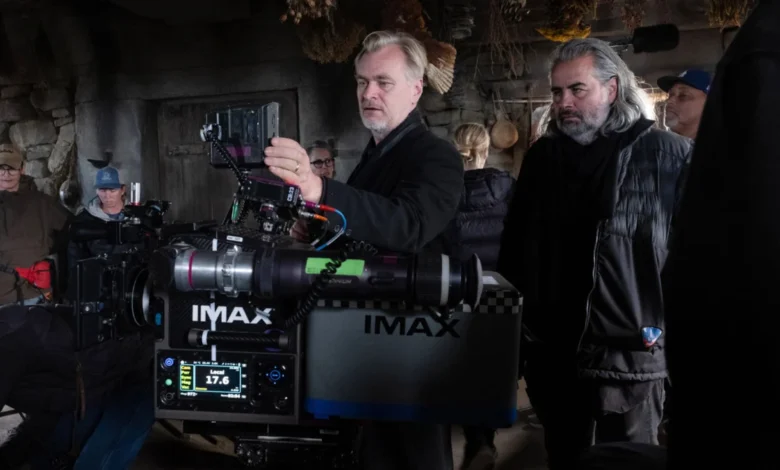
A significant factor contributing to the film’s immersive quality and the demanding production was Nolan’s decision to shoot "The Odyssey" entirely on IMAX 70-millimeter film. This commitment to a specific, high-fidelity format is a hallmark of Nolan’s filmmaking, aimed at providing audiences with an unparalleled visual and auditory experience.
"I went to IMAX, and I said, ‘Look, if ever we are going to fulfill this dream of shooting the entire movie that way, this is the one. This is The Odyssey,’" Nolan explained. This statement underscores his belief that the grandeur and scope of Homer’s epic were perfectly suited to the expansive canvas and breathtaking clarity of IMAX. The choice to shoot on film, rather than digital, further adds to the tactile and authentic feel of the production, a preference Nolan has often voiced for its unique aesthetic qualities. The technical demands of IMAX 70mm shooting are substantial, requiring specialized equipment, larger crews, and more complex logistical planning, all of which would have amplified the inherent difficulties of the production.
Box Office Triumphs and the Nolan Legacy
"The Odyssey" has indeed achieved remarkable success at the global box office. Early projections indicated an opening weekend of over $257 million worldwide, positioning it as Nolan’s most successful global opening since "The Dark Knight Rises" in 2012, which debuted with $249 million. This figure not only solidifies Nolan’s status as a box office titan but also demonstrates the immense public appetite for his distinctive brand of event cinema.
The film boasts an ensemble cast of considerable star power, featuring actors such as Matt Damon, Anne Hathaway, Lupita Nyong’o, Robert Pattinson, Tom Holland, Zendaya, and Charlize Theron, among many others. The presence of such a decorated cast, combined with Nolan’s directorial vision and the iconic nature of the source material, has undoubtedly contributed to the film’s widespread appeal.
The critical and commercial reception of "The Odyssey" can be viewed within the broader context of Nolan’s career. He has consistently pushed the boundaries of blockbuster filmmaking, tackling complex themes and narratives while delivering spectacle that resonates with a mass audience. Films like "Inception," "The Dark Knight" trilogy, and "Interstellar" have not only achieved financial success but have also sparked cultural conversations and redefined what is possible within the studio system. "The Odyssey" appears to be the latest installment in this legacy, offering a grand-scale adventure that is both intellectually stimulating and viscerally thrilling.
The Three-Year Cycle: A Deliberate Creative Cadence
Nolan’s consistent three-year release cadence is more than just a statistical anomaly; it reflects a deliberate approach to filmmaking that prioritizes depth and innovation. This timeframe allows for meticulous script development, extensive pre-production planning, rigorous on-set execution, and a comprehensive post-production process, especially when employing advanced techniques like IMAX 70mm.
The extended period between films is also crucial for Nolan’s creative rejuvenation. Directing a film of "The Odyssey’s" magnitude is an all-consuming endeavor, and taking a significant break allows him to step away, reflect, and develop new ideas without the immediate pressure of a looming production schedule. This sabbatical is likely to be filled with research, scriptwriting, and the conceptualization of his next ambitious project, ensuring that when he returns to the director’s chair, it will be with fresh perspectives and a compelling new vision.
Broader Implications and Industry Impact
The success of "The Odyssey" and Nolan’s commitment to the theatrical experience hold significant implications for the film industry. In an era increasingly dominated by streaming services and shorter attention spans, Nolan’s dedication to crafting event films designed for the big screen serves as a powerful reminder of cinema’s unique ability to transport and engage audiences. His insistence on employing physical filmmaking techniques, such as shooting on film and utilizing IMAX, also champions a craft that is becoming increasingly rare.
The substantial box office returns for "The Odyssey" validate the studio’s investment in auteur-driven, large-scale projects. This success could encourage other studios to greenlight ambitious, original films rather than relying solely on established franchises. Furthermore, Nolan’s willingness to tackle classic literature with a contemporary sensibility opens doors for other literary adaptations that might otherwise be deemed too challenging or niche for mainstream audiences.
The prolonged gap before Nolan’s next film, while perhaps disappointing for eager fans, ultimately serves the art form. It suggests a commitment to quality over quantity, a belief that groundbreaking cinema requires time, dedication, and a period of incubation. The anticipation built during these intervals only heightens the impact of his eventual releases, creating a cycle of excitement and critical engagement that few other filmmakers can command. As audiences continue to flock to theaters to experience "The Odyssey," they are also implicitly supporting a vision of cinema that values artistic integrity, technical innovation, and the enduring power of storytelling. The prolonged wait for his next masterpiece is, in essence, a testament to the immense effort and thought that will undoubtedly go into whatever epic journey Nolan chooses to embark on next.