Mahershala Ali reflects on the limitations of industry accolades and the structural challenges facing actors in contemporary Hollywood

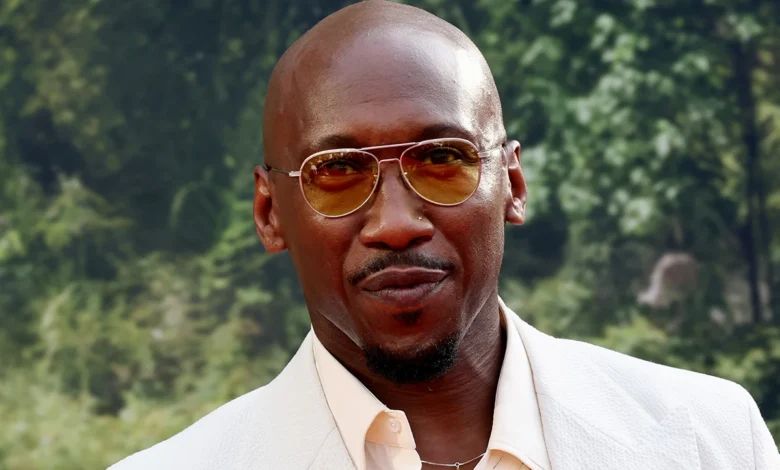
The pursuit of an Academy Award is widely considered the pinnacle of professional achievement within the film industry, yet for two-time Oscar winner Mahershala Ali, the gold statues serve as a reminder of the systemic hurdles that remain even for the most decorated performers. In a recent appearance on the podcast 7PM in Brooklyn, hosted by Carmelo Anthony and Kazeem “Kaz” Famuyide, Ali offered a candid assessment of his career trajectory, challenging the notion that prestige awards provide an actor with total professional autonomy or immunity from the industry’s volatile landscape.
Ali, who secured Best Supporting Actor honors for his roles in Barry Jenkins’ Moonlight (2016) and Peter Farrelly’s Green Book (2018), argued that the industry’s output of quality material often fails to keep pace with the sheer volume of talented actors. This disconnect, he suggests, renders even the most celebrated performers subject to the scarcity of viable roles.
The Myth of Validation and the Scarcity of Material
During the discussion, Ali addressed the common assumption that an Oscar win serves as a transformative milestone that guarantees future success. “There’s more good actors than there is good material,” Ali stated. “It’s not even that all these people are competing for these same spots. It’s just that out of all the material made, there’s only a handful of them that check certain boxes.”
Ali’s remarks highlight a critical structural reality: an actor’s career is tethered to the pipeline of greenlit projects. Regardless of individual accolades, if the industry is not producing material that aligns with an actor’s specific profile or aspirations, that actor remains in a position of dependence. “It doesn’t matter if I got 17 Oscars,” he noted. “If someone is not writing something for you or greenlighting something with you in mind, you’re like everybody else waiting and looking and searching.”
The actor further addressed the pressure on Black performers to view their success through the lens of diversity milestones rather than artistic merit. When asked if Oscar wins validate Black actors, Ali described the narrative as largely performative. “It’s kind of just talk. It doesn’t translate to anything real. You don’t want to find yourself in a situation where, oh, that’s ‘the diversity project.’ You just want to do great material as a Black person.”
Chronology: The Blade Project and Creative Friction
The conversation surrounding Ali’s career, particularly his recent professional experiences, has been dominated by the high-profile cancellation of Marvel Studios’ Blade project. Ali was attached to the titular role for years, a tenure marked by significant creative instability. The project suffered from repeated delays, multiple script rewrites, and the departure of key creative personnel, including director Bassam Tariq.
The timeline of the Blade production breakdown provides context for Ali’s frustration regarding industry workflows:
- 2019: Mahershala Ali is officially announced as Blade during Marvel’s San Diego Comic-Con presentation, marking a major expansion for the Marvel Cinematic Universe (MCU).
- 2021: Bassam Tariq is officially tapped to direct the film, with a production schedule aimed at a 2023 release.
- 2022: The production faces significant delays. In September 2022, Tariq exits the project due to creative differences and scheduling conflicts.
- 2023: Multiple writers are brought on to overhaul the script. The WGA and SAG-AFTRA strikes further halt progress, pushing the film’s release date indefinitely.
- 2024–2025: Marvel Studios officially removes Blade from its release calendar, effectively shelving the project. Kevin Feige later publicly acknowledges the failure of the production.
In a recent interview with The New Arab, Bassam Tariq elaborated on the environment that led to his departure. He described the process of casting without a finished script as a “dangerous” practice that eroded his credibility with his actors. “If you’re the bearer of bad news to your actors, but you’re not the one making any of these decisions—and it’s actually coming from a corporate entity—that’s not a great way to be a director,” Tariq stated.
The alignment between Ali and Tariq on this point is notable. Ali, in a subsequent GQ interview, echoed Marvel Studios President Kevin Feige’s sentiment that the project’s failure was a significant professional shortcoming. “To this day, I don’t know why it didn’t happen,” Ali said. “I just know that it was—Kevin, he said it was the biggest failure of his career and I agree.”
Market Dynamics and the "Three-to-Five Year" Pipeline
Ali’s commentary sheds light on the economic reality of modern film production, specifically the lead times required for independent development. While the actor acknowledged the possibility of self-producing projects to gain more agency, he emphasized that this is a long-term commitment. Developing a project from inception to screen typically spans three to five years, a duration that is prohibitive for many actors who must balance artistic goals with the realities of the market.
This bottleneck is exacerbated by the broader industry trend of prioritizing intellectual property (IP) and franchise-based content over original, character-driven narratives. For actors of Ali’s stature, the reliance on studios to “greenlight something with you in mind” remains a central point of contention. The data supports this shift: according to recent industry reports, the percentage of mid-budget, non-franchise films has steadily declined over the past decade, leaving fewer opportunities for prestige-oriented dramas that historically fueled the careers of serious actors.
Implications for the Industry
The critique offered by Ali and supported by the experiences of directors like Tariq points to a growing divide between corporate studio mandates and the creative process. The “Blade” scenario serves as a case study for what happens when the two forces fail to reconcile.
- Creative Autonomy vs. Corporate Control: The struggle for script integrity is becoming a defining issue for filmmakers and actors alike. When directors lose the ability to speak definitively to their cast because of corporate interference, the quality of the final product—and the morale of those involved—inevitably suffers.
- The Devaluation of Awards: If industry leaders like Ali perceive awards as disconnected from “real” career progression, it may signal a shift in how talent engages with the awards circuit. The prestige of an Oscar is increasingly being weighed against the practical ability to get meaningful work done.
- The "Diversity Project" Stigma: Ali’s pushback against the "diversity project" label underscores a desire for a post-essentialist approach to casting and storytelling. By advocating for roles where Black actors are treated as individuals rather than tokens, Ali is challenging studios to move beyond superficial representation toward more nuanced, character-centric narratives.
Moving Forward: The Case of "Your Mother Your Mother Your Mother"
Despite the setbacks associated with larger franchise models, Ali continues to pursue work that aligns with his artistic criteria. His most recent project, Your Mother Your Mother Your Mother, directed by Bassam Tariq, represents the kind of creative collaboration that prioritizes specific storytelling over broad corporate appeal. Released on September 25, the film stands as a testament to the partnership between Ali and Tariq, who chose to continue working together despite the dissolution of their previous Marvel engagement.
The contrast between the failed Blade project and the successful completion of Your Mother Your Mother Your Mother underscores Ali’s central point: the value of a project is found in the integrity of the material and the autonomy of the filmmakers. As the industry continues to navigate the complexities of post-strike production and evolving audience preferences, the insights provided by performers like Ali serve as a barometer for the health and direction of Hollywood’s creative labor force.
Ultimately, Mahershala Ali’s reflection on the limitations of his Oscars is not a dismissal of his achievements, but a call for a more sustainable and equitable industry. By shifting the focus from the validation provided by trophies to the actual opportunities available for meaningful work, Ali is highlighting the necessity of structural change in an industry that often confuses institutional recognition with long-term professional stability. Whether this perspective leads to a broader shift in how studios approach talent and development remains to be seen, but it is clear that for many of the industry’s most respected voices, the status quo is increasingly untenable.