Prediction markets turn to the Nvidia boardroom as traders wager on the future of CEO Jensen Huang following espionage scandal

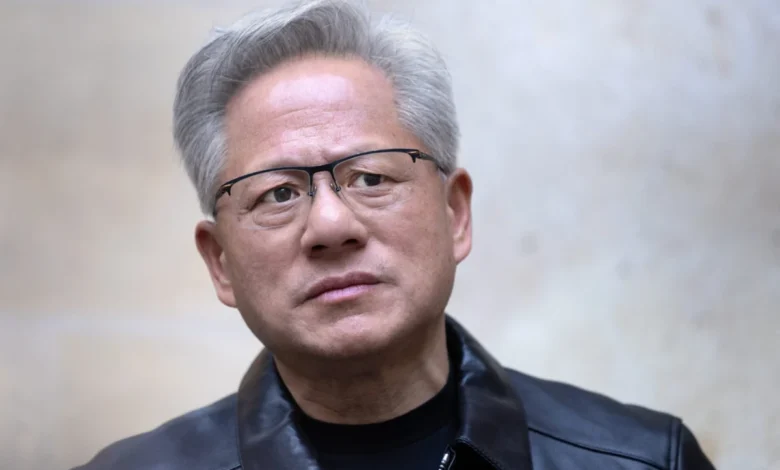
The corporate world is reeling from a geopolitical and personal firestorm involving Jensen Huang, the long-serving CEO of Nvidia, who has admitted to an intimate relationship with a business executive reportedly identified by U.S. intelligence as a Chinese spy. The revelation, which surfaced this past Sunday, has triggered an immediate and volatile reaction in both the equity markets and the burgeoning sector of event-prediction platforms. As Nvidia’s board of directors initiates a formal investigation into the matter, traders on platforms such as Kalshi and Polymarket are quantifying the uncertainty surrounding Huang’s tenure, turning the CEO’s personal crisis into a real-time barometer of corporate survival.
The implications of this scandal extend far beyond the boardroom. Nvidia, a linchpin of the global artificial intelligence infrastructure, holds a critical position in the ongoing technological arms race between the United States and China. The intersection of high-stakes corporate leadership and potential national security compromises has created a level of market anxiety not seen in the semiconductor industry for decades.
A Chronology of the Crisis
The unfolding situation began to accelerate on Friday, November 7, when reports surfaced regarding U.S. intelligence briefings concerning the potential exposure of sensitive, dual-use technology. By Sunday, November 8, Jensen Huang confirmed to the Nvidia board that he had been involved in a romantic relationship with an individual whom federal authorities have linked to Chinese state-sponsored espionage activities.
On Monday, November 9, Nvidia shares saw a sharp decline, shedding nearly 10% of their market value in a single session as investors processed the news of the board’s internal probe. The following 48 hours saw prediction markets rapidly populate with contract offerings, allowing the public to bet on the potential timelines for Huang’s departure, the possibility of a divorce, and the likelihood of a subpoena from the U.S. Congress.
The Prediction Market Response: Quantifying Uncertainty
Event contracts—a form of derivative trading where users bet on the outcome of future real-world events—have become a primary mechanism for gauging public and institutional sentiment regarding the scandal. The data emerging from these platforms suggests a high level of skepticism regarding Huang’s long-term retention.
On Kalshi, a contract tracking when Huang will vacate his position as CEO has generated over $266,000 in volume. Traders currently place the probability of his departure before January 2029 at 54%. A shorter-term perspective is more cautious, with the probability of an exit before January 2028 sitting at 52%, while a departure before July 2027 is pegged at 33%.
The regulatory focus is equally intense. Traders on Kalshi are wagering on the likelihood of Huang testifying before Congress, with current data indicating a 46% probability of a summons by January 2027, rising to 79% by July 2027. These figures underscore the market’s belief that the involvement of a suspected foreign intelligence asset will inevitably draw the scrutiny of the House and Senate committees responsible for oversight of intelligence and technology.
Polymarket, another leader in the event-contract space, has reported over $305,000 in volume for a market focused on the timing of a formal resignation or removal announcement. The market shows a 16% probability of such an announcement by the end of this calendar year, with that figure climbing to 22% by the end of the first quarter of 2027. Furthermore, the personal fallout has been commodified, with $159,000 in bets currently placed on the probability of a divorce, which traders estimate at a 23% likelihood by March 2027.
Corporate Governance and Regulatory Risks
The involvement of the board of directors is a pivotal component of this crisis. Under standard corporate governance protocols, Nvidia’s board is obligated to determine whether the CEO’s actions resulted in the unauthorized disclosure of trade secrets, intellectual property, or classified information related to government contracts.
Industry analysts note that even in the absence of a direct security breach, the optics of the situation present a significant "key person risk." Nvidia’s reliance on government-backed research grants and its role as a primary supplier for AI-driven military applications necessitate a level of security clearance and trust that may now be compromised.
Legal experts point out that if the investigation confirms that Huang failed to disclose the nature of his relationship, he could face charges related to breach of fiduciary duty or violations of corporate ethics policies. Moreover, the Pentagon’s involvement—given the mention of economic warfare and espionage—suggests that this is no longer merely a matter of human resources, but a matter of national security.
Historical Precedent and Market Forecasting
The rise of prediction markets like Kalshi and Polymarket has fundamentally altered how the public interacts with breaking news. These platforms operate on the theory of the "wisdom of the crowd," where the collective financial incentives of thousands of participants theoretically lead to more accurate forecasts than individual punditry.
However, the efficacy of these markets remains a subject of intense debate. During the 2024 U.S. presidential election, prediction markets diverged from traditional polling, favoring Donald Trump even as traditional media outlets reported a dead heat between the candidates. While the markets were ultimately vindicated in that instance, their track record is far from perfect. In the recent midterm elections, while traders correctly anticipated the broader political shifts, they failed to accurately predict the outcomes of several high-profile Senate and gubernatorial races, including the upset losses in South Carolina and Texas.
Critics argue that these markets can be susceptible to "whale" manipulation, where large-volume traders attempt to move the odds in a specific direction to influence public opinion or create a self-fulfilling prophecy. Despite these concerns, the sheer volume of capital currently tracking the Nvidia scandal indicates that the financial sector is treating these contracts as a serious proxy for the risk environment.
The Broader Impact on the Tech Sector
The scandal arrives at a precarious time for the semiconductor industry. With global supply chains still adjusting to export restrictions and the geopolitical tension between Washington and Beijing, the loss or forced resignation of a leader like Huang would send shockwaves through the market.
Nvidia’s share price decline of nearly 10% is indicative of the "uncertainty discount" that institutional investors are applying to the stock. The uncertainty is twofold: first, the potential loss of a visionary leader, and second, the potential for federal investigations that could lead to heavy fines, restricted access to international markets, or even the loss of defense-related contracts.
For the wider tech industry, this incident highlights the increasing vulnerability of high-profile executives to geopolitical intelligence operations. As companies become more integral to the national security apparatus of the United States, the private lives of their leadership are increasingly viewed as matters of public interest and security concern.
Looking Ahead
As the investigation progresses, the market will likely experience heightened volatility. Investors are currently waiting for the board to provide a formal update on the scope of the inquiry. Any indication that the investigation will be prolonged or that it may uncover systemic security failures within Nvidia will likely cause further downward pressure on the stock.
For now, the prediction markets serve as a real-time monitor of the board’s perceived stability. Should the odds of a resignation continue to climb, it will likely signal a loss of confidence not just from retail traders, but from the institutional investors who require stability to maintain their long-term positions in the company.
The situation remains fluid. The combination of legislative pressure, potential government intervention, and the scrutiny of the board of directors creates a trifecta of pressure that few corporate leaders have ever survived. Whether Jensen Huang can weather the storm or whether the prediction markets are correctly identifying the end of his tenure remains to be seen, but the sheer velocity of the capital flowing into these bets proves that the market is already bracing for a new era at Nvidia.
Related posts: