Electric Truck Maker Harbinger Secures $240 Million in Series D Funding Following Landmark FedEx Contract and Military Expansion

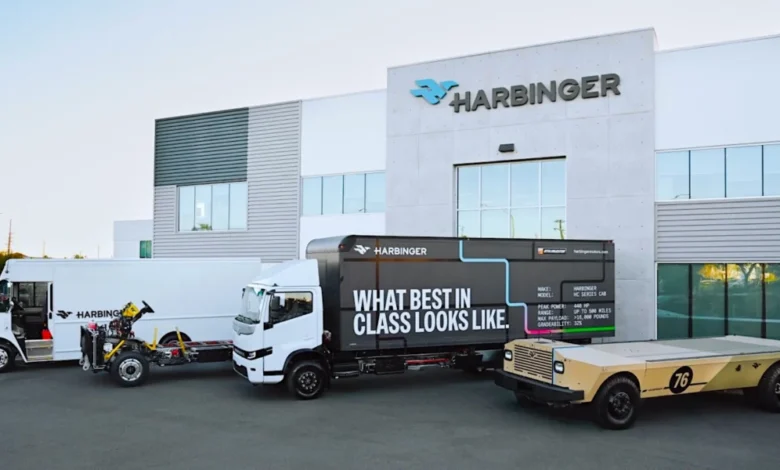
The commercial electric vehicle sector has reached a significant inflection point as electric truck manufacturer Harbinger announced the successful closure of a $240 million Series D funding round. This latest financial injection comes on the heels of a monumental commercial milestone: a historic $300 million agreement with global shipping conglomerate FedEx, alongside specialized defense contracts with the United States military. With this new capital secured, Harbinger has successfully raised more than $650 million in total equity financing since its inception in 2021, cementing its status as a formidable contender in the medium- and heavy-duty commercial zero-emission vehicle market.
The Series D funding round was co-led by prominent investment entities Tiger Global, the Capricorn Technology Impact Fund, and Ridgeline. According to company leadership, the capital will not only accelerate the scaling of Harbinger’s core medium-duty electric platform manufacturing capabilities but will also fund strategic diversification into energy storage systems, distributed power generation, autonomy software, and defense-specific applications.
A Historic Fleet Electrification Milestone
The influx of venture capital directly reflects investor confidence driven by Harbinger’s recent commercial achievements. Foremost among these is the binding order from FedEx for 2,000 medium-duty electric delivery trucks, valued at approximately $300 million. Industry analysts widely regard this transaction as one of the largest binding purchase agreements for medium- or heavy-duty electric commercial vehicles in transportation history.

For logistics operators like FedEx and competitor Amazon, the transition to fully electric fleets is no longer driven solely by corporate sustainability mandates or carbon reduction targets. Escalating and volatile diesel prices have made traditional internal combustion engine fleet operations increasingly cost-prohibitive. Internal fleet economics models suggest that substantial upfront capital expenditures on electric commercial vehicles yield massive long-term operational savings, with FedEx projecting hundreds of millions of dollars in diesel fuel offset costs over the lifecycle of these new electric trucks.
Harbinger’s purpose-built medium-duty architecture was engineered from the ground up specifically for commercial duty cycles, distinguishing the startup from competitors who often retrofit traditional chassis with electric powertrains. This clean-sheet design philosophy appears to be paying dividends, capturing the attention of both multinational logistics giants and government defense agencies seeking robust, high-performance electric alternatives to conventional fleet vehicles.
Strategic Vision and Leadership Perspective
Addressing the broader implications of the company’s trajectory, John Harris, Co-Founder and Chief Executive Officer of Harbinger, emphasized the necessity of rethinking foundational industrial systems.
"Harbinger exists to challenge what industry has learned to accept, and reinvent the critical systems the world depends on," stated Harris. "By rethinking critical systems from first principles, we aim to unlock better performance, greater reliability, safer operations, and more room to grow. Electrification is at the core of everything we do, and increasingly, electrification is at the core of industry, defense, mobility, and AI. Harbinger’s role is not simply to give customers another option. It is to reset expectations for what critical systems should deliver."

This philosophy underscores the company’s broader ambitions. Rather than remaining strictly a commercial delivery van manufacturer, Harbinger is positioning itself as an energy and mobility infrastructure provider. The expansion into energy storage and power generation suggests a future where commercial fleet yards double as localized microgrids, utilizing advanced battery management systems to balance grid loads during peak operational hours.
Chronology of Growth and Strategic Expansion
Harbinger’s ascent within the competitive electric vehicle landscape has been swift and strategic. Tracing the company’s milestones reveals a methodical approach to scaling engineering, manufacturing, and commercial partnerships:
- 2021: Harbinger is founded with a focus on developing proprietary medium- and heavy-duty electric vehicle architecture designed explicitly from first principles for commercial applications.
- March 2026: CEO John Harris outlines the company’s long-term vision during industry briefings, detailing proprietary battery technology and vertically integrated manufacturing strategies.
- June 2026: Harbinger officially enters the defense sector, securing an exploratory and developmental contract with the United States military for autonomous electric truck applications.
- October 2026: FedEx finalizes a landmark $300 million procurement agreement for 2,000 medium-duty electric delivery trucks, establishing one of the largest commercial EV commitments on record.
- November 2026: Harbinger closes its $240 million Series D funding round, co-led by Tiger Global, Capricorn Technology Impact Fund, and Ridgeline, pushing total historical fundraising past the $650 million threshold.
Diversification into Defense and Autonomous Technologies
A notable dimension of Harbinger’s current growth strategy is its deliberate expansion into the defense sector. The company’s recent military contracts highlight the unique advantages of electric powertrains in tactical environments. Electric vehicles offer distinct operational benefits over diesel counterparts, including significantly reduced thermal and acoustic signatures—crucial factors for modern tactical mobility.
Furthermore, integrating autonomy software into commercial and defense platforms addresses critical labor shortages within the freight and logistics sectors while enhancing operational safety in hazardous environments. By applying its proprietary medium-duty platform architecture to defense applications, Harbinger diversifies its revenue streams beyond traditional commercial package delivery, insulating the business against cyclical downturns in the private logistics market.

Market Implications and Economic Outlook
The successful closing of Harbinger’s Series D round signals sustained investor appetite for capital-efficient, vertically integrated hardware startups, even within a macroeconomic climate characterized by cautious venture capital deployment. While passenger electric vehicle adoption has faced fluctuating consumer demand and pricing pressures, the commercial fleet segment continues to demonstrate strong, fundamentals-driven growth.
Fleet operators operate under strict Total Cost of Ownership (TCO) calculations. As battery chemistry advances, production volumes scale, and charging infrastructure matures, electric commercial trucks are rapidly achieving cost parity with diesel vehicles. Companies like Harbinger that offer purpose-built, high-reliability platforms are uniquely positioned to capture significant market share as regulatory pressures mount and corporate fleet renewal cycles accelerate toward zero-emission targets over the next decade.
With over $650 million in cumulative funding, major enterprise validation via the FedEx contract, and strategic footholds in both commercial logistics and defense technology, Harbinger has transitioned from an ambitious industry newcomer into an established anchor of the zero-emission commercial transport ecosystem.