TKO Group Holdings Posts Record Third Quarter Results Driven by UFC Performance and Global Live Event Demand

TKO Group Holdings, the parent company overseeing the global sports and entertainment powerhouses UFC and WWE, reported a highly successful third quarter, punctuated by a significant surge in revenue and a strengthened financial outlook. Driven by a series of high-profile sellout events and a robust expansion in media rights and partnership revenue, the company’s performance underscores the enduring strength of the premium live events sector. For the period, TKO reported total revenue of $1.36 billion, a 21% increase year-over-year, while adjusted earnings before interest, taxes, depreciation, and amortization (EBITDA) climbed by 54% to $555.7 million.
UFC Dominance and Financial Performance
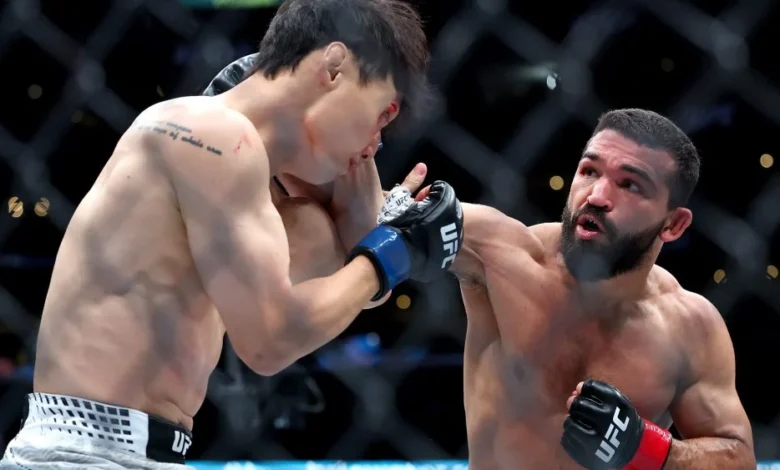
The UFC segment served as the primary engine of growth during the quarter, benefiting from a strategic schedule of marquee events that resonated with global audiences. The organization delivered a 60% year-over-year revenue increase, reaching $519.2 million. This growth was not isolated to a single channel; rather, it reflected a multi-faceted revenue strategy. Media rights, production, and content revenue accounted for a significant portion of this growth, contributing an additional $132.3 million compared to the same period in the previous year.
Beyond broadcasting, the UFC’s ability to monetize the live experience remained a core differentiator. Live events and hospitality revenue increased by $36 million, a testament to the league’s ability to command premium pricing for high-stakes bouts. Furthermore, partnerships and marketing revenue saw a $20.5 million boost, while consumer product licensing and other ancillary streams contributed an additional $5.2 million. This comprehensive growth highlights the UFC’s operational maturity and its ability to capitalize on the increasing appetite for combat sports content.
WWE and the Impact of Event Scheduling
In contrast to the explosive growth seen in the UFC, the WWE segment experienced a more tempered quarter. The primary factor behind this variation was a shift in the event calendar; the third quarter of this year featured three fewer events on the main roster compared to the corresponding period in the prior year. This reduction in volume naturally impacted top-line comparisons. However, management emphasized that this is a timing-based variance rather than a reflection of underlying demand. The WWE brand remains a cornerstone of the TKO portfolio, with the company continuing to integrate the wrestling giant’s operations to extract synergies in production, global distribution, and sponsorship sales.
A Year of Execution and Strategic Growth
The financial results arrive at the conclusion of what TKO executives have branded a "year of execution." Following the merger that brought UFC and WWE under the TKO umbrella, the company has focused on streamlining costs, unifying sponsorship sales teams, and leveraging the global reach of the IMG agency—the third pillar of TKO’s portfolio.
IMG, particularly its On Location premium events business, reported a strong quarter, buoyed by the influx of big-ticket international events. The ability to bundle high-end travel and hospitality experiences with major sports properties has proven to be a high-margin venture, further diversifying TKO’s revenue mix beyond television rights.
Official Commentary from TKO Leadership
Mark Shapiro, President and COO of TKO, addressed the results with a focus on long-term sustainability and market position. "Our third quarter performance reflects the secular tailwinds powering live events and experiences around the world, and TKO’s assets sit front and center of that premium ecosystem," Shapiro stated in a conference call with analysts.
Shapiro emphasized that the decision to raise full-year guidance for the second time this year serves as a clear indicator of leadership’s confidence in the firm’s trajectory. "Our business is durable and our fundamentals are solid, with the vast majority of our existing revenues locked in for the next five to seven years," he noted. By pointing to the "substantial runway" ahead, Shapiro signaled that the company expects the global sports market to remain resilient against broader macroeconomic fluctuations, particularly as sports consumption patterns continue to shift toward high-engagement, live-broadcast models.
Financial Projections and Market Guidance
Given the momentum observed through September, TKO has revised its full-year financial expectations upward. The company now projects total annual revenue to fall between $5.790 billion and $5.830 billion. Similarly, the adjusted EBITDA forecast has been increased to a range of $2.295 billion to $2.315 billion.
The expansion of the adjusted EBITDA margin—which rose to 41% in the quarter compared to 32% in the prior-year period—suggests that the company is successfully achieving operational efficiencies. The growth in earnings was bolstered by a $119.7 million increase at the UFC level and a $9.4 million gain at the WWE level, demonstrating that the cost-synergy initiatives implemented post-merger are beginning to yield tangible results on the bottom line.
Chronology and Market Context
The current success of TKO is part of a broader trend in the sports and media landscape. Since the formation of TKO Group Holdings, the company has sought to capitalize on the "live event premium."
- September 2023: TKO Group Holdings officially begins trading on the New York Stock Exchange following the completion of the merger between UFC and WWE.
- Q1-Q2 2024: The company focuses on integrating international sponsorship teams and optimizing the broadcasting schedule for both leagues.
- Q3 2024: TKO realizes the benefits of its first full year of combined operations, reporting record-breaking margins and increased revenue.
- Future Outlook: The company remains focused on international expansion, particularly in markets like the Middle East and Europe, where demand for premium sports content continues to outpace supply.
Implications for the Sports Media Landscape
TKO’s robust performance provides several key insights into the modern media industry. First, it reaffirms that live sports content remains one of the few reliable "appointment television" vehicles in an era dominated by on-demand streaming. While other segments of the entertainment industry face fragmentation and declining linear ratings, premium combat sports and professional wrestling maintain a loyal, global audience that is highly attractive to advertisers.
Second, the success of the TKO model—which combines the lean, high-margin UFC business with the volume-driven WWE model—demonstrates the power of horizontal integration. By utilizing a shared corporate infrastructure, TKO can negotiate larger, more lucrative sponsorship deals that span both brands, providing a level of scale that individual leagues might struggle to achieve alone.
Finally, the focus on "hospitality" and "premium experiences" suggests that the future of sports revenue is not just in broadcasting, but in the direct-to-consumer premium tier. By controlling the entire value chain, from the event production to the travel packages sold to fans, TKO is effectively capturing a greater share of the consumer’s wallet.
Broader Macroeconomic Considerations
Despite the positive outlook, TKO faces the inherent challenges of the media sector. The shift from cable television to digital platforms continues to reshape how media rights are valued. TKO’s management, however, remains optimistic, noting that its long-term contracts provide a "moat" that protects it from immediate volatility in the media market. The company’s focus on international expansion will likely be the next major phase of its growth strategy, as it seeks to replicate its domestic success in emerging markets with a high affinity for combat sports.
As the company enters the final quarter of the fiscal year, investors and industry observers will be watching to see if the momentum can be sustained. With a strong balance sheet and a clear strategy for growth, TKO appears well-positioned to maintain its status as a dominant force in the global sports entertainment economy. The firm’s ability to raise guidance twice in a single year is a rare feat in the current economic climate, reflecting both the strength of its underlying brands and the efficacy of its management team in navigating the complexities of the modern sports ecosystem.