Paramount Skydance Prepares for Major Exchange Shift Amid Ongoing Warner Bros. Discovery Merger Negotiations

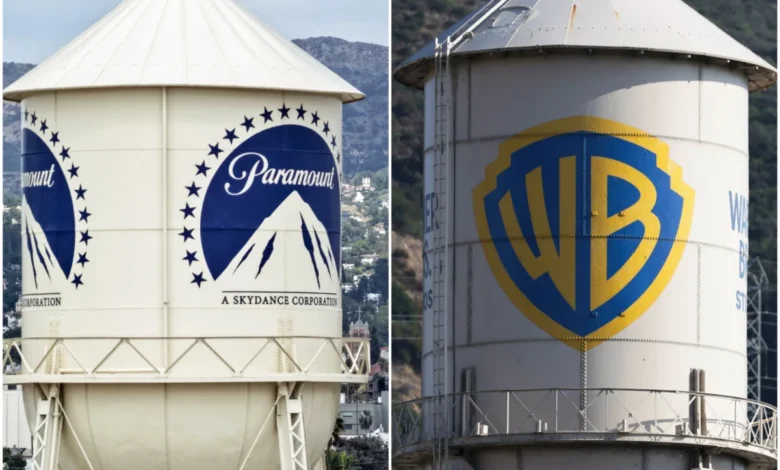
The landscape of the American media and entertainment industry is currently undergoing a seismic transformation, as Paramount Skydance navigates the final, complex maneuvers required to finalize its monumental $111 billion merger with Warner Bros. Discovery. While the deal remains subject to various closing conditions, the company has begun the administrative and structural heavy lifting necessary to transition its operations and stock listing in anticipation of a successful completion. In an SEC filing released this past Friday, Paramount confirmed that its board of directors resolved on September 25 to voluntarily withdraw its Class B common stock from the Nasdaq Global Select Market, where it currently trades under the ticker symbol PSKY, to relocate the listing to the New York Stock Exchange (NYSE).
This strategic migration, expected to take effect at the market open on October 6, serves as a symbolic and structural realignment for the entity. While the move to the NYSE is a standard procedure for large-cap companies seeking institutional stability, the timing is intrinsically linked to the broader integration strategy involving Warner Bros. Discovery. The company anticipates that the final trades on Nasdaq will conclude at the market close on October 5, marking the end of a significant chapter for the studio as it prepares to enter its next iteration.
The Mechanics of the Warrant Distribution
Central to the integration plan is the distribution of warrants to existing shareholders, a move designed to offer current investors a stake in the future entity under terms that mirror those provided to the primary equity syndicate. This syndicate includes high-profile figures such as David Ellison, his father Larry Ellison, and Gerry Cardinale, the founder of RedBird Capital Partners. These individuals have played a central role in the financing and structural design of the merger, and the warrant program is effectively an effort to harmonize the interests of retail and institutional shareholders with those of the controlling partners.
According to the SEC documentation, Paramount has set a record date of October 5 for this distribution. The warrants, which are expected to be issued in an approximate volume of 470 million, will grant holders the right to purchase shares of Class B common stock at a price dictated by the volume-weighted average price (VWAP) over a 20-day trading period. This period concludes three business days prior to the official merger closing. To mitigate volatility and protect investor value, the exercise price is subject to a predefined collar: a minimum of $12.00 per share and a maximum of $16.02 per share.
However, the company was careful to note the contingent nature of this financial instrument. Paramount emphasized that the distribution is fundamentally tied to the closing of the Warner Bros. Discovery acquisition. Should the merger face further delays or unforeseen regulatory setbacks, the board retains the authority to cancel or postpone the record and issue dates. This cautionary language underscores the reality that, despite the progress made, the deal is not yet a foregone conclusion.
Navigating the Regulatory Labyrinth
The path to this merger has been defined by intense regulatory scrutiny. A critical breakthrough occurred earlier this week when Paramount reached a settlement agreement with 12 Democratic state attorneys general. The coalition of states had initially filed an antitrust lawsuit to block the transaction, expressing concerns over market concentration and the potential for reduced competition in the streaming and broadcast sectors.
The proposed settlement, which requires judicial approval, does not mandate significant operational concessions from Paramount, suggesting that the states have been satisfied by the company’s assurances regarding content distribution and competition. Despite this victory, the process remains in the hands of the court. The presiding judge is currently conducting a thorough review of the settlement and has requested that all parties file a response by September 28 to address a request by Senator Cory Booker (D-N.J.). Senator Booker has advocated for an independent review of the proposed consent decree, highlighting the political pressure and public interest that continue to shadow the deal.
Historical Context and Strategic Rationale
To understand the magnitude of this merger, one must look at the historical trajectory of both organizations. Paramount, a legacy studio with over a century of history, has struggled to adapt to the digital-first era, facing the same headwinds as other traditional media conglomerates: declining linear television ratings, rising production costs, and the expensive, often unprofitable, pivot to subscription-based streaming services. Warner Bros. Discovery, itself a product of a massive merger between AT&T’s WarnerMedia and Discovery Inc., has spent the last several years aggressively deleveraging its balance sheet and rationalizing its content library.
The merger is viewed by market analysts as a defensive consolidation. By combining forces, the companies aim to achieve significant operational synergies, reducing redundant overhead and leveraging a combined library of intellectual property that is among the most valuable in the world. This includes iconic franchises from the Paramount vault, CBS’s broadcast dominance, and the vast Warner Bros. and HBO production pipelines.
Financial Implications and Shareholder Impact
For shareholders, the transition to the NYSE and the associated warrant program represent a hedge against the dilution inherent in such a massive transaction. The decision to issue shares of Class B common stock to the Paramount Global 401(k) Plan and the Paramount Global Master Trust—rather than issuing warrants to these entities—indicates a strategy to ensure that employee retirement vehicles are directly invested in the successor entity.
The financial engineering behind the warrants is sophisticated. By pegging the exercise price to a 20-day VWAP, the company is attempting to capture a "fair market value" that reflects investor confidence leading up to the merger. The $12.00 to $16.02 range provides a degree of certainty for investors, yet the reliance on the closing of the WBD merger as a trigger creates a binary outcome. If the merger fails, the warrant program effectively evaporates, leaving investors to navigate the standalone prospects of Paramount.
Looking Ahead: The Challenges of Integration
As the calendar turns toward October, the focus shifts to the court’s decision and the final administrative steps. The integration of two such distinct corporate cultures will be a primary challenge for the incoming leadership team. Historically, media mergers of this scale have faced significant friction in reconciling creative production cycles with bottom-line fiscal mandates.
If the merger closes as anticipated in the coming weeks, the industry will witness the birth of a new media giant capable of challenging the dominant streaming platforms—Netflix, Disney+, and Amazon Prime Video—on a global scale. However, the success of this entity will depend on its ability to manage its immense debt load, maintain the quality of its content output, and navigate the ongoing secular decline of the cable television ecosystem.
The transition to the NYSE is more than just a change in venue; it is a signal of the company’s intent to start fresh. As the ticker changes and the warrants potentially begin trading on October 13, investors will be watching closely to see if the promise of the Paramount-Skydance-WBD union can deliver the long-term shareholder value that has been elusive for so many in the legacy media sector. For now, the parties remain in a state of watchful waiting, as the legal and administrative machinery works to bring this historic deal across the finish line.