Beyond the Wardrobe: The Architectural Complexity of Modern Costume Design in Cinema

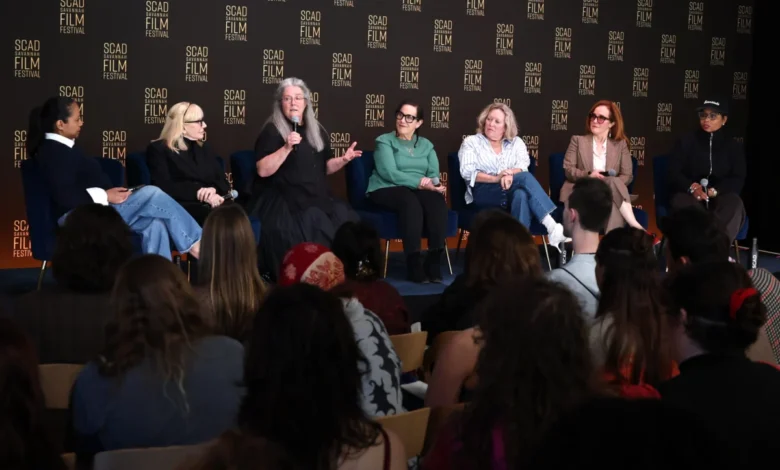
The art of costume design is frequently misunderstood as a purely aesthetic pursuit akin to professional shopping, but in reality, it is a rigorous, research-driven discipline that serves as the backbone of visual storytelling. This distinction was the central focus of the Costume Design Roundtable held at the SCAD Savannah Film Festival, where a panel of industry veterans—including Molly Rogers, Ellen Mirojnick, Arianne Phillips, Linda Muir, Amy Roth, and Marci Rodgers—unpacked the technical, historical, and psychological demands of dressing characters for the screen.
The Myth of the Stylist
For the uninitiated, the role of a costume designer is often conflated with that of a celebrity stylist or personal shopper. Molly Rogers, whose filmography includes the landmark fashion-centric film The Devil Wears Prada and its recent sequel, addressed this misconception with blunt clarity. Rogers noted that applicants who approach her with a primary interest in shopping are often disqualified immediately.
Costume design, as defined by the panel, is a process of character excavation. It requires an intimate understanding of a character’s socioeconomic background, personal history, and emotional trajectory. When Rogers worked on Spike Lee’s She’s Gotta Have It, she did not merely curate outfits; she conducted field research in New York to understand the authentic aesthetic of the city’s residents. By identifying the character Nola Darling’s affinity for Prince, Rogers translated abstract fandom into a cohesive visual language, utilizing thrift stores rather than luxury boutiques to ground the character in a gritty, authentic reality.
The Historical and Contemporary Paradox
Ellen Mirojnick, a titan in the industry known for her work on Wall Street and Basic Instinct, emphasized that contemporary costume design is arguably more challenging than period pieces. While historical dramas allow for archival reference, contemporary design requires the artist to document the present moment in a way that feels timeless yet specific.
"In the beginning of my career, I loved being able to document what New York was like at that period," Mirojnick explained. "It was for film, but it also documented the history of who we were." The difficulty lies in the invisibility of the work; when a costume is perfectly executed in a contemporary setting, the audience should not notice it. The design must be so integrated into the character’s life that it feels inevitable.
This sentiment is echoed by the logistical hurdles modern designers face. As Arianne Phillips noted, the increasing prevalence of luxury brand financing and product placement has introduced a new layer of friction. Designers are often pressured to incorporate specific products into a narrative, a trend that risks compromising the integrity of the character’s arc. Phillips, whose work spans Nocturnal Animals and The Invite, highlighted that maintaining artistic autonomy in a corporate-funded environment is a constant, exhausting negotiation.
Technical Precision and Narrative Symbolism
The panel underscored that every stitch, color choice, and fabric texture is a deliberate narrative device. In her work on the upcoming The Odyssey, Mirojnick utilized a "burned red" palette to represent the House of Ithaca, maintaining a visual consistency that spans thousands of costumes.
The climactic moment of the film, which features Queen Penelope wearing a blue gown, serves as a masterclass in symbolic dressing. The garment was engineered as a form of armor—a tight, pleated drape paired with a singular golden necklace. The design was intended to communicate strength and readiness for battle, signaling to the audience that Penelope had maintained her own power throughout her long isolation.
Similarly, Linda Muir’s research for projects like The Northman and Werwulf highlights the anthropological side of the craft. In her exploration of Viking-era textiles, Muir discovered that wool was not merely a textile; it was a currency and a marker of status. By researching the ecological history of the British Isles—including the historical eradication of wolves to protect sheep—Muir was able to construct a world that felt authentic to the scarcity and social hierarchies of the time.
The Challenge of the Legacy Project
Revisiting iconic material presents a unique set of hazards, as demonstrated by the production of the sequel to The Devil Wears Prada. Rogers spoke candidly about the "curse of the sequel," acknowledging that the original film’s massive cultural footprint made it a daunting project. The goal was to honor the established history of the characters while evolving them for a new era.
A notable example was the return of the iconic cerulean sweater from the first film. Rather than simply recreating the look, Rogers collaborated with Anne Hathaway to modify the garment into a vest, signaling a shift in the character’s maturity and personal style. This approach highlights the importance of evolution in character design—the clothes must reflect the passage of time.
Amy Roth faced a different set of challenges with I Play Rocky. Because the original film lacked a designated costume designer, there were no existing archives to draw from. Roth had to rely on the "collective memory" of the audience, meticulously sourcing and aging a leather jacket to match the specific look that defined the Rocky Balboa character. This process required a fusion of historical recreation and psychological resonance, working closely with actor Anthony Ippolito to ensure the physicality of the costume supported his performance.
Industry Implications and Future Trends
The conversation at the SCAD Savannah Film Festival ultimately painted a portrait of a profession at a crossroads. As the film industry becomes more consolidated, the pressures on designers to serve as marketers for luxury goods will likely intensify. However, the panelists remained steadfast in their commitment to the "salesperson" role—not for brands, but for the characters they clothe.
Data suggests that audience awareness of costume design is at an all-time high, driven by social media analysis and the viral nature of "costume spotting." Yet, the panelists warned that this superficial interest should not be confused with the deep, structural labor of the profession. Whether it is replicating the two distinct shades of red in Michael Jackson’s Thriller jacket or agonizing over the color harmony of a living room set, the work of the costume designer remains a vital, albeit often invisible, component of cinematic excellence.
The session, moderated by Variety’s Senior Artisans Editor Jazz Tangcay, served as a vital reminder that behind every memorable frame is a team of designers navigating the intersection of history, psychology, and corporate mandate. As the industry evolves, the ability to balance these conflicting demands—while staying true to the character’s internal truth—will continue to be the hallmark of the master costume designer.