Putin Claims Close Contact with Elon Musk Over Russia’s Starlink Rival Rassvet as Ukraine Operations Face Scrutiny

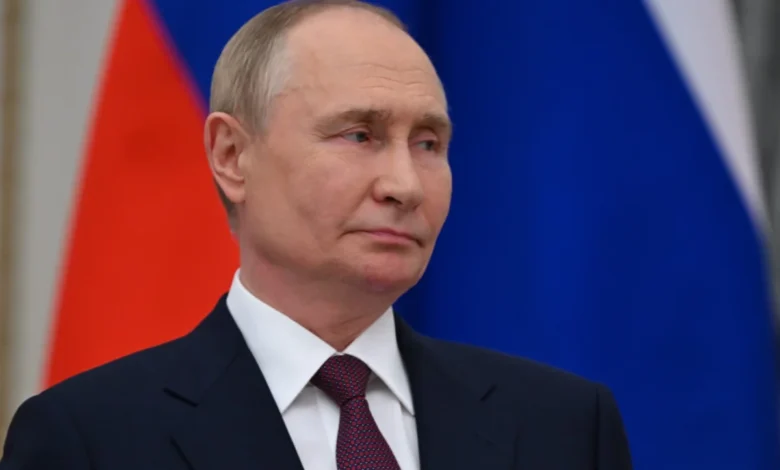
Russian President Vladimir Putin revealed on Wednesday that he and SpaceX Chief Executive Officer Elon Musk are maintaining close channels of communication regarding "Rassvet," Russia’s emerging domestic satellite internet initiative designed to rival Starlink. The announcement, delivered during an address at the Russia-Africa Summit, highlights a complex intersection of geopolitics, commercial space exploration, and modern military strategy, sending immediate shockwaves through international policy circles.
During his public remarks, the Russian leader offered high praise for the American billionaire, describing him as a visionary talent within the global technology sector. Putin noted the massive scale of the SpaceX constellation, contrasting it with Russia’s nascent efforts in low-Earth orbit (LEO) broadband development. However, the diplomatic acknowledgment of a dialogue between the Kremlin and the world’s most prominent aerospace entrepreneur carries profound ramifications, particularly given Musk’s immense influence over modern warfare through his company’s satellite networks.
The revelation arrives amid heightened tensions concerning the ongoing conflict in Ukraine, where digital communications infrastructure has become as vital as artillery. Ukrainian forces have relied heavily on Starlink and its military-grade counterpart, Starshield, since the onset of the Russian invasion in February 2022. Any hint of alignment or communication channels opening between Moscow and the head of the company supplying Ukraine’s primary tactical communications backbone introduces substantial strategic anxiety for Kyiv and its Western allies.
Background Context: The Geopolitics of Low-Earth Orbit Satellites
To understand the gravity of Putin’s statements, one must examine the transformation of low-Earth orbit into a contested geopolitical frontier. For decades, military communications relied on geostationary satellites, which are large, expensive, and vulnerable to targeted anti-satellite weaponry or severe signal latency. The rise of LEO mega-constellations—typified by SpaceX’s Starlink, which boasts over 5,000 operational satellites in orbit—fundamentally altered this paradigm. These networks provide high-speed, low-latency internet access virtually anywhere on Earth, making them indispensable for both civilian commerce and modern military command and control.
Recognizing this strategic vulnerability, nations outside the United States have raced to develop sovereign alternatives. Russia’s "Rassvet" project (meaning "Dawn" in Russian) represents Moscow’s ambitious attempt to construct an indigenous LEO satellite constellation capable of bypassing Western infrastructure dependencies. Yet, as Putin openly admitted, Russia currently lags far behind SpaceX’s operational capacity, making technical insights, international supply chains, or external regulatory environments critical hurdles for the Kremlin’s space program.
Chronology of Recent Escalations in Ukraine
The announcement at the Russia-Africa Summit does not exist in a vacuum; it follows a tumultuous month of friction between SpaceX leadership and Ukrainian authorities. The timeline of these developments underscores the precarious balance Musk maintains as a private citizen wielding unprecedented geopolitical leverage:
- Early October 2026: The United States government eases certain economic sanctions against Russia, sparking immediate apprehension within Ukrainian government circles regarding the security and continuity of their military communication links.
- Mid-October 2026: Ukrainian frontline drone units experience a sudden, widespread disruption in connectivity lasting approximately ten days. Subsequent investigative reports from media outlets like The Wall Street Journal and Reuters reveal conflicting accounts: some sources indicate Musk ordered SpaceX to restrict access, while others suggest the directive originated from within the White House.
- Late October 2026: Musk takes to social media platform X (formerly Twitter) to defend the restrictions, asserting that Ukrainian military personnel violated Starlink’s terms of service by employing the network to execute offensive drone strikes resulting in casualties.
- October 24, 2026: Satellite service across Ukrainian operational zones gradually normalizes, though lingering doubts remain regarding the long-term reliability of a privately controlled utility during wartime.
- October 29, 2026: Vladimir Putin publicly confirms direct communication channels with Musk during the Russia-Africa Summit, amplifying geopolitical debates over the oversight of critical orbital infrastructure.
The Vulnerability of Ukraine’s Digital Frontline

The reliance of the Ukrainian Armed Forces on Starlink has been well-documented since the earliest days of the 2022 invasion, when Russian cyberattacks crippled traditional military communications and local telecommunications grids. Starlink terminals deployed across the front lines allowed Ukrainian units to coordinate artillery strikes, monitor troop movements in real time, and maintain secure tactical chats under chaotic battlefield conditions.
However, this reliance has created a unique vulnerability: the entire defensive architecture of a sovereign nation hinges on the policy decisions, operational whims, and political perspectives of a single corporate executive. Musk himself starkly highlighted this reality in a public post on X, noting that if Starlink were to be deactivated, the Ukrainian front line would likely face catastrophic collapse. He emphasized that his assessment was not intended as a threat, but rather as an objective statement of fact regarding modern military dependency on commercial technology.
Official Reactions and International Implications
The disclosure of ongoing dialogue between Moscow and Musk has drawn sharp critiques and cautious evaluations from international observers, defense analysts, and lawmakers in Washington and Brussels.
Western defense officials have long expressed unease regarding the privatization of strategic deterrence and communication networks. While commercial innovation has undoubtedly outpaced traditional defense procurement cycles—allowing technologies to be deployed in months rather than decades—it introduces severe risks regarding accountability. A private corporation operating outside the traditional framework of international treaties and military alliances possesses the technical capability to alter the balance of an armed conflict unilaterally.
Furthermore, Putin’s public praise of Musk and the acknowledgment of "close contact" serve a dual propaganda and strategic purpose for the Kremlin. Domestically and internationally, it projects an image of diplomatic flexibility and technological engagement, while simultaneously fostering distrust between Kyiv and its primary technological benefactor. By highlighting an open line of communication with the American billionaire, Moscow aims to plant seeds of doubt among Ukrainian leadership concerning the permanence and security of their vital digital lifeline.
Fact-Based Analysis of Future Impacts
The intersection of private enterprise and state-level geopolitics demonstrated by this episode establishes a troubling precedent for future conflicts. Several key implications emerge from these developments:
- The Rise of Corporate Diplomacy: Technology executives are increasingly acting as independent diplomatic and military actors. Traditional nation-states must navigate relationships with corporate entities that hold monopolies over critical infrastructure, blurring the lines between sovereign foreign policy and private corporate governance.
- The Acceleration of Sovereign Alternatives: The friction experienced by Ukraine, combined with the realization of how easily commercial satellite access can be throttled, will likely accelerate efforts by middle and major powers alike to decouple from American-centric commercial space infrastructure. Nations will view reliance on foreign private constellations as an unacceptable national security risk.
- Regulatory Scrutiny: Lawmakers in the United States and the European Union are expected to face mounting pressure to establish clearer regulatory frameworks governing how private aerospace and telecommunications companies operate during active international military conflicts. The absence of legal clarity leaves both corporate boards and allied nations dangerously exposed to sudden shifts in operational policy.
As Russia continues to develop its Rassvet constellation and Musk navigates the delicate tightrope between commercial enterprise, regulatory compliance, and geopolitical controversy, the management of low-Earth orbit will remain a central pillar of international security discussions for the foreseeable future.