Former Vice President Kamala Harris Campaigns in Wisconsin for Democrat David Crowley, Prompting Pushback from Republican Opponent Rep. Tom Tiffany

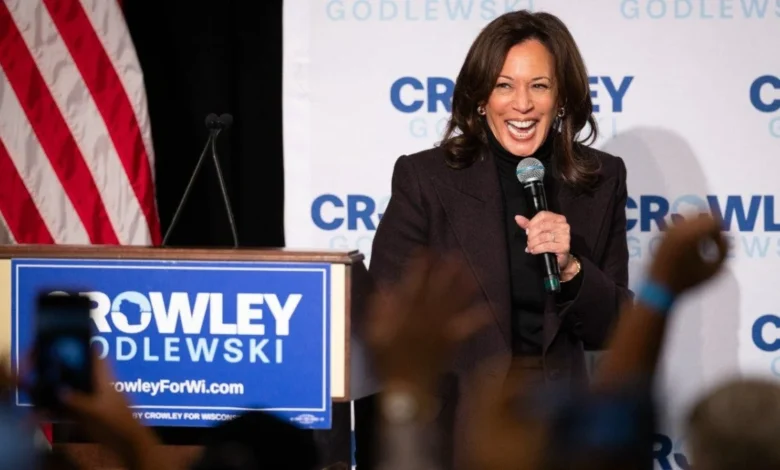
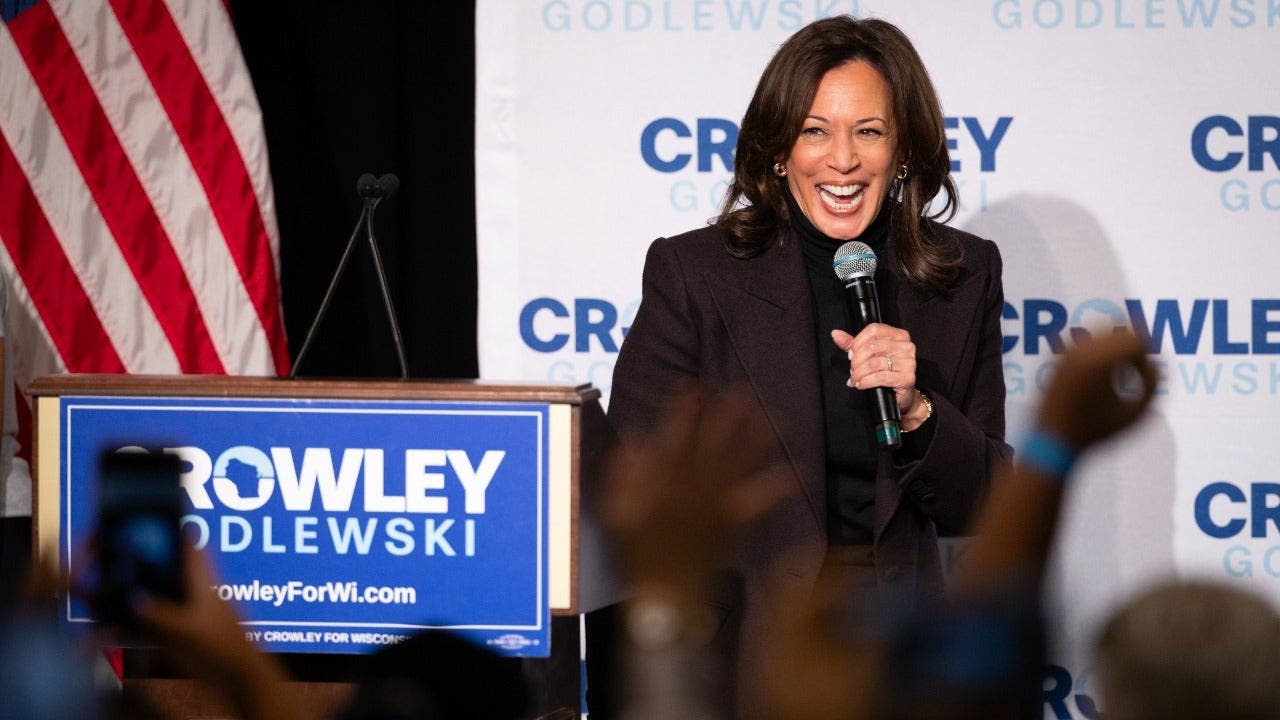
With just over a week remaining before a high-stakes gubernatorial election, the political spotlight has intensified on the state of Wisconsin. Former Vice President Kamala Harris traveled to the key Midwestern swing state to rally voters for Democratic gubernatorial nominee David Crowley. The high-profile visit, hosted at Milwaukee’s historic Pfister Hotel, was designed to inject momentum into the closing days of the campaign. However, the decision to bring in a national surrogate has immediately sparked a war of words, with Crowley’s Republican opponent, U.S. Representative Tom Tiffany, arguing that the appearance is a clear indicator that the Democratic campaign is struggling to energize its core base.
The visit underscores the fierce battle unfolding in Wisconsin—a perennial battleground state where local races often serve as bellwethers for national political trends. As both parties pour resources into the final stretch, the debate over economic management, party unity, and the trajectory of the state has taken center stage.
Chronology of the Campaign Trail and the Milwaukee Rally
The events leading up to the final week of the election cycle have been marked by intense campaigning, high-profile debates, and strategic surrogacy from national political figures. On Monday, Kamala Harris arrived in Milwaukee to headline a "Women for Crowley" campaign event.
Addressing a gathering of supporters at the Pfister Hotel, Harris acknowledged the emotional toll and political fatigue that many voters have experienced over the preceding year and a half. Pointing to feelings of anger, sadness, disappointment, and a general sense of powerlessness among the electorate, Harris sought to motivate the Democratic base to turn out at the polls.
"And we’ve been feeling powerless. People have been feeling like, ‘I can’t do anything about this.’ And I know how much pain people are in. I know how it is creating so much fear among so many communities of people," Harris told the audience.
The visit comes closely on the heels of a series of rigorous debates and primary battles that have defined the Wisconsin gubernatorial race. Notably, Crowley secured the Democratic nomination after a hard-fought and narrow primary victory over state Representative Francesca Hong, a progressive rival. The primary battle highlighted internal divisions within the state party regarding its ideological direction, with critics arguing that establishment figures favored Crowley as a centrist alternative.
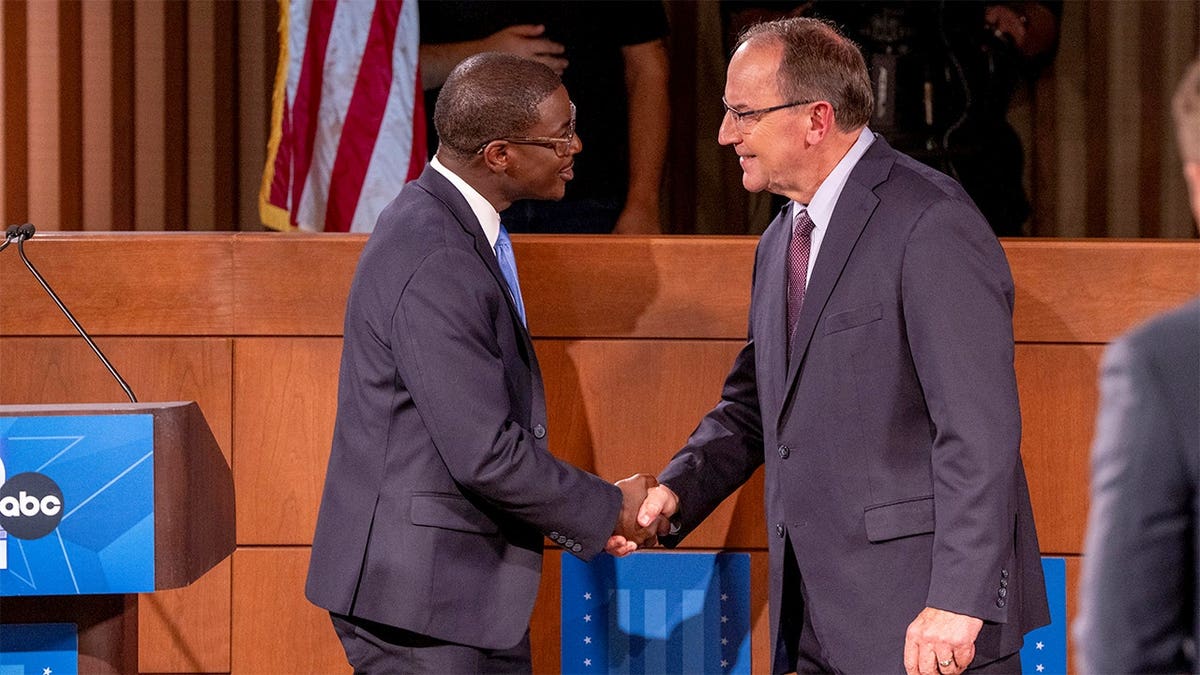
Just days prior to Harris’s arrival, Crowley and Tiffany squared off in a fiery televised debate on October 21 in Milwaukee. That encounter featured sharp exchanges over key policy issues, including abortion, immigration enforcement by Immigration and Customs Enforcement (ICE), and debates surrounding economic policy and socialism. Following the debate, both campaigns immediately pivoted to intense ground-game operations, culminating in the deployment of high-level national surrogates like Harris to shore up voter turnout in vote-rich urban centers like Milwaukee.
Republican Criticisms and the "Handpicked" Narrative
Rep. Tom Tiffany seized upon the timing and nature of Harris’s visit, framing it as a symptom of deeper structural weaknesses within the Crowley campaign. In an exclusive statement to Fox News Digital, Tiffany asserted that the reliance on a national figure of Harris’s stature demonstrates that the local campaign has failed to organically motivate its constituents.
"This is clearly a move that says that they’re struggling to get their base to vote. David Crowley has not excited the base," Tiffany stated.
Tiffany further connected Crowley’s campaign dynamics to the broader ideological tensions within the Democratic Party. Drawing parallels to the criticisms Harris faced during her own national political campaigns, Tiffany argued that Crowley was not the natural choice of the grassroots electorate, but rather an establishment-backed candidate.
"It was, once again, the Democrats that pulled somebody off the bench," Tiffany said. "They handpicked them rather than letting democracy work in their own party, and there’s people very frustrated with that. They’re trying to excite their base, and it’s a problem for them."
Beyond internal party mechanics, Tiffany has positioned his own campaign around themes of fiscal conservatism, accountability, and affordability. As the current Milwaukee County executive, Crowley has faced sustained scrutiny from his Republican challenger regarding local tax policies and government spending. Tiffany argued that Crowley’s record at the county level is incompatible with the economic pressures currently facing Wisconsin families.
"It’s not in his DNA to reduce costs for people in Wisconsin or to reduce taxes," Tiffany asserted. "He is going to raise taxes. That’s what he’s done every single year when he’s been county executive. That’s not what people want to hear."
Democratic Campaign Defense and Counter-Attacks
In response to Tiffany’s remarks, the Crowley campaign forcefully defended its record and strategy, pushing back against the narrative that the Democratic base is disengaged. A campaign spokesperson emphasized that Crowley has maintained an active schedule, traveling extensively across the state to present a clear economic vision aimed at lowering the cost of living for working families.
The campaign shifted the focus toward national economic issues, tying Tiffany directly to federal tax policies and the broader agenda of the Republican Party.
"David Crowley is criss-crossing the state to discuss his plan to lower costs for working families who are struggling to pay their bills because of Congressman Tom Tiffany and Donald Trump’s unaffordable MAGA agenda," the campaign spokesperson stated.
Highlighting Crowley’s executive experience, the campaign pointed to his tenure in local government as proof of fiscal responsibility and tax relief.
"David has spent his career lowering costs for working families, including balancing the budget and lowering the property tax rate every single year as county executive," the statement continued.
Furthermore, the campaign sought to disqualify Tiffany by pointing to his record in Washington, D.C., accusing the congressman of supporting legislation that benefits wealthy donors at the expense of ordinary Wisconsinites.
"Meanwhile, Tom Tiffany went to Washington and sold out working Wisconsinites to give the same billionaires funding his campaign massive tax breaks."
Broader Impact and Electoral Implications in Wisconsin
The high-stakes nature of the Wisconsin gubernatorial election reflects the state’s enduring status as a critical electoral battleground. With margins in statewide races historically razor-thin, both Democrats and Republicans view the outcome as pivotal not only for local governance but for national momentum ahead of upcoming legislative and executive cycles.
Political analysts note that voter fatigue, driven by intense partisan polarization and persistent economic anxieties regarding inflation and the cost of living, has made turnout a paramount concern for both campaigns. While Republican strategists are banking on economic dissatisfaction and anti-establishment sentiment to drive conservative voters to the polls, Democrats are relying on targeted voter mobilization efforts, prominent national surrogates, and messaging centered on reproductive rights and economic equity to energize urban and suburban bases.
As the final week of the campaign unfolds, both candidates are expected to maintain an aggressive schedule across the state. With early voting already underway and millions of dollars in advertising saturating local media markets, the contest in Wisconsin remains too close to call, serving as a critical test of grassroots enthusiasm and party organization in the American Heartland.