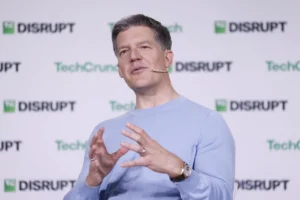
Silicon Valley Feud Erupts as Factory CEO Matan Grinberg Fires VC Chris Degnan Over Alleged Confidentiality Breach and Rival Defection


A high-stakes corporate feud has exploded across Silicon Valley, dragging in some of the most prominent venture capital heavyweights and artificial intelligence startups in the industry. Matan Grinberg, the co-founder and chief executive officer of agentic coding startup Factory, publicly announced via social media that he had terminated venture capitalist Chris Degnan from his role as a board advisor. Grinberg’s explosive allegation centered on claims that Degnan had systematically leaked confidential company intelligence to Factory’s primary market rival, Cognition.
The public confrontation instantly galvanized the tech ecosystem, transforming what might have once been a private boardroom dispute into a sprawling, multi-party digital spectacle. Within hours of Grinberg’s post, Degnan fired back, announcing his appointment as the chief revenue officer of Cognition while flatly denying Grinberg’s narrative. The fallout rapidly escalated as legendary venture capitalists Vinod Khosla and Keith Rabois intervened from opposing camps, trading public insults and shining an uncomfortable spotlight on the murky ethical boundaries of modern AI investing.
The public escalation highlights broader systemic tensions within the contemporary venture capital landscape. As artificial intelligence funding concentrates massive sums of capital into a handful of hyper-competitive domains, traditional fiduciary norms, board-level confidentiality, and investor loyalties are increasingly being tested, strained, and shattered.
Anatomy of an Executive Defection and Digital Showdown
The public fracture began on a Wednesday when Grinberg took to the social media platform X to air his grievances. According to the Factory CEO, Degnan—who had served as an advisor while representing Factory investor RPT Partners—had been systematically engaging with executives at Cognition, the creator of the popular Devin coding agent.
Grinberg stated that weeks prior, he had confronted Degnan after learning of a casual conversation between the investor and a Cognition executive. At the time, Grinberg said, Degnan downplayed the interaction, assuring the young founder that he possessed zero interest in joining a competitor. Degnan allegedly remarked that he had "made too much money" and was "too lazy to go work for Cognition," assurances that Grinberg accepted in good faith.
However, Grinberg’s trust was shattered on the following Monday when subsequent disclosures revealed that Degnan had actually been engaged in ongoing, serious employment talks with Cognition. Alarmed by the prospect of intellectual property leakage regarding Factory’s product roadmap, internal strategy, and competitive positioning, Grinberg asserted that he officially terminated Degnan’s advisory role on Tuesday.
Degnan vehemently disputed this sequence of events. In a statement published on X and LinkedIn shortly after breaking news of his new executive position, Degnan claimed he was never fired. Instead, he maintained that he voluntarily resigned from his advisory post on Monday to formally notify Grinberg of his imminent transition to Cognition. According to Degnan, Grinberg responded to the resignation by attempting to recruit him into a full-time, internal role at Factory—an offer Degnan claims he promptly declined.
Valuations, Competitors, and High-Stakes Profiles
The gravity of the dispute is underscored by the immense financial scale and market positioning of the two companies involved. Factory, founded three years ago and headquartered in San Francisco, specializes in agentic coding—autonomous artificial intelligence agents capable of executing complex programming tasks with minimal human intervention. The company secured a massive $200 million funding round at a staggering $5 billion valuation, backed by elite institutional investors including Khosla Ventures, Blackstone, Sequoia Capital, and Insight Partners. Factory’s enterprise clientele features blue-chip technology and financial corporations, including Nvidia, Adobe, Palo Alto Networks, and the Royal Bank of Canada.
Conversely, Cognition stands as Factory’s most formidable rival in the autonomous software development space. Cognition made headlines earlier in the month by securing a monumental $2 billion financing round at a towering $48 billion valuation. Its roster of enterprise customers includes major global entities such as Mercedes-Benz, NASA, Goldman Sachs, and Citi.
The personal pedigree of the principals involved further elevates the controversy. Chris Degnan is a veteran enterprise software sales executive. He was Snowflake’s very first sales hire, subsequently spending 11 years steering the data company’s explosive growth as its chief revenue officer. Prior to joining RPT Partners—a Newport Beach, California-based venture firm backing Factory—as a partner five months prior, Degnan had also established himself as a go-to-market advisor for early-stage startups within the multi-billion-dollar venture conglomerate Iconiq.
Venture Capital Titans Clash in Public
The ideological and professional divide over Degnan’s actions triggered an unprecedented public clash between prominent venture capitalists Vinod Khosla and Keith Rabois, both associated with Khosla Ventures, which curiously maintains financial exposure to both sides of the rivalrous equation. Khosla Ventures is an investor in both Factory and Cognition, illustrating the modern trend where venture firms hedge their bets across fiercely competing AI startups.
Vinod Khosla launched a blistering attack against Grinberg on social media, accusing the Factory CEO of fabrication and unprofessional conduct. Labeling Factory a "struggling second tier competitor," Khosla asserted that Grinberg was exhibiting "no decency or sense of proper behavior" and accused the founder of outright lying about whether Degnan had been fired rather than having resigned.
Grinberg responded by maintaining that he retained verifiable email documentation substantiating his timeline, though he declined to publish the correspondence publicly.
Conversely, Keith Rabois, a partner at Khosla Ventures who has historically championed rigorous operational ethics in Silicon Valley, rushed to Factory’s defense. Rabois condemned executive dual-dealing, writing on X that it is "unethical per se to even interview at a competitor while attending Board meetings and Board dinners." Rabois added that sitting through strategic board sessions with access to sensitive proprietary information while concurrently pursuing employment with a direct rival is "absolutely insane."
Broader Implications for Startup Governance and Fiduciary Duty
The public disintegration of the relationship between Factory and its former advisor highlights a structural transformation in the technology venture ecosystem. In the traditional, pre-generative AI era, venture capital firms and their designated board representatives maintained strict separation policies. Investors were routinely barred from funding direct competitors to protect proprietary technologies, customer lists, and strategic roadmaps.
The hyper-accelerated AI gold rush has largely dismantled these historical firewalls. Today, leading venture capital funds routinely portfolio-manage direct competitors across foundational models, application layers, and autonomous agents, creating unavoidable conflicts of interest.
These structural tensions are increasingly attracting regulatory and legal scrutiny. Notably, venture capital giant Andreessen Horowitz recently became the subject of a federal probe by the United States Department of Justice examining potential antitrust and governance violations arising from its partners serving simultaneously on the boards of competing artificial intelligence entities.
For early-stage founders, the incident serves as a stark cautionary tale regarding the sacredness of board-level trust. As Grinberg emphasized in his public statements, the unwritten social contract of Silicon Valley relies heavily on the premise that advisors and board members will maintain unwavering discretion.
"Trust in board membership is one of the sacred bonds in the Silicon Valley, one that helps the startup ecosystem thrive," Grinberg noted. "With it comes an enormous responsibility. That trust was violated."
As the dust settles on the public exchange, representatives for Factory, RPT Partners, Cognition, and Khosla Ventures have largely declined requests for further public elaboration. However, the ripple effects of the dispute are likely to permanently alter how startup founders evaluate the background checks, loyalty pledges, and conflict-of-interest disclosures required of incoming board advisors and venture capital partners.