Archaeologists uncover a massive hoard of over 900 Roman silver denarii dating to the reign of Emperor Hadrian in Germany

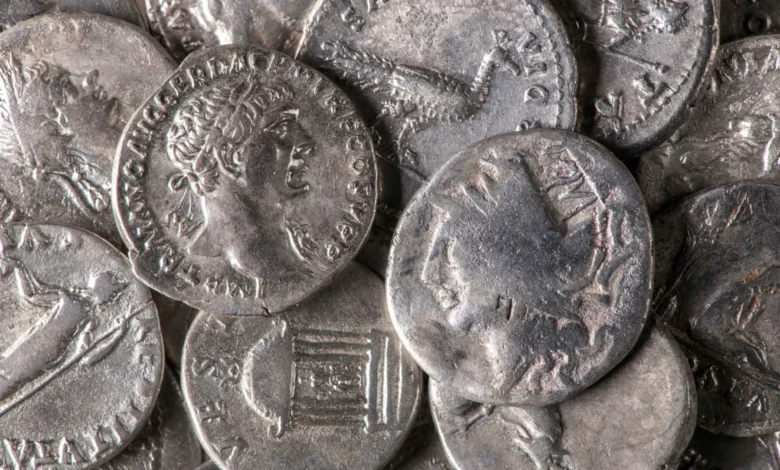
The recent discovery of more than 900 silver denarii in Germany marks a significant milestone in European archaeology, representing the largest collection of coins from the era of Emperor Hadrian ever unearthed in the region. This remarkable cache, weighing approximately 7 pounds (3.1 kilograms), provides historians and numismatists with a rare, tangible link to the economic and military infrastructure of the Roman Empire during the second century A.D. The discovery was managed by the LVR-Office for the Preservation of Archaeological Monuments in the Rhineland, which has since begun a meticulous process of cataloging and conservation to ensure the preservation of these historical artifacts.
The Context of the Rhineland Discovery
The Roman presence in the Rhineland was a cornerstone of the Empire’s northern frontier. During the height of the Roman Empire, the region served as a critical buffer zone and a center for trade and military operations. The denarius, which was the standard silver coin of the early Roman Empire, served as the primary currency for paying soldiers, facilitating long-distance trade, and managing the administrative expenses of provincial governance.
The fact that this hoard was buried in such a significant quantity suggests a period of deliberate concealment. Whether the coins were hidden due to an imminent threat of invasion, social instability, or a private merchant’s desire to protect assets from theft, the cache acts as a time capsule. By examining the distribution and minting dates of these coins, experts can better understand the flow of wealth from the capital in Rome to the fringes of the Germanic frontier.
Chronology of the Roman Frontier
To understand the significance of this discovery, one must look at the timeline of Roman expansion and consolidation. Emperor Hadrian, who reigned from 117 to 138 A.D., is famously remembered for his efforts to consolidate the borders of the Empire. Unlike his predecessor Trajan, who focused on expansion, Hadrian emphasized stability and the fortification of existing territories.
- 117 A.D.: Hadrian ascends to the throne, inheriting an Empire at its territorial zenith.
- 120–125 A.D.: Extensive administrative reforms are enacted, and military pay scales are adjusted across the provinces to ensure loyalty among the legions.
- 130–135 A.D.: A period of heightened border security across the Rhine and Danube rivers. This is the estimated timeframe during which such a substantial hoard of denarii might have been accumulated and subsequently lost or buried.
- 138 A.D.: Death of Hadrian and the transition to the Antonine period.
The coins discovered in the Rhineland appear to span the middle of Hadrian’s reign, offering a cross-section of the monetary policy of the time. During this era, the silver content of the denarius was relatively stable, though the fiscal pressures of maintaining a standing army were immense.
Supporting Data and Numismatic Analysis
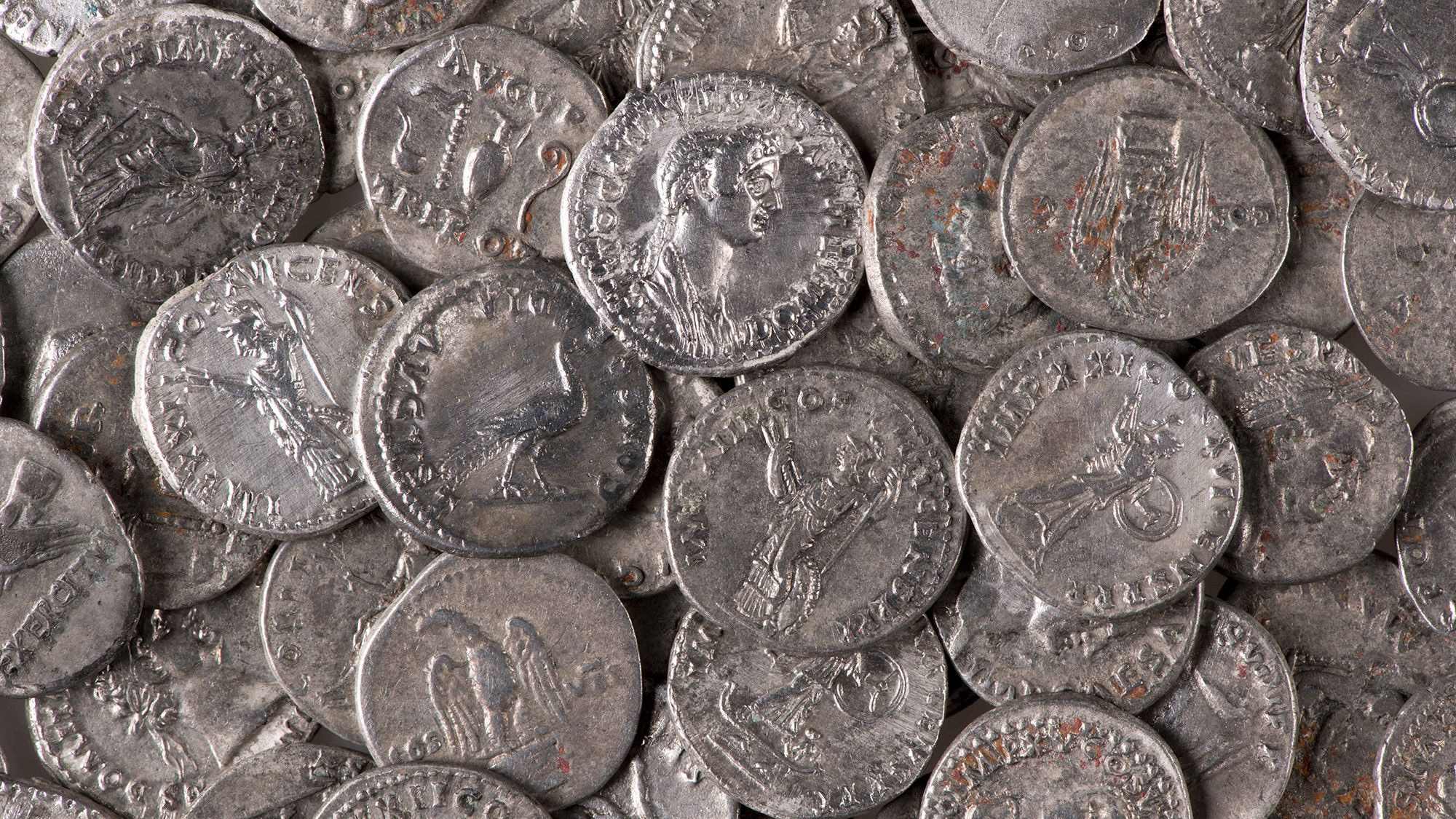
The hoard consists of 900 individual silver denarii. In the context of the second century, this was a small fortune. For comparison, the annual pay for a typical Roman legionary during the reign of Hadrian was approximately 300 denarii. This means the hoard represents roughly three years of a soldier’s salary—a sum that would have been sufficient to purchase a small farm or sustain a family for an extended period.
The sheer volume of the discovery allows researchers to conduct a statistical analysis of coin wear, metallurgical composition, and regional distribution. By studying the mint marks found on these coins, archaeologists can determine if they originated from the central mint in Rome or from smaller, localized mints established to supply the northern garrisons.
"This is an extraordinary find," noted a representative from the LVR-Office for the Preservation of Archaeological Monuments in the Rhineland. "The density of the coins, combined with their excellent state of preservation, allows us to map the economic interconnectedness of the Roman provinces in unprecedented detail. It confirms that the Rhineland was not merely a military outpost but a hub of active, coin-based commerce."
Archaeological Implications
The implications of this discovery extend beyond simple monetary history. The burial of the hoard suggests that the owner had intended to retrieve it, as it was likely hidden in a vessel or a designated secure area. When a hoard of this size is left behind, it often points to a sudden event—a localized conflict, a plague, or the sudden death of the owner—that prevented their return.
Furthermore, the hoard contributes to the ongoing debate regarding the "Romanization" of Germania. The presence of such a large quantity of high-value silver coinage implies that the local economy was deeply integrated with Roman currency systems. It suggests that even in areas distant from Rome, the standard of living and the mechanisms of trade were heavily dependent on the stability of the imperial mint.
Official Responses and Conservation Efforts
Since the discovery, the LVR-Office has prioritized the protection of the site where the hoard was found. Excavation in such areas is a delicate process, requiring the use of specialized tools to avoid damaging the silver surfaces of the coins. The coins are currently undergoing electrolytic cleaning and chemical analysis to stabilize the metal, which has been subjected to centuries of soil acidity.
The academic community has expressed significant interest in the find. Experts from universities across Europe are collaborating to compare these coins with other known hoards found in Britain, France, and Italy. This comparative approach is essential for creating a comprehensive database of Hadrianic coinage, which will assist in dating future archaeological discoveries.
The Legacy of the Hadrianic Era
Hadrian’s reign was characterized by a push toward cultural and architectural unity. From the construction of the Pantheon in Rome to the building of Hadrian’s Wall in Britain, his influence was expansive. The discovery of this silver hoard serves as a domestic, grassroots reflection of that same reach. While the Emperor focused on grand architecture and border security, the people living in the provinces were actively participating in a sophisticated, cash-based economy.
This find underscores the importance of continued archaeological survey work in the Rhineland. Many such hoards likely remain buried, waiting to be uncovered through modern geophysical surveying techniques. The LVR-Office intends to continue its research in the area, hoping to determine if the hoard was part of a larger administrative building or a private residence.
Broader Historical Impact
As we look at the trajectory of the Roman Empire, it becomes clear that the stability of its currency was the bedrock upon which its power rested. The "crisis of the third century," which occurred later, would eventually lead to the rapid debasement of the currency and hyperinflation. However, this hoard dates from the "Golden Age" of the Empire, a time when the denarius was still a reliable and highly trusted medium of exchange.
By studying these 900 silver coins, we are essentially reading a history book written in metal. Each coin carries the image of the Emperor and the symbols of the Roman state, reinforcing the propaganda and the reach of the imperial administration. This discovery serves as a reminder that history is not just found in books and statues, but in the pockets of the people who built the infrastructure of the ancient world.
The LVR-Office for the Preservation of Archaeological Monuments in the Rhineland plans to display a selection of the coins in a future exhibition. This will provide the public with a unique opportunity to view the artifacts and learn about the intricate economic systems that sustained the Roman Empire at its peak. As analysis continues, more details regarding the specific origin of the coins and the circumstances of their burial are expected to emerge, further enriching our understanding of life on the Roman frontier.
Related posts: