The automotive industry is witnessing a profound shift in commercial logistics, and Kia Corporation is positioning itself at the vanguard of this transition with the formal expansion of its Platform Beyond Vehicle (PBV) lineup. Following the positive reception of the PV5 model, which debuted in February, Kia has unveiled the PV7, a larger, more robust electric van designed to compete directly in the high-capacity commercial sector. This strategic move signals Kia’s intent to challenge established players such as the Ford E-Transit and the Mercedes-Benz eSprinter by offering a highly modular, technology-forward solution for fleet operators and passenger transport services.
A Chronology of the PBV Initiative
Kia’s journey toward the PBV ecosystem began in earnest as part of the company’s "Plan S" strategy, which prioritizes electrification and mobility services. The initial reveal of the PV5 earlier this year served as a proof-of-concept for a modular architecture that could adapt to diverse business requirements. By isolating the driver’s cabin from the rear modules, Kia introduced the concept of "Life Modules," allowing owners to swap the vehicle’s rear section to transition between a cargo hauler, a mobile office, or a passenger shuttle.
The announcement of the PV7 represents the second phase of this rollout. While the PV5 serves the mid-size van segment, the PV7 arrives as a full-size solution. By extending the wheelbase and overall dimensions by approximately two feet compared to its sibling, Kia is targeting logistics firms that require higher volume capacity and extended range—critical metrics for last-mile delivery and regional distribution networks.
Technical Specifications and Performance Metrics
At the heart of the PV7 is the scalable PBV platform, engineered for flexibility. Unlike the 400-volt architecture utilized in the PV5, the PV7 features a sophisticated 800-volt electrical system. This technical upgrade is significant, as it facilitates ultra-fast DC charging capabilities. Kia estimates that the PV7 can replenish its battery from 10% to 80% in approximately 20 to 25 minutes, a critical downtime reduction for fleet operators who prioritize operational efficiency.
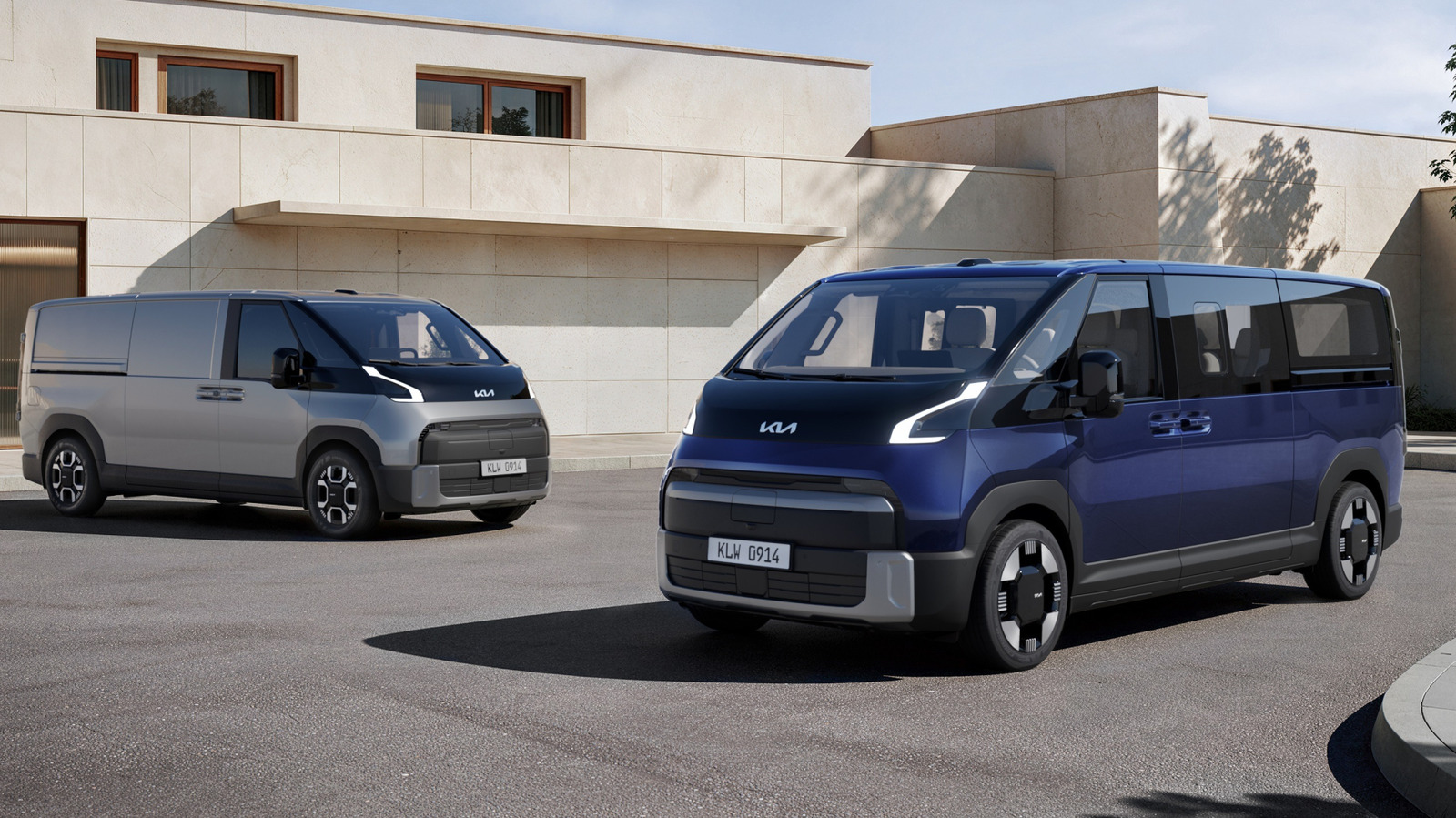
Energy storage is provided by a standard 71.5-kWh battery, with an optional, high-capacity 96.2-kWh nickel-cobalt-manganese (NCM) battery pack available for long-haul applications. In its most efficient front-wheel-drive configuration, the PV7 is projected to achieve a range of roughly 286 miles on the WLTP cycle. Furthermore, the powertrain produces up to 268 horsepower and 310 lb-ft of torque, ensuring that the vehicle maintains adequate performance even when fully loaded.
The vehicle’s physical dimensions reflect its intended role as a workhorse. Standing 17.5 feet long, 6.54 feet wide, and 6.52 feet tall, the PV7 provides the volumetric efficiency required to accommodate three standard Euro pallets in its cargo configuration. To manage these loads, Kia has integrated a specialized heavy-load driving mode, which dynamically adjusts torque delivery and regenerative braking profiles to ensure stability and safety, regardless of payload weight.
Modular Versatility and Interior Design
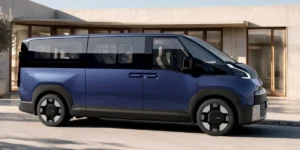
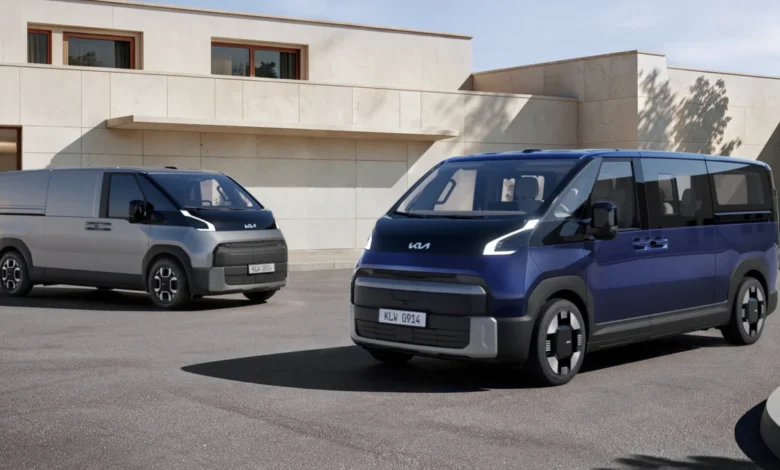
Kia’s design philosophy for the PV7 emphasizes "functional aesthetics." The exterior features a bold, industrial design language characterized by a blunt, aerodynamic nose and distinctive, futuristic lighting signatures. The lower beltline and wide, blistered wheel arches provide a rugged, purposeful stance that distinguishes the PV7 from the more utilitarian, boxy designs typically found in the commercial van segment.
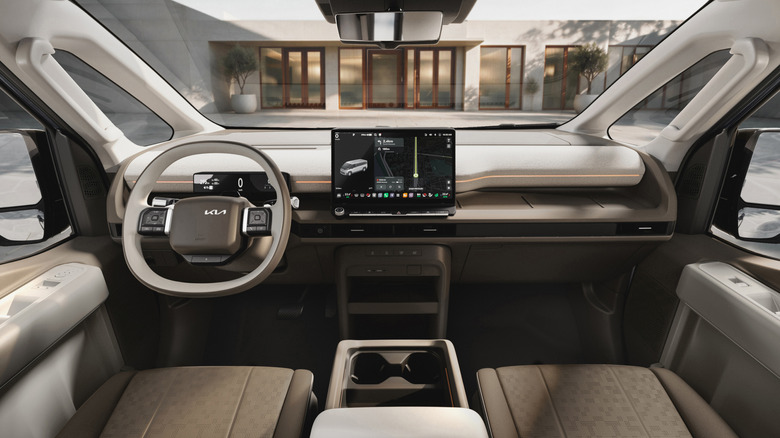
Inside, the cabin is designed with the driver’s ergonomics in mind. The dashboard is minimalist, focusing on digital interfaces and connectivity. For the passenger variants, the interior is highly configurable, with the chassis supporting layouts for seven, nine, or up to 11 occupants. This versatility allows the PV7 to pivot between commercial delivery, shuttle services, and even private transport, depending on the specific "Life Module" attached to the chassis.
Competitive Landscape and Market Implications
The introduction of the PV7 places Kia in direct competition with the global leaders of the electric commercial vehicle (ECV) market. The Ford E-Transit, which has enjoyed significant success in North America and Europe, relies on its brand recognition and a vast service network. Similarly, the Mercedes-Benz eSprinter offers a premium, high-reliability reputation that has made it a favorite among logistics companies.
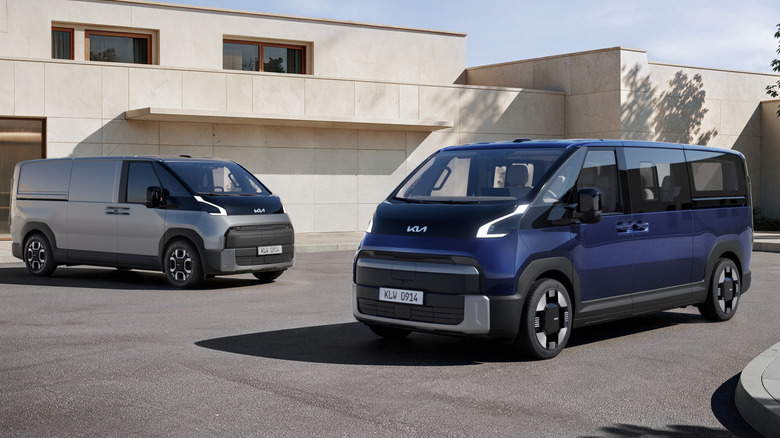
Kia’s differentiator lies in its "Total Mobility Solution" approach. By offering 23 distinct configurations, Kia is attempting to lower the barrier to entry for small-to-medium enterprises (SMEs) that may have previously found it difficult to justify a dedicated electric vehicle for a single, niche purpose. The ability to modify the vehicle after the initial purchase—effectively "re-tasking" the van—offers a level of long-term asset value that traditional fixed-body vans cannot match.
Furthermore, the integration of an 800-volt architecture suggests that Kia is designing these vehicles with future-proofing in mind. As charging infrastructure continues to develop globally, the PV7 is better positioned than its 400-volt peers to take advantage of high-speed DC charging stations, potentially offering a lower Total Cost of Ownership (TCO) over the vehicle’s lifespan.
Strategic Outlook and Potential Challenges
While the technical specifications are compelling, the success of the PV7 will hinge on several external factors, most notably regional availability and supply chain stability. As of the current announcement, Kia has not confirmed a definitive timeline for a U.S. market launch. The American van market is highly competitive and protected by various tariffs and local manufacturing requirements, such as those governed by the Jones Act or the Inflation Reduction Act’s (IRA) tax credit criteria.
If Kia intends to penetrate the North American market, it will likely need to localize production to circumvent potential import duties and to qualify for federal incentives. Industry analysts suggest that Kia’s parent company, Hyundai Motor Group, may look to leverage its existing manufacturing facilities in Georgia to support the assembly of these PBV models, should demand warrant a regionalized strategy.
Additionally, the transition to fleet electrification requires more than just the vehicle itself; it requires a robust ecosystem of telematics, fleet management software, and charging infrastructure support. Kia has indicated that it is developing a digital management suite specifically for PBV operators, which will provide real-time data on battery health, charging status, and route optimization. This software layer is arguably as important as the vehicle’s hardware, as it allows fleet managers to monitor the performance of their assets in real-time, thereby maximizing uptime and reducing operational overhead.
Conclusion: A New Era for Commercial Transit
The Kia PV7 represents a bold departure from traditional commercial vehicle design. By embracing an "alien-esque," high-tech aesthetic and pairing it with a highly sophisticated, modular powertrain, Kia is signaling that it no longer views commercial vans as mere commodity assets. Instead, it views them as integral components of a larger, data-driven logistics network.
As the global push toward carbon neutrality gains momentum, the pressure on logistics and transport companies to electrify their fleets will only intensify. The PV7’s combination of high-capacity energy storage, rapid charging speeds, and extreme modularity provides a compelling argument for fleet operators to move away from internal combustion engines. Whether or not it manages to unseat the established titans of the industry will depend on execution, but for now, the PV7 stands as a significant milestone in the evolution of the electric van segment. With its unique design and technical flexibility, the PV7 is poised to influence how businesses perceive and utilize commercial transport in the coming decade.