The Forgotten Pioneer: How Mitsubishi and Hyundai Built the World’s First Gasoline Direct-Injection V8

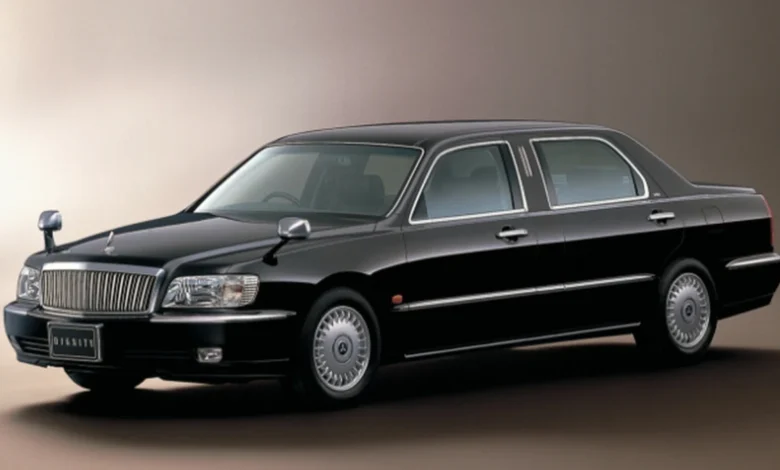
In the modern automotive landscape, Mitsubishi Motors is defined by its strategic focus on plug-in hybrid electric vehicles (PHEVs), compact crossovers, and a legacy rooted in rally-bred four-cylinder engines. To the contemporary consumer, the notion of a high-displacement, naturally aspirated V8 emanating from a Mitsubishi factory seems an impossibility—a relic of an era that the brand has long since abandoned. Yet, hidden in the annals of late-20th-century engineering is the Mitsubishi 8A80, a 4.5-liter engine that holds the singular distinction of being the first gasoline direct-injection (GDI) V8 ever to reach series production. This technological milestone, developed in a collaborative effort with Hyundai, remains a fascinating case study in industrial ambition, premature innovation, and the volatile nature of the luxury sedan market.
A Departure from Tradition: The Genesis of the 8A8 Family
The development of the 8A8 engine family was not merely an exercise in building a larger powerplant; it was a response to a global shifting of tides in the late 1990s. While Mitsubishi was renowned for its high-performance turbochargers and the legendary 4G63 engine, the Japanese manufacturer sought to challenge the established hierarchy of the executive luxury segment. At the time, the Japanese domestic market was dominated by the Toyota Century—a vehicle defined by its status, exclusivity, and, in some iterations, a V12 engine. To compete, Mitsubishi needed a flagship.
The partnership with Hyundai, which was then in the midst of transforming its own brand identity, provided the necessary infrastructure to scale such an ambitious project. The division of labor was strategic: Hyundai leveraged its expertise in heavy-duty bottom-end architecture and casting, while Mitsubishi spearheaded the design of the cylinder heads and the revolutionary GDI fuel-delivery system. This system, which sprayed fuel directly into the combustion chamber rather than the intake port, was theoretically capable of providing a more precise air-fuel mixture, resulting in higher thermal efficiency and increased power density.
Chronology of the GDI V8 Era
The timeline of the 8A80 engine is remarkably brief, reflecting the rapid changes in consumer preferences and the eventual cooling of the partnership.
- 1997–1998: Mitsubishi and Hyundai finalize the joint development of the 4.5-liter V8 platform. The engine is designed specifically for the luxury segment to bridge the gap between mid-size offerings and premium flagship sedans.
- 1999: The Mitsubishi Proudia and the ultra-luxurious Mitsubishi Dignity limousine are launched in Japan. Both feature the 8A80 engine as their centerpiece, marking the global debut of the GDI V8.
- 1999–2000: Hyundai launches the first-generation Equus (marketed as the Centennial in various international regions). The vehicle utilizes the G8AA, a variation of the 8A8 engine architecture.
- 2001: Mitsubishi abruptly ceases production of both the Proudia and the Dignity after just two years, citing abysmal sales figures and a strategic realignment toward smaller, more fuel-efficient platforms.
- 2004: The South Korean government issues a recall involving over 29,000 Hyundai Equus units, providing researchers with one of the few tangible data points regarding the production volume of the engine.
- 2009: Hyundai officially retires the first-generation Equus platform, bringing the legacy of the 8A8 family to a definitive close.
Technical Specifications and Engineering Objectives
The Mitsubishi 8A80 was a naturally aspirated, 32-valve, 4.5-liter V8 engine. With a compression ratio of 10.7:1, it was tuned to produce approximately 276 horsepower (206 kW) and 304 pound-feet of torque. By the standards of the late 1990s, these figures were respectable, though not class-leading. The primary engineering goal was not raw horsepower, but rather the efficiency benefits promised by the GDI system.
Direct injection allowed the engine to run leaner, reducing carbon dioxide emissions and improving fuel economy during light-load conditions. However, the technology was in its infancy. The high-pressure fuel pumps required for GDI systems were notoriously temperamental, and the chemical composition of gasoline in the late 90s often led to carbon buildup on intake valves—a common criticism of early GDI implementations. While Mitsubishi was an early adopter, they were navigating a landscape where the software and material science required to manage GDI efficiently had not yet fully matured.
Market Performance: A Tale of Two Strategies
The failure of the Mitsubishi Proudia and Dignity in the Japanese market serves as a cautionary tale in automotive branding. The Proudia, intended to serve as a successor to the Debonair, struggled to find an identity. Mitsubishi, a brand historically associated with youth, sport, and dirt-track racing, found that its customer base was unwilling to pay premium prices for a domestic luxury sedan.
Between 1999 and 2001, Mitsubishi produced only 1,227 Proudias and a mere 59 Dignity limousines. These figures are exceptionally low, making surviving models highly sought after by collectors of obscure automotive history. In contrast, Hyundai’s application of the engine in the Equus was far more commercially successful. By positioning the Equus as the pinnacle of Korean manufacturing, Hyundai managed to sell over 110,000 units throughout the vehicle’s lifespan. While only a fraction of those were equipped with the G8AA V8, the contrast in success underscores the importance of brand perception in the luxury sector.
The Broader Impact and Industry Legacy
The legacy of the 8A80 engine is multifaceted. From a historical perspective, it represents the "first-mover" risk. Mitsubishi took a significant gamble on GDI technology before the rest of the industry fully embraced it. Today, almost every modern gasoline engine—from fuel-efficient economy cars to high-performance supercars—utilizes direct-injection technology. In this sense, the 8A80 was a technological prophecy that arrived a decade too early.
Furthermore, the collaboration between Mitsubishi and Hyundai provided the foundational experience for Hyundai to eventually develop its own proprietary engines, such as the Tau V8. The partnership proved that, while the product may not have been a commercial triumph, the cross-pollination of engineering talent was a vital step in Hyundai’s evolution into a global automotive powerhouse.
Analysis: Why the V8 Disappeared
The disappearance of the V8 from the Mitsubishi lineup was not just a result of poor sales; it was an early indicator of the industry’s shift toward downsizing. As emissions regulations tightened and the global financial environment shifted, the manufacturing of large-displacement engines became a liability. Mitsubishi’s decision to move away from the 8A80 allowed the company to pivot toward the small-displacement, high-efficiency engines that would eventually power the Lancer Evolution and the Outlander PHEV.
While the "Powertard" 20-liter dump truck engine remains a humorous footnote in the brand’s history, the 8A80 stands as a genuine, albeit forgotten, achievement. It serves as a reminder that even in the most unlikely of places, and within the most unexpected of companies, the spirit of innovation can produce machines that define the cutting edge—even if only for a fleeting moment in time. The 8A80 was a bridge between the analog past of automotive engineering and the digitized, efficiency-focused future that we inhabit today. Its rarity today only adds to its mystique, serving as a silent, mechanical monument to a time when Mitsubishi dared to challenge the status quo of the luxury market with a revolutionary, yet ultimately ephemeral, heart of steel and direct-injected fire.