The Return of a Racing Icon: TAG Heuer Revitalizes the Monaco Chronograph with Vintage Precision and In-House Innovation

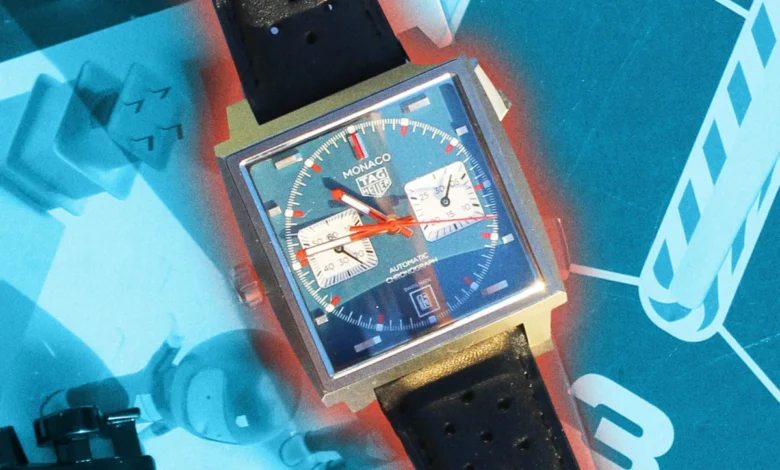
TAG Heuer has officially unveiled a significant update to its legendary Monaco collection, marking a pivotal return to the design language that first defined the avant-garde timepiece in 1969. Announced during the prestigious Watches and Wonders exhibition in Geneva, the new iteration of the Monaco represents more than a simple aesthetic refresh; it is a calculated effort by the Swiss horologist to reconcile the watch’s storied past with modern mechanical excellence. By restoring the sharp, architectural lines of the original "McQueen" Monaco and introducing a sophisticated in-house movement, TAG Heuer aims to satisfy both historical purists and a new generation of luxury watch enthusiasts.
The Genesis of a Radical Design: 1969–1975
To understand the significance of the latest Monaco release, one must look back to the competitive landscape of the late 1960s. In 1969, the watchmaking world was embroiled in a high-stakes race to produce the first automatic chronograph movement. Heuer (as the brand was known before its acquisition by TAG in 1985) collaborated with Breitling, Hamilton-Buren, and Dubois Dépraz in a secret venture codenamed "Project 99." The result was the Calibre 11, a revolutionary movement that featured a micro-rotor and a modular chronograph construction.

Jack Heuer, the brand’s visionary leader at the time, recognized that such an extraordinary movement required an equally extraordinary exterior. He sought a design that was "unconventional, even radical." He struck a deal with case manufacturer Erwin Piquerez, who had developed the first water-resistant square case. The resulting Heuer Monaco, Reference 1133B, was unlike anything else on the market. Its sharp-edged, 39mm square case, metallic blue dial, and horizontal hour indices were a direct challenge to the traditional round chronographs of the era.
Despite its technical prowess, the Monaco was not an immediate commercial success. Its geometry was considered too polarizing for the mainstream market. Even its association with cultural icons like Sammy Davis Jr. and Stanley Kubrick—and its legendary appearance on Steve McQueen’s wrist in the 1971 film Le Mans—could not sustain its sales. By 1975, Heuer made the difficult decision to discontinue the model, seemingly relegating the square chronograph to the annals of horological curiosities.
The Evolution and "Softening" of an Icon
The Monaco remained dormant for over two decades until TAG Heuer resurrected the model in 1998. However, the versions released during the late 1990s and throughout the early 21st century often deviated from the original’s uncompromising DNA. In an attempt to make the watch more "wearable" and commercially palatable, the brand introduced several design modifications that critics often referred to as a "softening" of the icon.

The original matte, "petroleum" blue dial was frequently replaced with sunray-brushed finishes that caught the light in a more conventional, "luxe" manner. The distinctive red-tipped horizontal indices were often swapped for vertical silver markers, and the chronograph pushers were moved from the left-hand side (a signature of the Calibre 11) to the right-hand side to accommodate standard modular movements. Furthermore, the case geometry evolved; the once-razor-sharp corners of the 1969 original were subtly rounded, and the crystal became more domed, losing the blocky, architectural silhouette that defined the watch’s early years. While these versions, including the 2015 update, were successful in maintaining the Monaco’s presence in the catalog, they were often viewed by collectors as "Facetuned" versions of a masterpiece—lacking the raw, tool-watch grit of the McQueen era.
Technical Specifications: The New Standard
The 2024 Monaco release addresses these historical grievances with surgical precision. The most notable technical advancement is the integration of a brand-new, fully in-house automatic chronograph movement. While TAG Heuer has utilized the Heuer 02 movement in recent years, the latest iteration features a movement refined for the specific proportions and demands of the Monaco case.
Key Technical Data:
- Case Dimensions: 39mm x 39mm, maintaining the classic square footprint.
- Case Material: Options include fine-brushed and polished stainless steel, as well as a high-tech Grade 2 titanium variant.
- Movement: In-house automatic chronograph (TH20-00 series), featuring an 80-hour power reserve and a vertical clutch for smoother chronograph engagement.
- Water Resistance: 100 meters (10 bar), staying true to Piquerez’s original waterproof square case concept.
- Dial Options: A return to the classic matte blue with white sub-registers; a racing green variant with black registers; and a sophisticated black-and-gold titanium edition.
- Ergonomics: A redesigned caseback and shortened lugs to improve wrist comfort without sacrificing the watch’s "Minecraft-like" presence.
The return to the matte dial is particularly significant. Unlike sunray dials, which can appear busy under direct light, the matte finish provides a high-contrast background that emphasizes the red accents on the hands and indices. This choice enhances legibility, a core requirement for a watch born in the pits of the Le Mans circuit.

Aesthetic Restoration: Sharpening the Edges
Beyond the movement, the 2024 Monaco focuses on "aesthetic restoration." The case geometry has been meticulously reworked to recapture the sharp, blocky edges of the 1969 original. In side-by-side comparisons with the outgoing 2015 models, the new version appears more aggressive and structurally defined. The transition between the brushed and polished surfaces of the steel is more pronounced, giving the watch a machined, industrial feel that aligns with its heritage as a racing instrument.
The dial layout has also seen a "cleanup." The sub-registers (the two square-ish circles at 3 and 9 o’clock) have been given more depth, and the typography has been resized to create a more balanced visual weight. Importantly, the date window at 6 o’clock has been integrated more cleanly, avoiding the cluttered look that plagued some of the mid-2000s models. The result is a watch that feels like a vintage "New Old Stock" piece but functions with the reliability of 21st-century Swiss engineering.
Market Analysis and the "Neo-Vintage" Trend
The release of the revamped Monaco occurs at a time when the luxury watch industry is increasingly leaning into the "neo-vintage" trend. Collectors are moving away from oversized, overly polished modern designs in favor of watches that tell a story and respect their original proportions. By reverting to the sharper case and matte dial, TAG Heuer is positioning the Monaco to compete more effectively with other "heritage" icons, such as the Omega Speedmaster Professional and the Rolex Daytona.

Industry analysts suggest that this move is part of a broader strategy under the leadership of the LVMH Watch Division. There is a clear mandate to elevate TAG Heuer’s horological standing by focusing on in-house movements and high-quality finishing. The Monaco, as the brand’s most recognizable silhouette, serves as the flagship for this transition. By correcting the design "mistakes" of the past 20 years, TAG Heuer is signaling to the enthusiast community that it values authenticity as much as innovation.
Broader Impact and Implications
The revival of the "true" Monaco design has implications that extend beyond the TAG Heuer catalog. It reflects a broader cultural shift toward the preservation of original design intent. Much like the automotive industry’s recent move toward "restomodding"—where classic car bodies are fitted with modern engines—the new Monaco offers the best of both worlds: the soul of 1969 and the performance of 2024.
For TAG Heuer, the success of this model is crucial. The Monaco is one of the few watches that can be identified from across a room based on its shape alone. By doubling down on its "uncompromising" nature—even acknowledging that a square watch may not be the most comfortable or conventional choice—the brand is embracing its identity as the "rebel" of Swiss watchmaking.

As the new Monaco hits boutiques and authorized retailers, it carries the weight of a 55-year legacy. It is a tribute to Jack Heuer’s original gamble and a nod to the celebrities who wore it when it was still a commercial underdog. In an era where many luxury products feel increasingly homogenized, the return of the sharp-edged, matte-dialed Monaco is a reminder that some designs are so radical they don’t need to be modernized—they just need to be remembered.