BYD Set to Launch the Great Han Flagship Electric Sedan on October 13 with Over 1,000 Kilometers of Range and Ultra-Fast Charging Capabilities

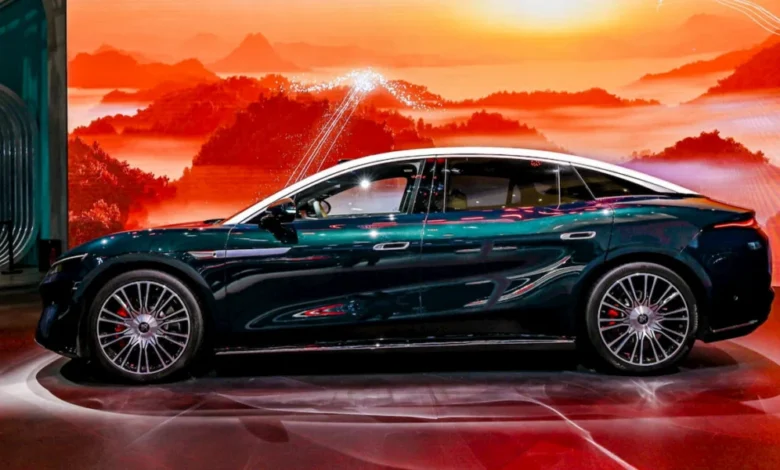
Automotive giant BYD is preparing to officially launch its highly anticipated flagship electric vehicle, the Great Han (known domestically in China as the Da Han), on October 13. Representing a major milestone for the company’s Dynasty family, the Great Han is BYD’s premier D-segment sedan, designed to compete directly with established luxury heavyweights in the global electric vehicle market. The official release follows a robust pre-order campaign that kicked off at the Chengdu Auto Show on August 21, where the vehicle commanded significant consumer interest thanks to its aggressive starting price of approximately $37,200 USD (249,900 yuan).
The vehicle’s upcoming market debut underscores BYD’s aggressive push upmarket into the luxury and full-size vehicle segments. By combining staggering driving ranges, advanced battery architecture, cutting-edge suspension systems, and luxury amenities at a competitive price point, the Great Han aims to redefine consumer expectations for flagship electric mobility.
Chronology of the Great Han Development and Launch
The journey of the Great Han from concept to production showroom has progressed at a rapid pace, reflecting the broader velocity of China’s booming electric vehicle sector.
The vehicle first entered the public consciousness in June, when it appeared in a batch of new energy vehicles approved for sale by China’s Ministry of Industry and Information Technology (MIIT). This regulatory filing provided automotive analysts and enthusiasts with their first sneak peek at the physical dimensions and core specifications of BYD’s upcoming full-size sedan.
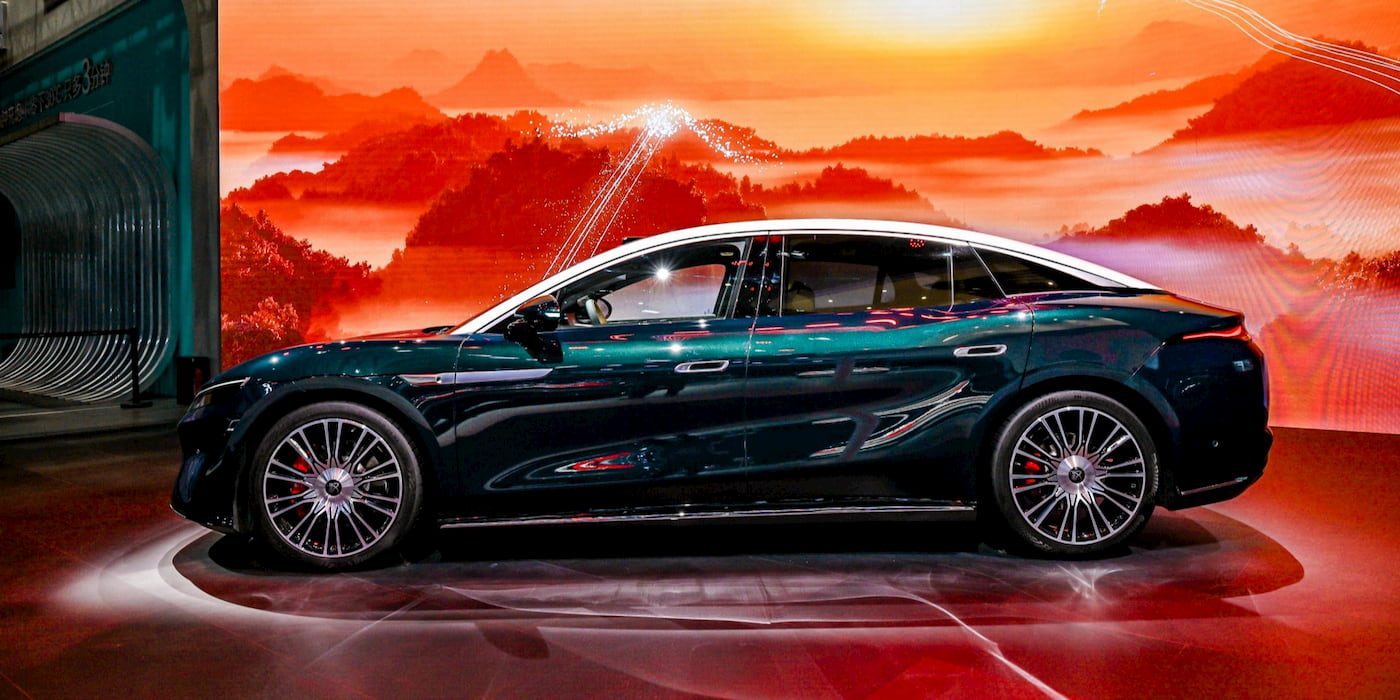
Following the MIIT disclosure, BYD’s leadership officially confirmed the vehicle’s development trajectory. Lu Tian, general manager of BYD’s Dynasty series, officially verified the vehicle’s branding and announced the October 13 launch date, setting the stage for the formal commercial rollout.
Momentum accelerated significantly on August 21 at the Chengdu Auto Show, where BYD officially opened pre-orders for the Great Han. The public debut at the auto show served as a critical testing ground for market reception, yielding strong initial order numbers that validated the company’s pricing strategy. With pre-orders underway and production lines fully primed, the upcoming October 13 event marks the final transition from pre-market anticipation to customer deliveries.
Detailed Specifications and Powertrain Variants
The Great Han will be offered in three distinct variants, catering to varying performance preferences while maintaining high baseline specifications across the board. The lineup is split between two rear-wheel-drive (RWD) options—the Premium and the Flagship—and one high-performance all-wheel-drive (AWD) option.
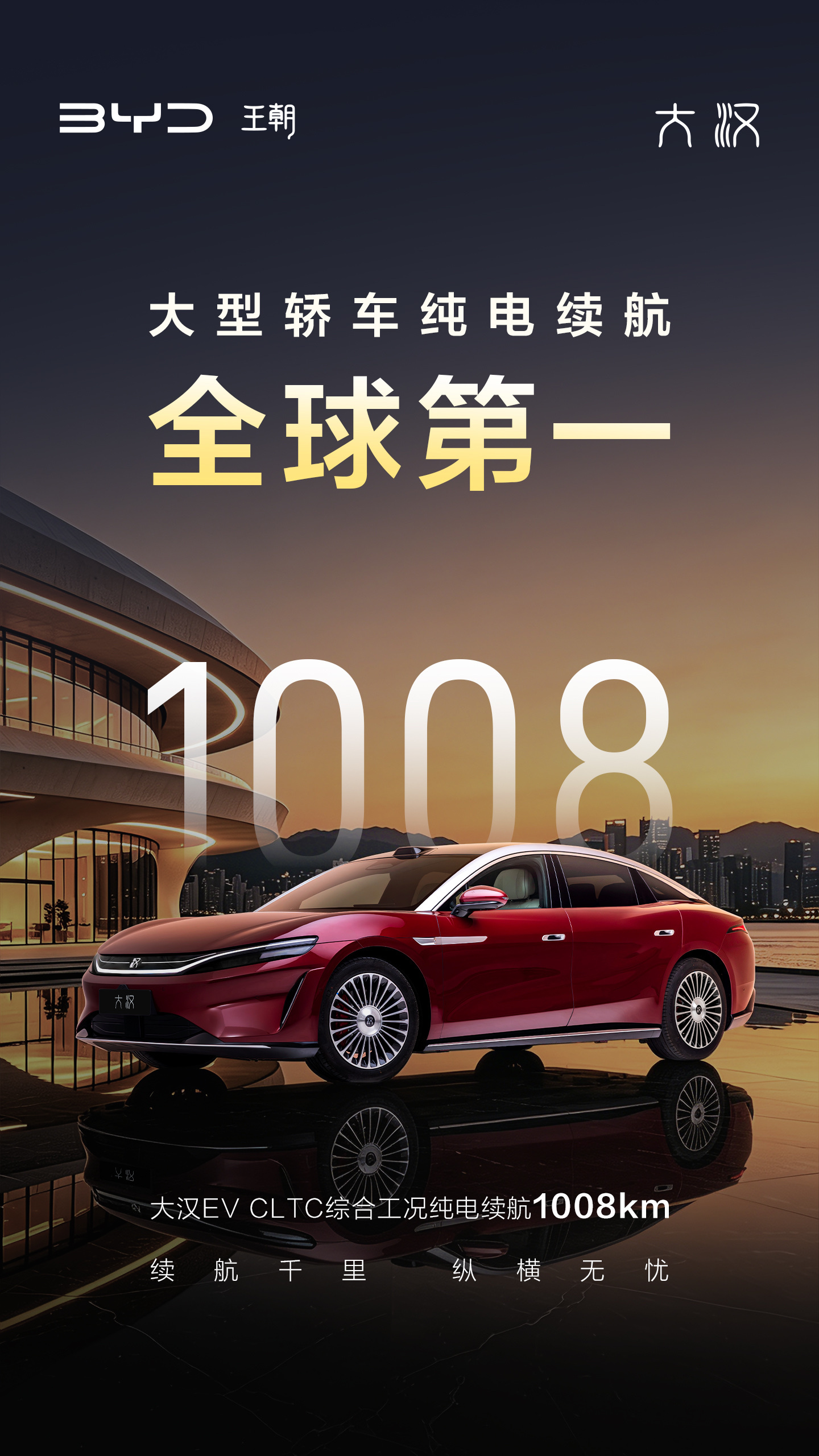
The RWD Premium starts at 249,900 yuan ($37,200), while the RWD Flagship is priced at 269,900 yuan ($40,200). Both rear-wheel-drive variants utilize a single electric motor outputting 370 kW (496 horsepower). Paired with a substantial 102.326 kWh battery pack, these models achieve an impressive CLTC driving range of up to 1,008 kilometers (626 miles) on a single charge.
For drivers seeking enhanced traction and more aggressive performance, the AWD variant adds a front electric motor, bringing the combined power output to a staggering 570 kW (764 horsepower). Although it shares the same 102.326 kWh battery pack as its rear-wheel-drive counterparts, the added energy draw of the dual-motor setup results in a slightly reduced, yet still exceptional, CLTC range of 880 kilometers (546 miles).
Revolutionary Battery Technology and Flash Charging Infrastructure
At the technical core of the Great Han are BYD’s proprietary innovations in energy storage and replenishment. All variants of the flagship sedan come equipped with the company’s next-generation Blade Battery 2.0. This advanced battery architecture continues BYD’s industry-leading safety standards while improving energy density to support the vehicle’s class-leading range figures.
Equally notable is the integration of BYD’s new Flash Charging technology. Utilizing ultra-high-power 1,500 kW charging infrastructure, the Great Han is capable of replenishing its state of charge at unprecedented speeds. According to official performance metrics, the vehicle can recharge from 10% to 70% in a mere 5 minutes. Furthermore, completing a near-full charge from 10% to 97% takes just 9 minutes, drastically mitigating range anxiety and reducing charging downtime to levels comparable to refueling internal combustion engine vehicles.
Dimensions and Exterior Footprint
In terms of physical size, the Great Han occupies a commanding footprint on the road. The flagship sedan measures 5,256 mm in length, 1,999 mm in width, and 1,510 mm in height, anchored by a generous wheelbase of 3,130 mm.
These dimensions place the Great Han firmly in the upper echelon of full-size luxury sedans. Notably, it surpasses popular global electric vehicles such as the Tesla Model S and the Lucid Air in overall physical dimensions. In terms of size and road presence, the Great Han is comparable to the long-wheelbase variant of the Mercedes-Benz S-Class, signaling BYD’s intent to capture market share traditionally dominated by legacy European luxury automakers.

Cabin Luxury, Suspension, and Smart Driving Systems
Beyond its raw powertrain and battery statistics, the Great Han is packed with high-end hardware designed to deliver an executive-level ride quality. Following the design philosophy established by BYD’s flagship Great Tang SUV, the sedan includes an extensive suite of luxury features as standard equipment.
Passenger comfort is prioritized through the inclusion of zero-gravity front seats, which are engineered to reduce physical fatigue on long-distance journeys. Handling and ride stability are managed by BYD’s advanced DiSus-A dual-chamber air suspension system, which dynamically adjusts damping to isolate the cabin from road imperfections. Additionally, the inclusion of rear-wheel steering enhances maneuverability at low speeds while improving high-stability lane changes, effectively reducing the turning radius of a vehicle of this substantial length.
On the technological front, all Great Han models feature BYD’s proprietary "God’s Eye B" smart driving system. This advanced driver-assistance system (ADAS) suite delivers sophisticated capabilities, including Navigation on Autopilot (NOA) for highway and urban transit, as well as automated remote parking features to assist drivers in tight spaces.
Broader Industry Context and Strategic Implications
The launch of the Great Han represents far more than the introduction of a new model; it is a strategic chess move in BYD’s broader corporate evolution. Having firmly established its dominance in the mass-market and affordable electric vehicle segments, the company has spent the past several years aggressively scaling upmarket.

This upward trajectory includes the successful rollout of the Great Tang SUV, as well as a series of sophisticated, high-end vehicle releases under its dedicated luxury brand, Denza. By introducing a vehicle with the technical specifications and luxury appointments of the Great Han at a starting price point under $40,000, BYD is exerting intense pricing pressure on both domestic competitors and legacy international automakers operating within China.
Analysts observing the Chinese electric vehicle market note that the introduction of ultra-fast 1,500 kW flash charging paired with a 1,000+ kilometer range benchmark sets a new competitive threshold for the industry. As traditional automakers struggle to match the vertical integration and cost efficiencies mastered by BYD, the launch of the Great Han on October 13 will likely force a re-evaluation of product development timelines across the global automotive landscape.
As pre-orders continue to convert into firm sales and the official launch date approaches, attention will turn toward how quickly BYD can scale production to meet demand, and whether the company plans to export this flagship platform to international markets, where a luxury sedan with these specifications could disrupt established Western and Asian competitors.
Related posts: