The Rise of the Chosen Caregiver: How Friends and Neighbors Are Filling America’s Eldercare Void


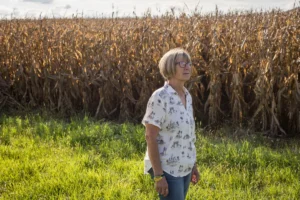
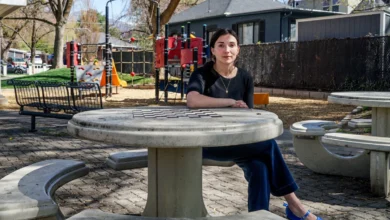
For years, Nicole Straight and Patricia Wood lived merely as acquaintances across the street from one another in Sausalito, California, trading polite greetings and the occasional cup of coffee. That casual dynamic underwent a profound transformation last October following a severe accident. Wood, then 92, suffered a bad fall that resulted in a broken neck, necessitating a grueling three-month stint in a rehabilitation facility. Upon returning to the home she shares with her niece, Wood found herself unable to ambulate without physical assistance.
"I still don’t dare go up and down stairs unless someone is with me," said Wood, now 93 and a retired insurance executive.
The physical limitations imposed by her recovery fundamentally reshaped her relationship with Straight, a 53-year-old retired chef. Today, Straight visits on a weekly basis, arriving bearing lattes, baked goods, and leftovers from home-cooked meals. Straight’s husband has also integrated himself into the support network, installing a grab bar in Wood’s bathroom, mounting shelves, and replacing burnt-out light bulbs and smoke detector batteries. Constant text messaging bridges the physical gap between their homes. When Straight embarks on grocery runs, she routinely checks in via text to take inventory of Wood’s needs, bypassing the older woman’s driving restrictions to keep her pantry stocked.
"She is a gift from heaven," Wood said. "We talk and talk. Sometimes we shed a few tears, but mostly we laugh. I never thought I’d have a new best friend at this time of my life."
Wood and Straight’s evolving relationship is part of a broader, nationwide shift in eldercare. Traditionally viewed through the strict lens of familial obligation—where spouses and adult children shoulder the responsibility of aging relatives—caregiving in the United States is rapidly adapting to significant demographic transformations.
Demographic Shifts and the Longevity Crisis
Sociologists and demographers point to several concurrent trends that are reshaping how older adults navigate physical decline. Chief among them is the rising population of individuals aging without the traditional safety nets of marriage or children.
"The number of older adults who have never married or are divorced has been increasing, so we have more people aging alone," explained Deborah Carr, a sociologist at Boston University who has extensively researched these trends. Furthermore, Carr noted that the proportion of childless adults, whether by choice or circumstance, is steadily growing, while families that do have children are experiencing declining birth rates compared to previous generations.
Compounding these structural shifts are geographic dispersion and family estrangements. As career opportunities and housing costs scatter families across vast distances, elderly individuals frequently find themselves isolated from their biological next-of-kin. Even when familial ties remain intact, geographical barriers can render daily assistance impossible, leaving a vacuum that local social networks must fill.
These evolving dynamics have forced a reevaluation of who constitutes a caregiver in modern society, thrusting friends, neighbors, and community members into vital support roles that were once exclusively managed behind closed family doors.
Quantifying the Phenomenon: Data from Recent Studies
While anecdotal accounts of neighborly assistance are common, recent empirical research has begun to measure the true scale of friend-and-neighbor caregiving on a national level.
A landmark study published in JAMA Network Open, spearheaded by researchers at the University of Michigan, sought to quantify the prevalence of friends and neighbors serving as supplementary caregivers. Investigators utilized data from the National Health and Aging Trends Study, which examined more than 2,600 older adults with health limitations, averaging 79 years of age.
While immediate family members remain the primary source of eldercare, the study revealed that approximately 14% of participants identified friends or neighbors acting in caregiving capacities. Researchers extrapolated this figure to estimate that approximately 2.4 million older Americans rely on friends for caregiving support nationwide.
These findings align closely with other major assessments. A comprehensive national survey conducted by AARP and the National Alliance for Caregiving placed the proportion of caregivers supporting nonrelatives at 11%.
"Friends are among the auxiliary caregivers who have not been acknowledged," said Karen Fingerman, a gerontologist at the University of Texas at Austin and co-author of a commentary accompanying the JAMA Network Open study. "We neglect the sacrifices they make."
Distinct Patterns: How Friend Caregivers Differ from Family
The Michigan study, widely regarded as the first nationwide examination of its kind, uncovered distinct operational differences between familial and non-familial caregivers. Most notably, friends are significantly less likely to reside with the care recipient and rarely act as the sole provider of care.
"They provide fewer care hours," said Yee To Ng, a gerontologist and the lead author of the study. According to the research, friends supplied an average of 18 hours of help per month, compared to roughly 67 hours logged by family members.
The nature of the tasks performed also diverges sharply along the lines of relationship type.
"Friends are more likely to provide transportation," Ng noted.
Data from the study showed that two-thirds of caregiving friends actively drive their peers to destinations. Shopping, assisting with outdoor mobility, preparing meals, and accompanying recipients to medical appointments round out the top five most common tasks performed by nonrelatives.
Consider the experience of Czes Ferrino, an 82-year-old widow living alone in Westerly, Rhode Island. Ferrino maintains her independence and navigates daily life without major disabling health conditions, but she faced a sudden crisis when her automobile broke down permanently. Her next-door neighbor stepped in, accompanying her across multiple dealerships to help her evaluate and purchase a reliable used vehicle.
"He walked me through it like a son would for a mother or grandmother," Ferrino said.
However, clear boundaries exist regarding what friends are willing or equipped to handle. Personal care tasks—such as bathing, dressing, and toileting—remain overwhelmingly within the domain of family members.
"Those can infringe on people’s self-esteem," Ng explained. "With family, we accept that when you’re really ill, they step up with intimate activities. It’s embarrassing to have your friends help you use the toilet."
Profiles of Friend-Assisted Aging
The demographic profile of older adults who rely on friends tends to skew distinct from those who rely solely on relatives. According to the JAMA Network Open data, respondents who named friends as caregivers were generally younger than those dependent entirely on family, and they were markedly more prone to holding college degrees. Fingerman attributes this correlation to the reality that higher education levels are typically associated with larger, more robust social networks.
Unsurprisingly, those assisted by friends were also far more likely to be unmarried and living alone.
Ann Greenwater, an 84-year-old resident of a mobile home park in rural Humboldt County, California, exemplifies this demographic. Greenwater managed her household independently until severe back pain left her bedridden for nearly three months. Although she has since regained her mobility and manages basic housekeeping, cooking, and personal care, she admits, "I’ve never really fully recovered."
Unmarried and possessing no close family beyond a distant nephew with whom she shares little contact, Greenwater stopped driving long ago. Into that vulnerability stepped a dedicated cadre of friends she met through a nearby Zen Buddhist center.
Milli Quam, 86, routinely handles Greenwater’s laundry, occasionally picking up medical prescriptions along the way. Another friend, aged 73, assists with computer troubleshooting, while this individual and several others alternate driving Greenwater to the grocery store or shopping on her behalf. Furthermore, local volunteer organizations provide transportation to her medical appointments.
"I love Ann, and I’m happy there’s something concrete I can do," Quam said. "I hope I can keep doing it for a long time."
Advantages, Vulnerabilities, and Policy Gaps
While friend caregiving provides an invaluable lifeline, researchers emphasize that this model carries unique vulnerabilities compared to traditional family structures.
On the positive side, generational alignment often fosters deeper emotional resonance. "Our friends are our own age and understand what we’re going through," Carr noted. "They may have more empathy and sometimes real knowledge they’ve acquired." When integrated alongside family efforts, the contributions of friends can substantially mitigate caregiver burnout.
Conversely, nonrelatives can represent a less stable source of long-term assistance. Neighbors relocate, and interpersonal strains can erupt if an aging individual’s needs become overly burdensome. Because friendships are built upon expectations of egalitarian reciprocity, the inherent asymmetry of a caregiving dynamic can induce guilt in the recipient and frustration in the helper. A separate study co-led by Carr found that these relational strains can exacerbate depression in older adults dealing with physical limitations.
Furthermore, the public policy landscape offers virtually no structural support for non-familial caregiving arrangements. Employment protections designed to accommodate caregivers largely ignore friendships.
"The federal Family and Medical Leave Act, for instance, with rare exceptions does not provide job-protected leave from work to care for a friend with a serious health condition," explained Laura Lawless, a labor and employment lawyer with Squire Patton Boggs.
Societal expectations similarly reinforce these disparities. "For family, ‘through thick and thin’ is the expectation," Carr said. "There’s huge stigma to being estranged from your family, but it’s kind of normal for some friendships to just fall away."
Looking Ahead
Despite the inherent fragility of friend-based support networks, many older adults and their chosen caregivers remain focused on the present. In Sausalito, Wood jokingly issues ultimatums to Straight, declaring that her neighbor "is not allowed to move until I die."
In Humboldt County, Greenwater expresses profound gratitude that her community of friends has remained steadfast. Yet, the reality of aging applies equally to those rendering aid. Quam, at 86, acknowledges that she, too, may soon reach an age where she must surrender her car keys.
"I’m wondering what will happen when these friends aren’t able to come to me," Greenwater reflected. "I guess we’ll deal with it when it comes."