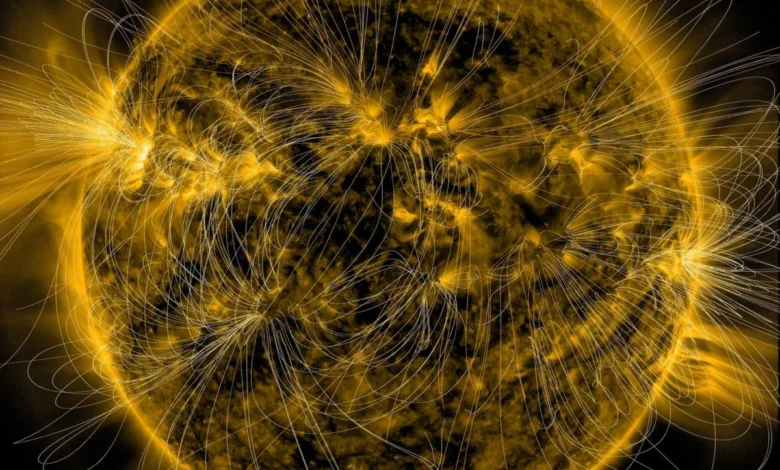
For decades, the standard model of solar physics has relied on a phenomenon known as magnetic reconnection to explain the sun’s most violent outbursts. This process, where magnetic field lines snap and reform, releases enormous amounts of energy that power solar flares and coronal mass ejections. Now, a groundbreaking theoretical study suggests that this behavior is not limited to magnetism alone. According to new research derived from Einstein’s general theory of relativity, gravity may also possess the capacity to undergo "gravitational reconnection," where sheet-like structures within the gravitational field break apart and rearrange, potentially reshaping our understanding of spacetime dynamics.
The Physics of Reconnection: From Magnetism to Gravity
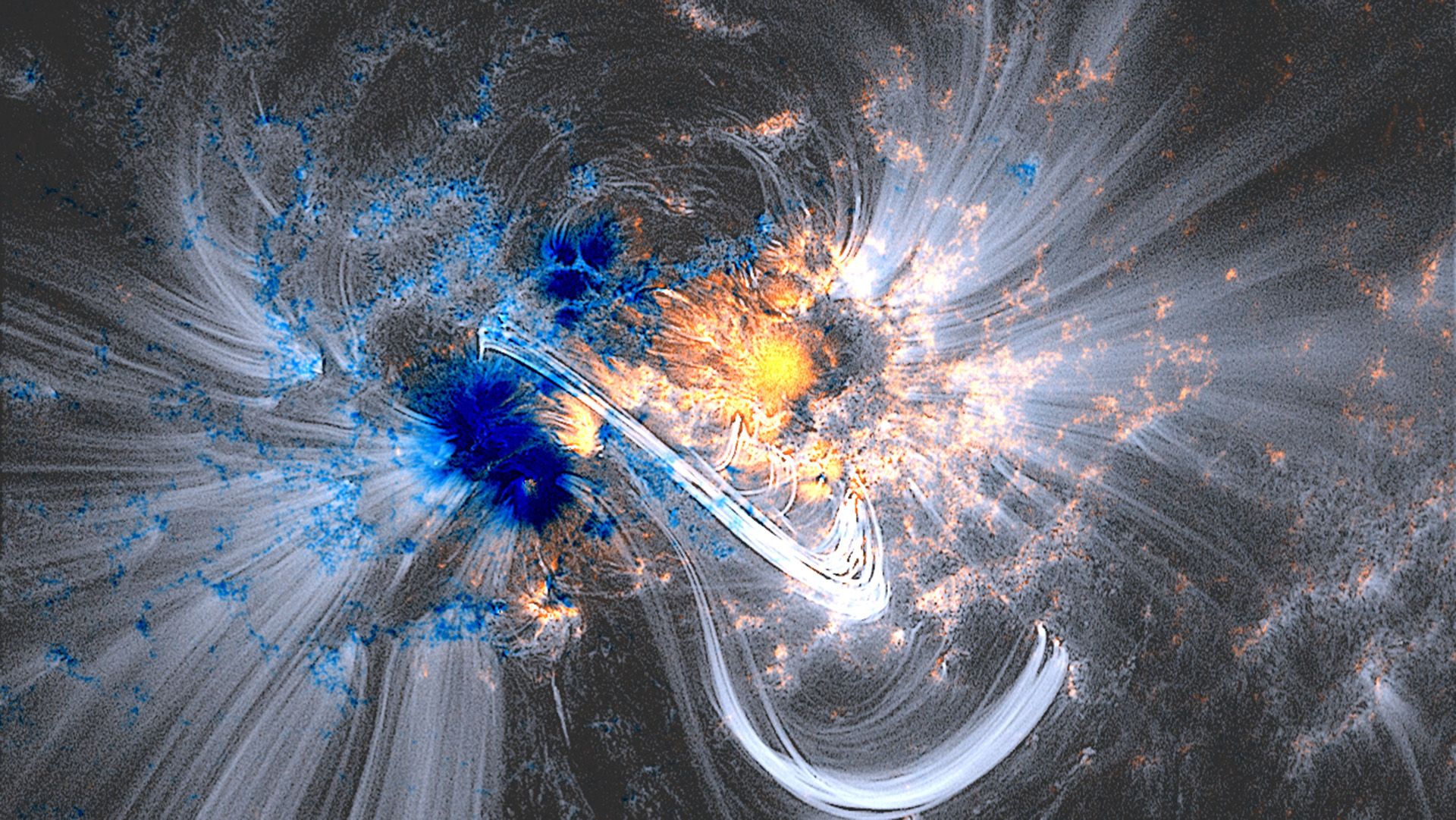
In the context of the sun, magnetic reconnection occurs when oppositely directed magnetic field lines are forced together. As these lines meet, they "break" and reconnect into new configurations, converting magnetic potential energy into kinetic energy and heat. This mechanism is the primary driver of the energetic phenomena that periodically bombard Earth’s magnetosphere.
The new theoretical framework posits that gravity, described by Albert Einstein as the curvature of spacetime, could experience a strikingly similar evolution. Gravity is typically envisioned as a smooth, continuous fabric that warps in the presence of mass. However, at extreme scales or under specific mathematical conditions derived from the Einstein field equations, this fabric may form "sheets" of concentrated gravitational energy. Just as magnetic field lines act as conduits for energy, these gravitational sheets could theoretically undergo a snapping process, releasing energy in a manner analogous to solar flares—a hypothesis that opens a new frontier in high-energy astrophysics.
A Chronology of Theoretical Development
The concept of gravitational reconnection does not exist in a vacuum; it is the culmination of nearly a century of research into the nature of spacetime.
- 1915: Albert Einstein publishes his General Theory of Relativity, establishing that gravity is the curvature of spacetime caused by mass and energy.
- 1950s–1970s: Physicists develop the theory of magnetic reconnection to explain the solar corona’s high temperature and the origin of solar flares.
- 2010s: Advanced computational simulations begin to show that general relativity allows for non-linear structures in gravitational fields that are more complex than simple, smooth curves.
- 2024: Researchers publish the current theoretical model suggesting that the mathematical properties of gravity’s "singularities" or "sheets" allow for reconnection events, mirroring the topological changes seen in plasma physics.
This evolution represents a shift from viewing gravity as a passive background force to an active, dynamic field capable of sudden, high-energy structural transitions.
Analyzing the Implications of Gravitational Reconnection
The primary question facing the scientific community is whether these gravitational reconnection events could be observed in the universe. If gravity can indeed "snap" and reconnect, the release of energy would be cataclysmic. Unlike magnetic reconnection, which primarily affects plasma, a gravitational reconnection event would involve the rearrangement of the geometry of spacetime itself.
Experts suggest that the most likely candidates for observing such phenomena would be in the vicinity of extreme gravitational environments, such as the event horizons of black holes or the mergers of neutron stars. In these regions, the gravitational field is stretched to its breaking point. If a reconnection event occurred, it would likely produce a distinct signature in the form of gravitational waves—ripples in spacetime that were first detected by the LIGO observatory in 2015.
Fact-based analysis of this theory suggests that if gravitational reconnection is confirmed, it could solve long-standing puzzles in astrophysics, such as the origin of high-energy gamma-ray bursts or the mechanism behind the sudden acceleration of matter near supermassive black holes. Furthermore, it provides a crucial bridge between classical general relativity and the elusive goal of quantum gravity, as it demonstrates that the "fabric" of space can have discrete, breakable properties.
Expert Perspectives and Scientific Skepticism
While the theoretical study is being met with interest, it is currently in its nascent stages. Theoretical physicists emphasize that this is a mathematical exploration rather than a confirmed observational fact. The challenge lies in the fact that, unlike magnetic fields which can be measured with localized instruments, gravity is pervasive and difficult to isolate.
Dr. Elena Vance, an astrophysicist unaffiliated with the study, noted that the mathematical mapping between magnetic reconnection and gravitational field dynamics is "highly suggestive" but requires significant empirical validation. "The challenge," Vance explains, "is that we are looking for a signal of spacetime reconfiguration that is essentially masked by the overwhelming mass-energy of the objects creating the gravity in the first place. We need to distinguish between the gravity of a star and the ‘snapping’ of the gravitational field itself."
Other critics point out that the energy required to trigger such a reconnection event in gravity would be orders of magnitude higher than anything currently observed in the solar system. Consequently, the theory remains a test of the limits of general relativity rather than a phenomenon that would impact the daily stability of planetary orbits or solar activity.
The Broader Impact on Cosmology
The implications of this research extend far beyond solar flares or black hole dynamics; they touch upon the fundamental structure of the universe. If spacetime can "reconnect," it suggests that the geometry of the universe is not as immutable as previously thought. This could have profound consequences for our understanding of the early universe, particularly during the inflationary period immediately following the Big Bang, where high-energy density might have facilitated constant gravitational reconnection events.
Furthermore, this study invites a re-evaluation of how dark matter—which exerts significant gravitational influence without interacting with electromagnetism—might behave. If dark matter forms structures similar to gravitational sheets, it is possible that dark matter itself could undergo these reconnection events, potentially explaining mysterious bursts of radiation or gravitational anomalies that have puzzled cosmologists for years.
Future Directions: Moving from Theory to Observation
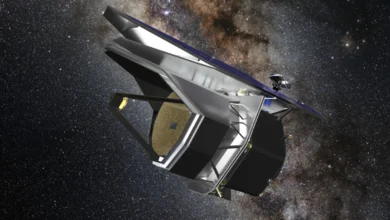
As researchers continue to refine these models, the next step involves high-fidelity computer simulations that can model the interaction of gravitational sheets under extreme density. These simulations will serve as a roadmap for future gravitational wave detectors, such as the proposed LISA (Laser Interferometer Space Antenna), which will be capable of detecting lower-frequency gravitational waves than current terrestrial observatories.
By providing a clear set of theoretical predictions—such as specific frequency patterns in gravitational waves—this study provides a measurable target for the next generation of space telescopes. If detectors can identify the specific "snap" signature predicted by the theory, it would confirm that gravity, like magnetism, is a dynamic and volatile force.
In conclusion, the hypothesis of gravitational reconnection represents a bold synthesis of plasma physics and general relativity. While we are still far from witnessing a "gravitational flare" in the night sky, the research provides a vital new lens through which to view the structure of our universe. It challenges the traditional view of a static, predictable spacetime and suggests that the very foundation of our existence may be more turbulent and prone to dramatic shifts than even Einstein himself might have anticipated. As the scientific community continues to probe these mathematical possibilities, we move closer to a deeper, more unified understanding of the forces that govern the cosmos.