Bridging the Rural Healthcare Divide: The Complex Reality of the Make America Healthy Again Movement

Rural America has long served as a cornerstone for conservative political power, with voters in non-metropolitan counties reliably delivering crucial margins for Donald Trump and the Republican Party in successive election cycles. Yet, a comprehensive new national survey published by The Associated Press in partnership with KFF reveals a profound and widening disconnect between the federal administration’s signature healthcare initiatives and the daily lived experiences of the citizens who reside outside major urban centers. While approximately half of all rural voters readily identify with the principles of the Make America Healthy Again (MAHA) movement—a sprawling populist health campaign heavily championed within the Trump administration—an overwhelming majority report that current federal policies have failed to meaningfully improve the healthcare landscape in their communities.
The nationwide poll, which surveyed more than 2,000 registered rural voters, exposes a complex web of political alignment, grassroots optimism, and deep-seated economic anxiety. Approximately 8 in 10 rural respondents asserted that the Trump administration’s policies have either had no impact or exerted a genuinely negative effect on the overall health and well-being of their local populations. Intriguingly, this sentiment is not isolated to political opponents; even among dedicated supporters of the MAHA movement, nearly 68 percent share the assessment that federal interventions have yet to translate into tangible local health improvements. This duality highlights a central tension in contemporary rural politics: while the underlying philosophy of the MAHA platform resonates deeply with voters concerned about chronic illness, processed foods, and corporate agriculture, the execution and perceived reach of federal policy leave many communities feeling overlooked.
Grassroots Perspectives and the Appeal of MAHA
The appeal of the MAHA framework is deeply rooted in the daily realities of rural life, where environmental exposures, high rates of chronic disease, and a pervasive sense of institutional neglect converge. For many residents, health concerns are not abstract policy debates but visible, localized crises.
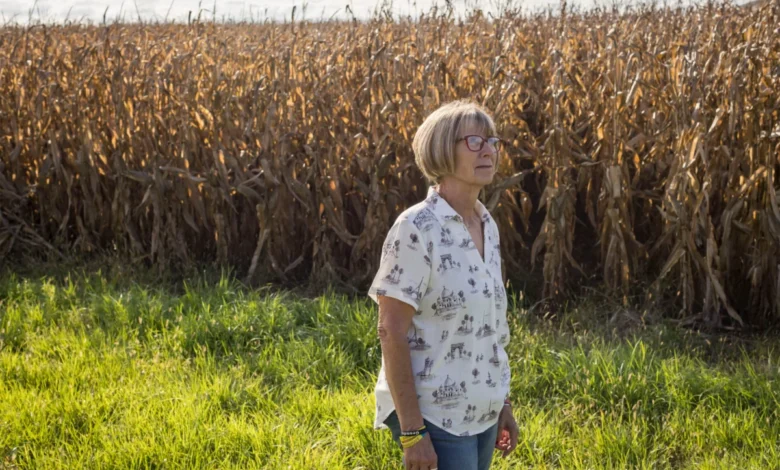
Take, for instance, Mike Jager, a 58-year-old registered Republican and pastor living in Sumner, Iowa. Jager’s home sits just on the periphery of vast agricultural acreage, a geography that mirrors his personal anxieties regarding chronic illness. Over the years, Jager has watched family members and neighbors grapple with severe medical conditions, which he and many in his community attribute to long-term exposure to agricultural chemicals and the pervasive consumption of ultraprocessed foods. Jager openly acknowledges that the Trump administration’s overarching health policies have yielded only "minimal" impact in his corner of the state. Nevertheless, he maintains a hopeful outlook, largely because of the direction charted by Health and Human Services Secretary Robert F. Kennedy Jr.
"It’s a beginning," Jager remarked, capturing a sentiment shared by many in the movement. "It’s a big ship to try and turn around and course-correct." Jager’s political engagement reflects this localized alignment; during the June Republican primary for governor of Iowa, he cast his ballot for Zach Lahn, a business owner and farmer who ran explicitly on a MAHA platform and successfully defeated Trump-backed U.S. Rep. Randy Feenstra.
The MAHA movement, heavily amplified by Kennedy since he joined the administration, touches upon several unorthodox and populist themes. These include breaking away from long-standing federal vaccine guidance, launching extensive federal research into ultraprocessed foods, and redirecting agricultural subsidies toward regenerative farming practices. For voters like Jager, these talking points strike a chord because they directly challenge corporate agricultural norms and pharmaceutical giants—entities that many rural residents blame for soaring regional cancer rates.
However, the movement’s reception is far from uniform across the political spectrum. Donna Klocke, a 71-year-old Democrat who operates a 200-acre farm in Carroll County, Iowa, shares the community’s deep anxieties surrounding cancer—having lost her husband to the disease and watching multiple neighbors battle similar diagnoses. Yet, while Klocke agrees that personal health and clean living are vital, she firmly rejects the MAHA label and views figures like Kennedy with deep apprehension. Citing Kennedy’s historical role as an anti-vaccine activist and his mixed messaging regarding the measles vaccine, Klocke fears that a departure from established public health consensus could invite the resurgence of preventable infectious diseases.

"Measles are coming back and polio," Klocke said. "It’s the measles that really gets me. It’s like, do you not understand how dangerous it is?"
Structural Deficits: Infrastructure and Cost Pressures
Beneath the ideological debates over food systems and federal health priorities lies a harsher, more immediate crisis: the steady erosion of rural healthcare infrastructure. The KFF-AP survey underscores a profound level of community angst regarding basic medical access, rising household expenses, and the structural vulnerabilities of rural safety-net programs.
Data from the poll reveals that roughly half of all rural voters believe their communities suffer from a severe shortage of primary care physicians and clinical providers. The deficit is perceived as even more acute within mental health care, where the vast majority of rural residents report an inadequate supply of specialized practitioners. Furthermore, the survey highlights a dramatic acceleration in hospital scarcity: approximately 35 percent of rural voters now state that their community lacks a sufficient number of hospitals, marking a substantial increase from the 21 percent who reported the same concern in a comparable KFF-Washington Post survey conducted in 2017.
Coupled with infrastructure deficits are crushing financial pressures. More than six in 10 rural voters identified healthcare, gas, and grocery costs as their primary household pain points. These economic anxieties are sharply delineated by insurance coverage type. While rural residents covered by employer-sponsored plans or Medicare report lower levels of acute worry, the burden on vulnerable populations is severe. Among working-age rural adults enrolled in Medicaid, 80 percent reported being either very or somewhat worried about their ability to afford healthcare.
This anxiety is contextualized by recent federal policy shifts. Last year, congressional Republicans passed a major tax and spending package that slashed projected federal Medicaid spending by more than $900 billion over a decade while instituting stringent new eligibility requirements. Similarly, rural Americans who purchase private coverage independently—such as through the Affordable Care Act marketplace—face intense financial strain. In Lipan, Texas, Kim Solis and her husband run a small handyman and home remodeling business, relying on marketplace insurance for coverage. Following policy adjustments enacted during the current presidential term, Solis reported that her monthly premium jumped from zero to $166, while copays rose and individual deductibles increased by $2,000 each.
"Certainly, we’d be in a world of hurt trying to take money out of savings or getting it out of our 401(k) just to be able to do something about it," Solis said, voicing a fear common among independent workers in remote areas.
Political Implications and the MAGA-MAHA Intersection
The intersection of the Make America Great Again (MAGA) political identity and the Make America Healthy Again movement presents a delicate balancing act for Republican strategists, particularly as the nation approaches high-stakes midterm elections.

David Peterson, a professor of political science at Iowa State University, points out that voters are increasingly sensitive to what he characterizes as a "weird split" within the Trump administration. On one hand, the administration’s broader economic and fiscal policies—including reductions in public health spending and adjustments to insurance marketplaces—contribute to rising household costs and financial insecurity. On the other hand, figures like Kennedy travel the country promoting populist, anti-corporate health narratives that appeal to deep-seated frustrations with the medical-industrial complex.
"It’s this mix of things coming out of D.C., out of different pieces of the administration, that’s confusing people," Peterson explained. He notes that while the populist anti-corporate messaging around cancer rates and processed foods is politically potent, it creates cognitive dissonance when families find that the cost of healthy living remains out of reach due to broader economic pressures. Buying nutritious food often translates, in the minds of struggling consumers, to a luxury they cannot afford under prevailing economic policies.
Despite these contradictions, loyalty to individual leaders remains largely resilient along partisan lines. The survey indicates that rural voters overwhelmingly place their trust in their personal physicians and local healthcare providers above any government agency or federal official. When parsed by party affiliation, trust in Robert F. Kennedy Jr. and Donald Trump splits predictably: roughly 74 percent of rural Republicans express a "great deal" or "fair amount" of trust in Kennedy for reliable health information, compared with only 10 percent of rural Democrats. Similarly, roughly 69 percent of rural Republicans trust Trump on health matters, contrasted with just 5 percent of rural Democrats.
For non-ideological voters, the focus remains stubbornly practical. Alma Johnson, a 65-year-old night security worker at a horse farm in Stamping Ground, Kentucky, has voted for Trump in the 2016, 2020, and 2024 presidential elections and generally approves of his administration’s direction. Yet, Johnson emphasizes that she approaches politics independently rather than viewing herself as a partisan devotee.
While Johnson supports core MAHA concepts—noting her approval of restrictions preventing the purchase of junk food through the Supplemental Nutrition Assistance Program (SNAP)—she admits she has seen little measurable impact from federal health policies, such as updated dietary guidelines or the new federal food pyramid, in her daily life.
"It takes a long time to change people, their habits, their thoughts, or the things they do," Johnson observed.
Methodology and Broader Context
The findings of the KFF-AP Rural Voters Survey reflect data gathered between August 12 and August 24, 2026, encompassing responses from 2,241 registered voters residing in rural census tracts as classified by the U.S. Department of Agriculture’s Rural-Urban Commuting Area codes. Utilizing a hybrid methodology combining the probability-based SSRS Opinion Panel and a registration-based sample from the L2 voter file, the survey maintains an overall margin of sampling error of plus or minus 3 percentage points.
As the Trump administration continues to utilize the MAHA banner to mobilize voters ahead of the midterm elections—highlighted by high-profile appearances, regional bill signings, and grassroots campaigning—the intersection of public health rhetoric and economic reality remains a defining dynamic in rural America. While the cultural and ideological appeal of a healthier nation strikes a powerful chord among voters grappling with chronic illness and environmental concerns, the data suggests that bridging the gap between Washington’s policy pronouncements and the material well-being of rural communities will require addressing foundational deficits in healthcare access, medical infrastructure, and household affordability.