In the realm of advanced mathematics, the boundary between playful recreation and profound theoretical inquiry is often remarkably thin. Decades after it was first introduced to the academic community, a perplexing mathematical problem—widely believed to have been inspired by the physics and cadence of professional juggling—has finally been definitively resolved. A collaborative sequence of breakthroughs spanning multiple years and culminating in a groundbreaking paper has brought closure to a puzzle posed by the legendary mathematician and juggler Ronald Graham.
The successful resolution of Graham’s rearrangement conjecture represents a triumph of modern probabilistic methods, cross-disciplinary collaboration, and the relentless persistence of a new generation of mathematical minds. By deploying sophisticated techniques ranging from randomized algorithms to advanced Fourier analysis, researchers have unlocked the hidden structural flexibility within rigid number systems, putting to rest a question that had lingered in the mathematical ether since the early 1970s.
The Dual Lives of Ronald Graham and the Origins of a Conjecture
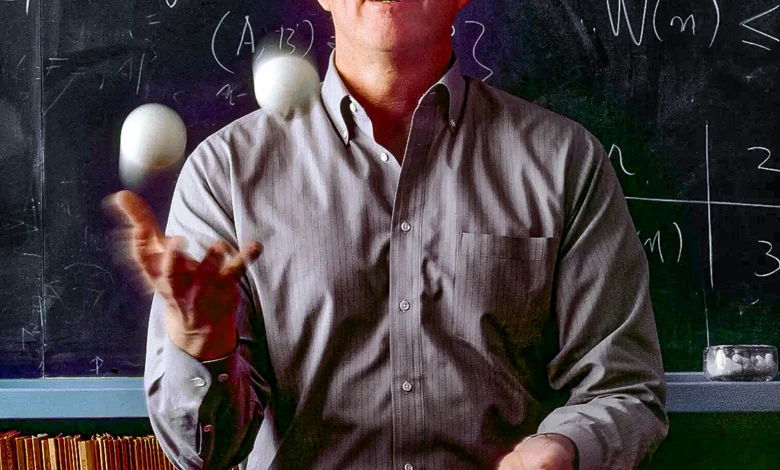
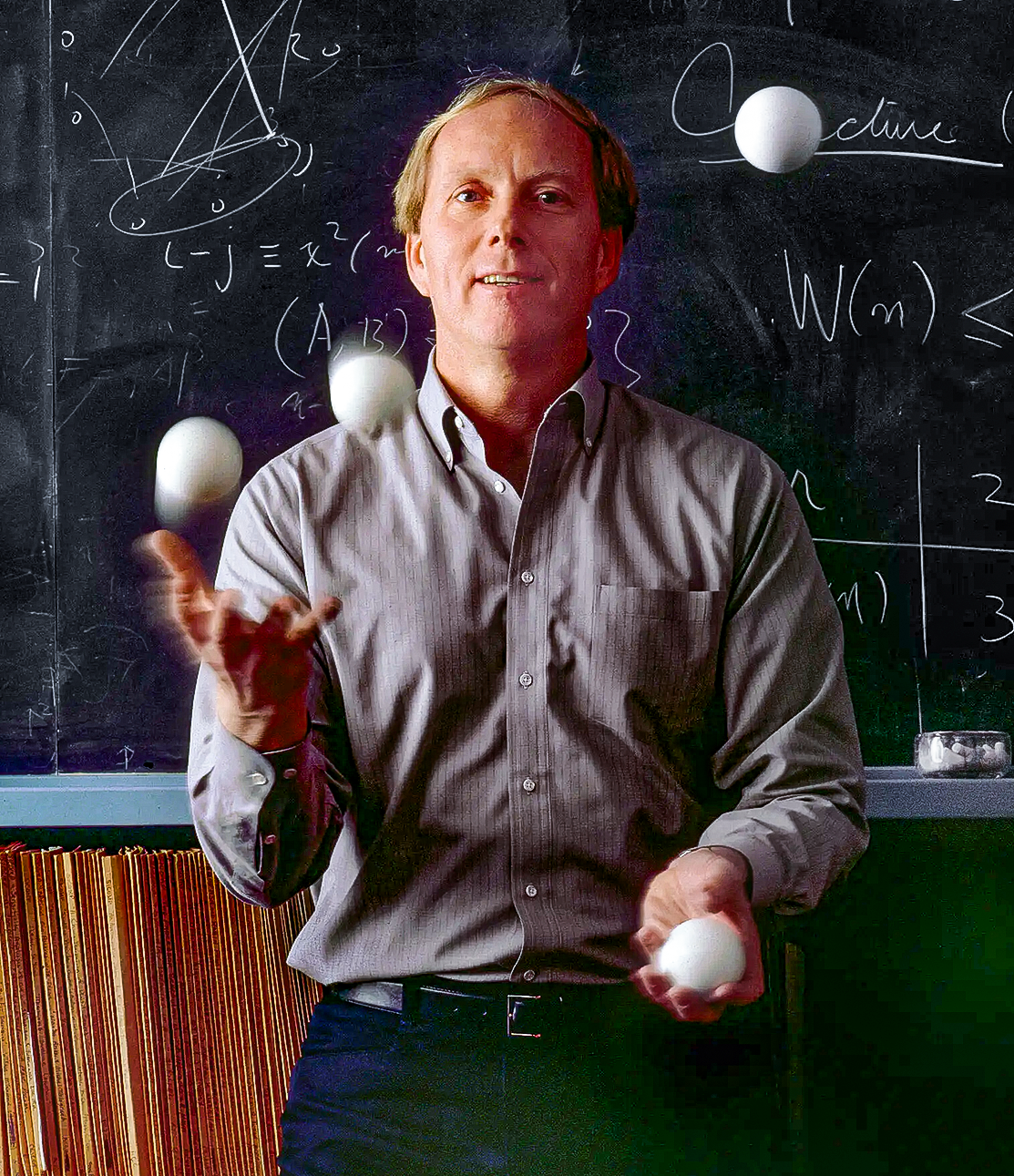
To understand the genesis of the problem, one must look to the extraordinary life of Ronald Graham. A titan of combinatorial mathematics and a former president of the American Mathematical Society, Graham maintained an equally passionate dedication to the performing arts. He served as the president of the International Jugglers’ Association, frequently blurring the lines between rigorous intellectual research and physical dexterity. Colleagues often recalled his penchant for spinning objects, tossing pens against walls, and exploring the geometric choreography of moving props.
Graham viewed this duality not as a contradiction, but as a natural consequence of the human brain’s relentless search for patterns and structure. This philosophical synthesis naturally bled into his academic output. Alongside his wife and fellow mathematician, Fan Chung of the University of California, San Diego, Graham co-authored numerous scholarly papers exploring the explicit mathematical foundations of juggling.
However, the specific problem that would eventually captivate a new generation was formally introduced by Graham in 1971, well before he formally published his works on juggling mathematics. The premise of the problem can be visualized through a simple framework: begin with a random set of distinct, non-zero integers. The core question asks whether these numbers can always be systematically rearranged so that every "partial sum"—the sum of the first two numbers, the first three, the first four, and so on—yields a completely unique value.
In the metaphorical language of juggling, this mathematical constraint mirrors a fundamental rule of performance. If each ball in a routine remains in the air for a distinct duration, a juggler must find an optimal sequencing of throws to ensure that no two objects land simultaneously, which would inevitably crash the act.
While the problem is trivial when dealing exclusively with positive numbers or an infinite number line where sums continuously expand, the true mathematical hurdle emerged when numbers are constrained within a finite system—specifically, clock arithmetic. In this modular environment, numbers wrap around a fixed cyclic limit based on a prime number, meaning that adding distinct positive integers can ultimately result in a sum of zero. Graham hypothesized that even within these rigid, repeating frameworks, enough underlying flexibility exists to guarantee a valid rearrangement. Yet, for decades, proving this intuition remained beyond the reach of the global mathematical community.

A Chronology of Breakthroughs: The Long Road to Resolution
The eventual dismantling of Graham’s conjecture did not happen overnight; rather, it unfolded through a gradual, multi-stage campaign executed by a young cohort of mathematicians working across different subfields of combinatorics.
The modern chapter of this mathematical saga began in earnest in 2022. Alp Müyesser, then a graduate student at the University of Oxford, was investigating problems requiring a delicate synthesis of random processes and deterministic corrections. Upon encountering Graham’s conjecture, Müyesser realized that his freshly minted doctoral research could be adapted to address it. Collaborating with his former adviser, Alexey Pokrovskiy of University College London, Müyesser tackled scenarios where the set of numbers comprises nearly every available integer up to the clock modulus limit.
Because constructing a valid sequence manually in such large sets is computationally and conceptually intractable, Müyesser and Pokrovskiy turned to probability. They discovered that while a purely random ordering of numbers would mostly succeed, it would occasionally generate troublesome intervals whose sums equaled zero. To counteract this, they engineered a method involving specially reserved spare numbers that could be inserted to repair flawed sequences. They posted their foundational technique in April 2022, though it was initially embedded within a broader paper addressing general combinatorial structures.
The narrative took an unexpected turn a couple of years later. Noah Kravitz, a mathematician at Oxford who was entirely unaware of Müyesser and Pokrovskiy’s ongoing efforts, stumbled upon Graham’s conjecture listed within an online repository of unsolved problems. Driven by a sentiment that it was "embarrassing for humanity" that such a fundamental question remained open, Kravitz decided to attack the problem from the opposite analytical extreme.
Partnering with Benjamin Bedert, also at Oxford, Kravitz focused on the inverse scenario: instances where the chosen set of numbers is extremely small relative to the clock’s modulus. By September 2024, the duo successfully posted a proof covering these sparse sets. Upon noticing the publication, Müyesser reached out, bridging the gap between their distinct methodological approaches. Joined by additional colleagues, this expanded coalition published a subsequent paper in August 2025 that managed to capture a broader array of large-set scenarios.
Despite these significant strides, a persistent and formidable middle ground remained untouched. Sets of medium size—those containing roughly half as many elements as the clock modulus—resisted all existing techniques. The collaborative methods developed thus far had hit a structural wall, threatening to cast the problem back into another multi-decade dormancy.
The Final Piece: Anti-Concentration and Fourier Analysis
The definitive breakthrough arrived in February 2026, courtesy of an intellectual partnership between Lisa Sauermann of the University of Bonn and Huy Tuan Pham of the University of Chicago. Longtime academic friends who first crossed paths at Stanford University in 2015, Sauermann and Pham reunited during an academic conference in Germany in late 2025. Inspired by presentations detailing the stalled progress on Graham’s conjecture, the two mathematicians utilized a brief research visit in Bonn to devise a novel strategy.
Intriguingly, Sauermann’s connection to the problem ran deeper than she initially realized. Decades prior, as a high school student representing Germany in the International Mathematical Olympiad, she had successfully solved a closely related problem. That historical puzzle had almost certainly been crafted by Fan Chung for the Olympiad committee, drawing direct inspiration from her husband Ronald Graham’s expansive catalog of intellectual puzzles.
Within three days of intensive chalkboard sessions, Sauermann and Pham formulated a plan to bridge the gap using a technically daunting mechanism known as anti-concentration. In probability theory, anti-concentration statements provide rigorous mathematical bounds guaranteeing that specific random events possess an exceptionally low probability of occurring. While prior researchers understood that anti-concentration might theoretically resolve the medium-set dilemma, the technical complexity had previously deterred them from attempting it.
Sauermann and Pham initiated their proof by randomly reordering the number sets and utilizing a stepwise repair protocol for any zero-sum subsequences. However, they systematically categorized the exact failure points of this repair process into three distinct "bad events": zero-sum sequences occurring too close to the end of an arrangement, clusters of zero-sum sequences occurring simultaneously, and corrective swaps inadvertently generating secondary zero-sum errors downstream.
To prove that the cumulative probability of these catastrophic failure events remained strictly below 100%, the duo deployed Fourier analysis—a powerful mathematical framework that decomposes complex functions into sums of simple wave components. By transforming the random number sets through the lens of Fourier analysis, they proved that no single partial sum was disproportionately likely to emerge, thereby smoothing out the probability landscape.
In February 2026, Sauermann and Pham uploaded a comprehensive 27-page manuscript to the arXiv preprint server. Their proof demonstrated that random orderings could be successfully repaired to eliminate problematic zero-sum sequences with a staggering success rate exceeding 90%. This final paper effectively spanned the remaining methodological chasm, securing a unanimous consensus that Graham’s rearrangement conjecture was fully resolved across all configurations.
Broader Implications and Mathematical Legacy
The closure of Graham’s conjecture carries significant conceptual weight within the mathematical community, even if its immediate practical applications remain abstract. The proofs collectively establish that under extreme modular constraints, underlying systemic order and structural flexibility naturally emerge. As Princeton mathematician Noga Alon noted, the resolution highlights the profound capability of probabilistic methods to extract definitive patterns from seemingly chaotic environments.
Nevertheless, theoretical limitations remain. The entire framework of the four foundational papers operates under the assumption that the clock modulus is unimaginably large—on the scale of ten raised to the 100th power. While this immense magnitude satisfies the rigorous demands of advanced number theory and abstract algebra, it prevents the immediate translation of the proofs into physical utility. A juggling routine corresponding to a modulus of that scale would require a performance duration that far exceeds human capabilities or cosmic lifespans.
Furthermore, minor technical avenues remain open for exploration regarding specific edge cases across arbitrary, non-prime clock boundaries. Yet, these minor caveats do little to diminish the scale of the achievement.
For the broader mathematical world, the successful collaboration across Oxford, Chicago, Bonn, and London serves as a testament to the vitality of contemporary combinatorics. Fan Chung, reflecting on the resolution of her late husband’s decades-old problem, observed that crafting a genuinely profound mathematical question is itself an artistic endeavor. With the final proof now formally documented, the algebraic community can rest assured that Ronald Graham’s intellectual juggling act has finally landed safely on its feet.