The landscape of physical media in the video game industry is undergoing a structural transformation, and Nintendo finds itself at a unique crossroads as it balances legacy support with evolving supply chain constraints. While industry peers like Sony have signaled a strategic pivot away from traditional physical game production, Nintendo remains a holdout, reaffirming its commitment to the cartridge format even as the economics of production become increasingly volatile. This commitment, however, is not without its challenges. The company’s reliance on specialized semiconductor suppliers for ROM chips, combined with shifting consumer habits, has created a complex environment where the cost of physical ownership is being recalibrated in real-time.
The State of Physical Media in 2026
To understand the current predicament, one must look at the semiconductor dependencies inherent in the Switch ecosystem. Nintendo’s physical distribution model relies heavily on ROM-based cartridges, which require specific fabrication processes provided by companies like Rohm and Lapis Semiconductor. As the industry moves toward higher-capacity, high-performance storage solutions, the legacy supply lines for these specialized chips have faced tightening margins. This scarcity, paired with inflation and broader logistics hurdles, has placed upward pressure on the unit cost of manufacturing physical media.
In recent months, this cost pressure has materialized as a direct fiscal strategy. Earlier this year, Nintendo moved to adjust the MSRP for select physical titles, resulting in a price disparity where physical copies often retail at a premium compared to their digital counterparts. This marks a departure from historical industry standards, where physical and digital editions traditionally launched at identical price points.
A Chronology of the Physical Shift
The transition toward a digital-first market has been a gradual, multi-year process that began in earnest during the previous console generation and accelerated during the COVID-19 pandemic.
- 2024: Nintendo continued to expand its digital storefront, the Nintendo eShop, while maintaining a robust physical release schedule. However, whispers of supply chain constraints began to circulate as production costs for high-capacity cartridges remained a significant percentage of per-unit retail value.
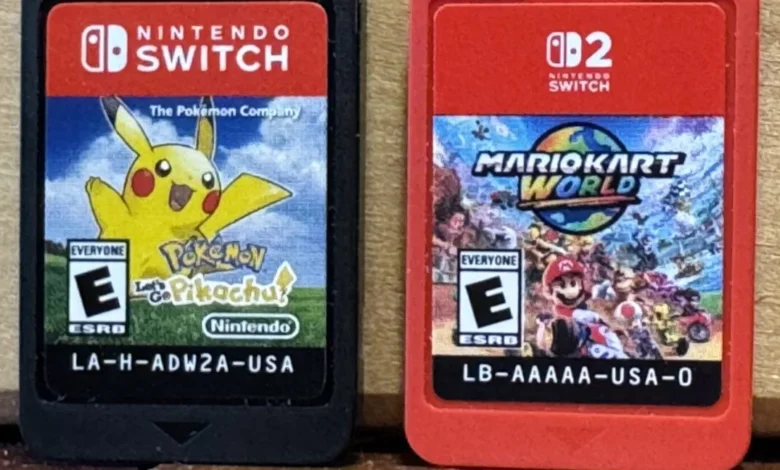
- December 2025: A pivotal moment occurred when Japanese publisher Inin announced its strategy for R-Type Dimensions III. The publisher explicitly stated that a full cartridge release was only financially viable due to the introduction of two new, smaller-capacity cartridge sizes for the Switch 2. This underscored the reality that for many third-party publishers, the cost-to-capacity ratio is the primary determinant of whether a game receives a physical release.
- March 2026: Nintendo officially implemented a pricing structure that effectively penalized physical consumers, charging more for physical Switch 2 games than digital equivalents. This move was interpreted by analysts as a necessity to recoup the rising costs of semiconductor procurement.
- July 2026: Official communications from Nintendo management confirmed that the company has no immediate plans to abandon physical cartridges, acknowledging the immense loyalty the fanbase holds for tangible media.
The Rise of Digital Dominance
The underlying tension between physical production and digital distribution is evidenced by the shift in Nintendo’s quarterly revenue streams. Data provided by market analyst David Gibson highlights a critical trend: during the second calendar quarter of 2026, digital software sales accounted for 61.5 percent of Nintendo’s business. This figure represents a steady, consistent growth pattern compared to the same period in 2025.
For Nintendo, this transition is both a benefit and a challenge. Digital sales offer near-100 percent margins, eliminating the costs of manufacturing, shipping, warehousing, and retailer middleman cuts. However, physical games remain a vital component of the "Nintendo brand experience." Collectors, gift-givers, and regions with poor high-speed internet infrastructure continue to demand physical products. The current strategy appears to be one of "managed decline" for physical media—maintaining the format to satisfy the core user base while incentivizing digital adoption through pricing structures.
Supply Chain Vulnerabilities: The Semiconductor Factor
The dependence on Rohm and Lapis Semiconductor is not merely a logistical concern; it is a strategic bottleneck. These firms specialize in specific types of mask ROM, which are essential for the read-only nature of Switch cartridges. Unlike NAND flash memory, which is widely available and used in everything from smartphones to SSDs, the specialized ROM required for Nintendo’s proprietary cartridges is not subject to the same economies of scale.
As semiconductor fabs pivot to newer, more lucrative technologies—such as AI-focused chips or automotive sensors—the legacy capacity available for Nintendo’s ROM chips becomes more expensive. If Nintendo were to attempt a massive production run for a high-demand title, it would be competing for fab space with industries that are willing to pay higher premiums, thereby forcing Nintendo to absorb or pass on those costs.
Official Stance and Industry Reactions
Nintendo’s official stance, reiterated by leadership in mid-2026, emphasizes that physical games are an essential part of the company’s DNA. This sentiment is rooted in the idea that Nintendo consoles are "family-first" devices, where physical gifts and shared ownership remain culturally significant.
However, industry observers suggest a disconnect between the corporate messaging and the fiscal realities. While Nintendo maintains that it will not follow Sony’s path, the market is dictating a different reality. Sony’s move to minimize physical disc production—a strategy fueled by the prevalence of high-speed internet and the ubiquity of PlayStation Plus—has provided a roadmap that Nintendo is watching closely, if not necessarily following.
Third-party publishers have been the most vocal about the difficulties. Many smaller developers have indicated that the cost of "printing" a cartridge—which includes the licensing fee, the manufacturing cost, and the shipping—can eat into as much as 20–30 percent of the total revenue generated by a physical unit. For a game that retails at $60, this significantly impacts the break-even point compared to a digital sale, which carries almost no variable cost.
The Long-term Economic Implications
The long-term implication of this trend is the potential for a "niche-ification" of physical media. Much like the resurgence of vinyl records in the music industry, physical games may eventually shift from being the standard method of distribution to being a premium collector’s item.
If the trend toward digital sales continues to climb—potentially reaching 70 percent or more by 2028—the manufacturing volume for cartridges will likely drop. While this would decrease Nintendo’s overall manufacturing overhead, it could paradoxically lead to higher per-unit costs due to the loss of bulk-ordering discounts from semiconductor suppliers.
Furthermore, the environmental impact of physical media is coming under increased scrutiny. Logistics, carbon footprints from shipping, and the eventual e-waste of plastic cases and PCBs are factors that corporate boards are increasingly forced to address. A digital-first strategy is significantly more ESG-friendly, which may play a role in the long-term decision-making process at Nintendo’s Kyoto headquarters.
Analysis: Balancing Legacy and Efficiency
The current model is a fragile equilibrium. Nintendo is attempting to keep the physical format alive as a service to its legacy audience while using the price differential as a tool to migrate the average consumer toward the digital ecosystem.
For the consumer, the impact is two-fold. First, the cost of ownership is rising for those who prefer physical media. Second, the availability of physical copies may become more selective. We are likely to see a future where high-profile, first-party blockbusters (like the next Mario or Zelda entry) receive widespread physical distribution, while smaller, indie, or niche titles become "digital-only" or "limited physical run" releases.
The reliance on ROM chips from a shrinking pool of suppliers serves as a reminder that even the most innovative gaming companies are subject to the base realities of the global semiconductor market. Nintendo’s "limping" path is one of deliberate, calculated endurance. They are not abandoning the physical game, but they are clearly preparing for a world where that format is no longer the primary driver of their revenue.
As we look toward the latter half of the decade, the industry will be watching to see if Nintendo can successfully thread this needle. If the cost of manufacturing remains high, they may eventually be forced to reconsider their commitment to physical media. Until then, the company continues to subsidize its history, betting that the tangible nature of the Switch cartridge remains a critical asset in a market that is otherwise rapidly vaporizing into the cloud. The question is not whether physical media will disappear entirely, but whether it can remain a sustainable, mass-market proposition in the face of persistent semiconductor volatility and a global shift in consumer behavior.