Representative Alexandria Ocasio-Cortez Faces Scrutiny Over Perceived Accent Shift at Memphis Rally

New York Congresswoman Accused of Code-Switching, Drawing Comparisons to Previous Controversies Involving Kamala Harris and Hillary Clinton
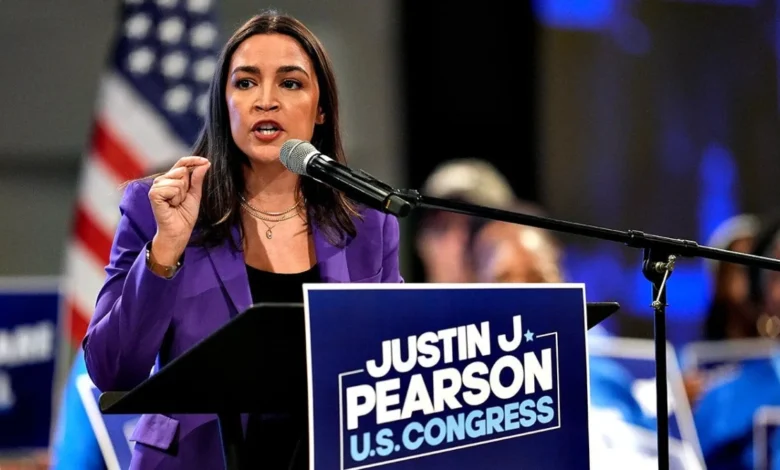
Representative Alexandria Ocasio-Cortez, D-N.Y., found herself at the center of a social media firestorm last week following her appearance at a campaign rally in Memphis, Tennessee. Critics swiftly accused the progressive lawmaker of adopting an altered accent during her speech, drawing parallels to similar past controversies involving prominent Democratic figures such as former Vice President Kamala Harris and former Secretary of State Hillary Clinton. The incident has reignited debates about political authenticity, linguistic accommodation, and the intense scrutiny public figures face in the digital age.
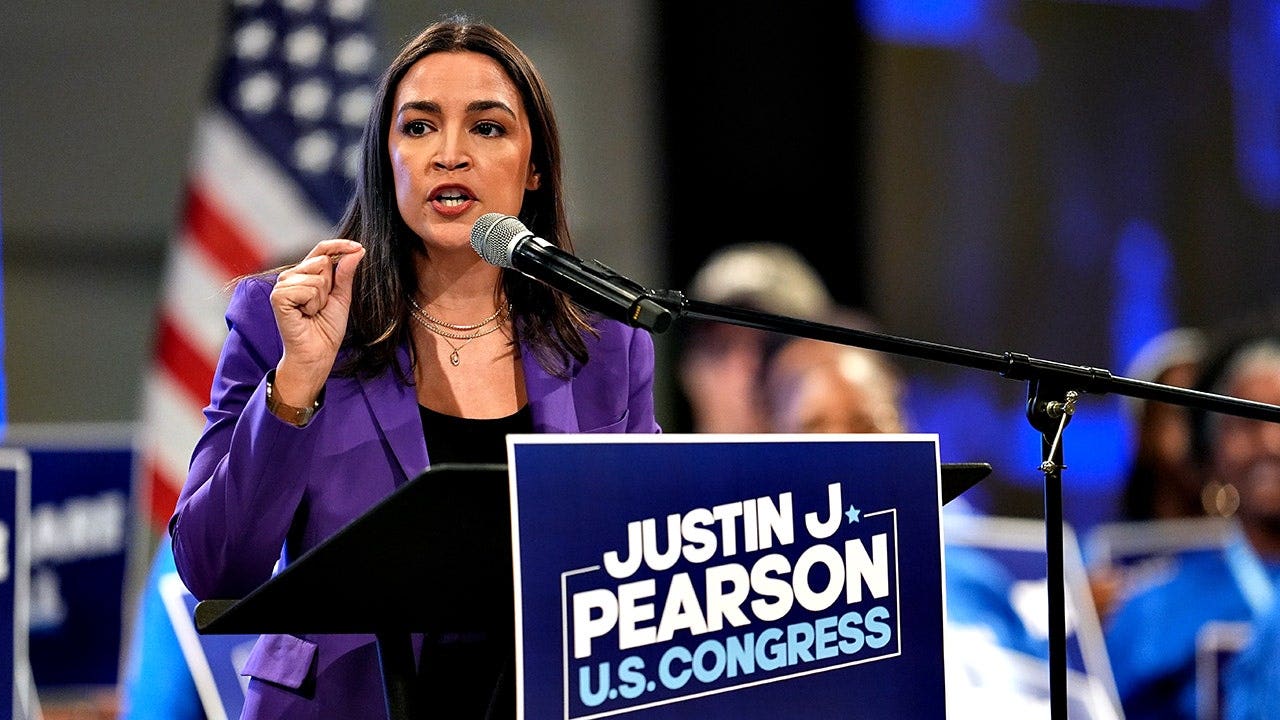
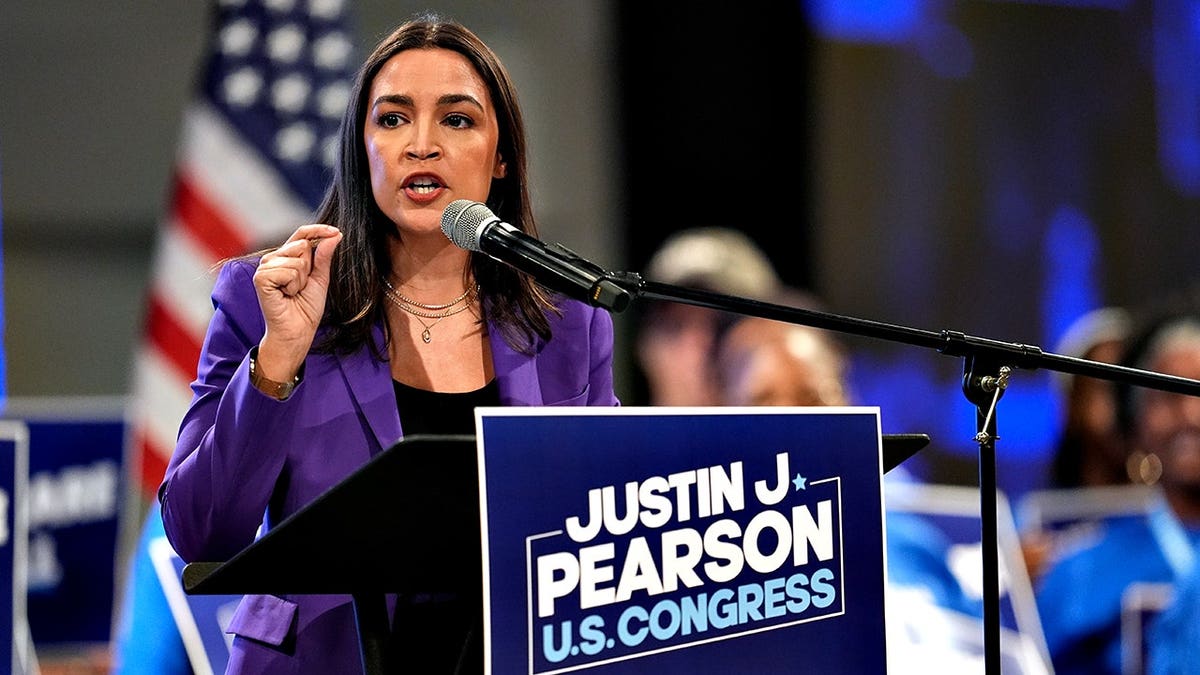
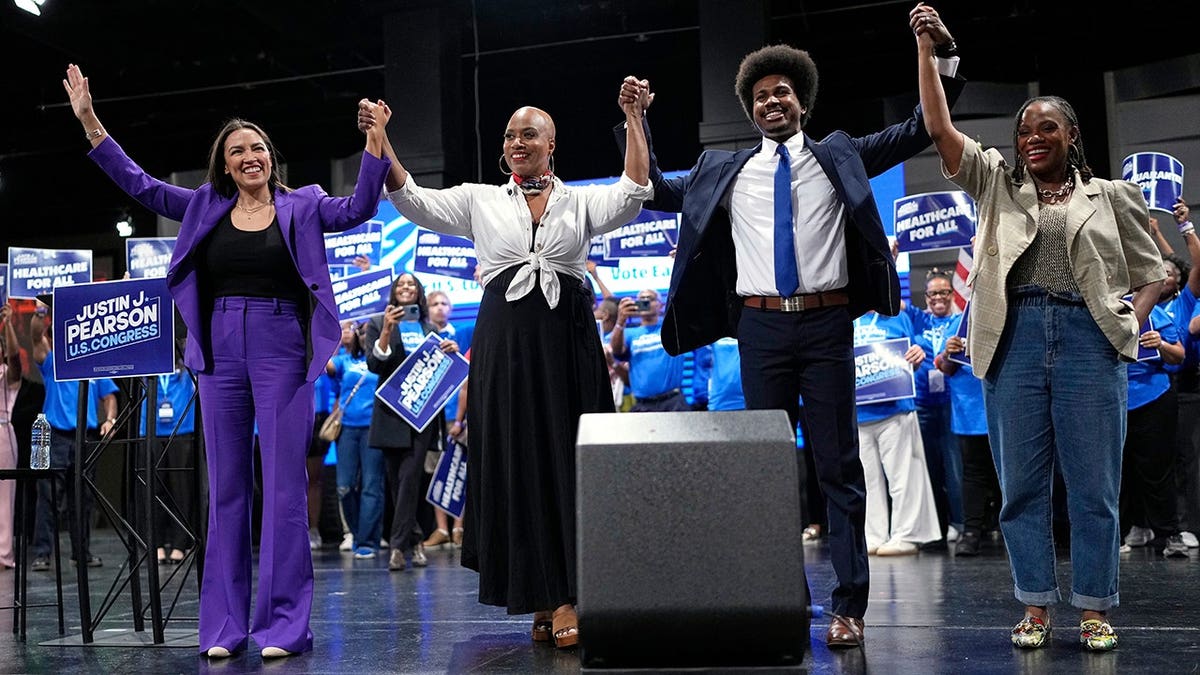
The rally, held on Friday, July 17, 2026, was in support of progressive U.S. House candidate Justin Pearson, who currently serves as a Tennessee state representative. Pearson, a prominent voice in Tennessee politics, gained national attention for his activism and advocacy, making Ocasio-Cortez’s endorsement a significant moment for his campaign. Her presence in Memphis underscored a broader Democratic effort to bolster progressive candidates in traditionally conservative-leaning Southern states, aiming to expand the party’s influence beyond its established strongholds.
During her address to the enthusiastic crowd, Ocasio-Cortez delivered a passionate call for national unity and progressive solidarity across geographical divides. She emphasized the importance of engaging voters in all regions, particularly in the South. "We cannot afford to leave Tennessee behind," she declared, her voice resonating through the venue. "We cannot afford to leave Kentucky behind, Alabama behind, Mississippi behind, Georgia behind, South Carolina behind. There is no country where we are split apart." This segment of her speech was intended to highlight the interconnectedness of American states and the necessity of a unified progressive movement.
She further elaborated on a recent visit to the South, stating, "About a month or two ago, we were in Montgomery, Alabama — Sister [Rep. Ayanna] Pressley and I were in Montgomery, Alabama, and one of the things that we said was that it is time for the North to roll up to the South." This particular phrase, an idiom suggesting a need for engagement and support from Northern progressives towards their Southern counterparts, was delivered with what many online perceived as a noticeable shift in her typical speaking cadence and pronunciation.
The Genesis of the "Accent" Accusations
Almost immediately following the dissemination of clips from her speech across social media platforms, a wave of criticism erupted. Commentators and public figures began to highlight what they characterized as an affected Southern or "Baptist preacher" accent, distinct from her usual Bronx-inflected New York speech patterns. The accusations quickly gained traction, fueling a broader discussion about perceived political pandering and inauthenticity.
Actor Michael Rapaport, known for his outspoken political commentary and who has announced intentions to run for New York City mayor in 2029, was among the first to voice his criticism. He posted on social media, "AOC, from the ‘Bronx’ sounding like a southern Baptist preacher while in Memphis." Rapaport’s comment succinctly captured the essence of the burgeoning controversy, framing it as a disingenuous attempt to connect with the local audience.
Conservative communications strategist Steve Guest echoed these sentiments, drawing historical comparisons. "Hillary Clinton developed an accent. Kamala Harris developed an accent. AOC is developing an accent. It’s all patronizing," Guest wrote, suggesting a recurring pattern among high-profile Democratic women. This broad generalization implied a calculated political maneuver rather than a natural speech variation.
Another social media user, referencing potential future political ambitions, wrote, "Rep. AOC just got busted putting on a FAKE ACCENT for a predominantly black audience. She’s seriously going full Kamala for 2028," speculating about a possible presidential bid and linking her actions to past criticisms leveled at the former Vice President. These reactions underscored the deep skepticism and political polarization that often accompany such perceived shifts in a public figure’s presentation.
A Chronology of Similar Linguistic Controversies
The accusations against Ocasio-Cortez are not isolated incidents in the landscape of American political discourse. The phenomenon of politicians being criticized for altering their speech patterns, often referred to as "code-switching" or "linguistic accommodation," has a well-documented history, particularly with female politicians.
Former Vice President Kamala Harris has repeatedly faced similar allegations throughout her career. In 2024, she was widely criticized for allegedly adopting a Southern accent during a rally in Atlanta and again during a Labor Day rally in Detroit. Critics pointed to specific phonetic shifts and intonations that they claimed were uncharacteristic of her regular speaking voice. Perhaps most notably, during her 2021 overseas trip to France, Harris was accused of using a "French accent" while touring a COVID lab, a charge that drew considerable media attention and online mockery. The White House, in response to some of these accusations, dismissed them as "insane," suggesting that such scrutiny was unwarranted and perhaps politically motivated.
Hillary Clinton, too, experienced this phenomenon during her political career. During her 2008 presidential campaign, particularly in Southern states like Alabama, she was perceived by many to soften her "R" sounds and adopt a slower cadence, leading to widespread accusations of using a "Southern drawl" to appeal to voters. These instances highlight a recurring pattern where a politician’s vocal delivery becomes a focal point of criticism, often interpreted as an attempt to manipulate or pander to a specific demographic.
Linguistic Accommodation vs. "Fake Accents": A Deeper Dive
From a sociolinguistic perspective, the phenomenon observed in politicians like Ocasio-Cortez, Harris, and Clinton can be understood through the lens of "communication accommodation theory." This theory posits that individuals often adjust their speech patterns—including accent, pace, and vocabulary—to converge with their interlocutors to foster rapport, gain approval, or enhance communication effectiveness. This is a common human behavior, often unconscious, that occurs in various social settings.
In political rhetoric, this convergence can be a deliberate strategy. Politicians aim to connect with diverse audiences, and subtly mirroring local speech patterns can be an effective way to build trust and demonstrate solidarity. When Ocasio-Cortez uses phrases like "roll up to the South" or adopts a more rhythmic, impassioned delivery, it could be interpreted as an attempt to resonate with the rhetorical styles prevalent in certain Southern communities, particularly within the Black church tradition, which often employs expressive and call-and-response elements.
However, the line between genuine accommodation and perceived inauthenticity is thin and often subjective. When these shifts are perceived as too dramatic, inconsistent, or calculated, they can backfire, leading to accusations of being "fake" or "patronizing." Critics argue that such changes imply a lack of genuine connection or respect for the audience, suggesting that the politician is merely putting on an act. The very public nature of political rallies, combined with the instantaneous and critical lens of social media, means that any perceived linguistic deviation is likely to be scrutinized and amplified.
The Broader Implications for Political Authenticity
The recurrent nature of these "accent" controversies underscores a persistent challenge for politicians: how to connect with diverse constituencies without appearing disingenuous. Authenticity has become a paramount virtue in modern politics, particularly in an era where voters are increasingly skeptical of established institutions and politicians. Any perceived deviation from a politician’s "true" self can be seized upon by opponents and critics as evidence of insincerity.
For Ocasio-Cortez, who built her political brand on a foundation of grassroots activism and a direct, unvarnished communication style, accusations of adopting a "fake accent" could potentially undermine her carefully cultivated image of authenticity. Her supporters often laud her for her straightforwardness and refusal to conform to traditional political norms. Critics, conversely, use these instances to portray her as a calculated political operator, no different from the establishment figures she often critiques.
The incident also highlights the complex interplay of regional identity, race, and political communication in the United States. The "Southern Baptist preacher" comparison, for instance, touches upon culturally specific rhetorical traditions, particularly within African American communities in the South. When a politician from a different background is perceived to adopt elements of this style, it can be seen by some as an appreciative nod to cultural heritage, while others may view it as cultural appropriation or a superficial attempt to curry favor.
The Amplifying Power of Social Media
Social media platforms like X (formerly Twitter) play an instrumental role in rapidly disseminating and intensifying these controversies. A short video clip, devoid of its full context, can go viral within minutes, eliciting immediate and often polarized reactions. The absence of nuance in these online exchanges means that complex linguistic phenomena are often reduced to simplistic accusations of "fake" or "real."
The swift amplification by influencers, political strategists, and news outlets further solidifies the narrative, making it difficult for the politician in question to fully control the perception. In the digital age, a momentary vocal inflection can become a defining moment, overshadowing the substantive content of a speech or policy discussion. The original article notes that Fox News Digital reached out to Ocasio-Cortez’s team for comment on the "fake accent" accusations, indicating the mainstream media’s engagement with the online discourse. As of the time of this report, any official response or clarification from her office has not been publicly released.
Looking Ahead: The Enduring Debate
The controversy surrounding Representative Ocasio-Cortez’s speech in Memphis is more than just a passing social media spat; it reflects deeper anxieties about political representation, identity, and authenticity. As politicians increasingly navigate a diverse and fragmented electorate, the challenge of connecting with different groups while maintaining a consistent public persona will remain a critical aspect of political strategy.
The recurring nature of these "accent" criticisms suggests that voters and commentators alike are highly attuned to the subtle cues embedded in a politician’s delivery. Whether these linguistic shifts are genuine, unconscious accommodations, or deliberate rhetorical choices, they are inevitably scrutinized and interpreted through a highly politicized lens. As the 2028 election cycle begins to loom, and with speculation about Ocasio-Cortez’s future ambitions, how she, and other public figures, manage their public image and communication style will undoubtedly continue to be a subject of intense observation and debate.