OpenAI Acquires Smartphone Camera Startup Glass Imaging in Over $300 Million Deal to Advance Proprietary Hardware Ambitions

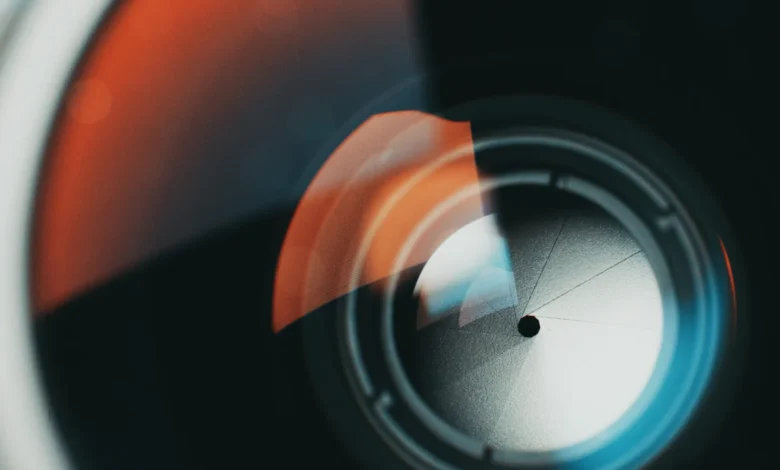
In a strategic move that signals a deeper push into consumer hardware, artificial intelligence giant OpenAI has acquired Glass Imaging, an innovative smartphone camera technology startup, for a reported sum exceeding $300 million. The acquisition, first reported by The Wall Street Journal on September 14, 2026, brings a specialized engineering team into the OpenAI fold. Glass Imaging has spent years developing advanced computational photography techniques designed to fundamentally alter how mobile devices capture the physical world, marrying high-end optical principles with sophisticated neural networks.
Founded in Los Altos, California, in 2019, Glass Imaging had previously secured approximately $30 million in venture funding from prominent institutional investors. The company was established by Ziv Attar and Tom Bishop, two former Apple engineers whose pedigree includes leading the development team behind Apple’s groundbreaking Portrait Mode. Their departure from consumer tech giants to launch Glass Imaging was rooted in a shared vision: overcoming the immutable laws of physics that limit smartphone camera quality. Because mobile devices are constrained by thin chassis and miniature physical lenses, they have traditionally relied on heavy post-processing algorithms to simulate depth and clarity. Glass Imaging flipped this paradigm on its head, utilizing machine learning models trained on the unique optical characteristics of specific hardware systems to dramatically improve image fidelity at the exact moment the shutter clicks.
The Chronology of an Emerging Hardware Titan
The purchase of Glass Imaging does not occur in a vacuum; it represents the latest and most concrete step in OpenAI’s methodical transition from a pure software and model developer into an integrated hardware ecosystem player. Rumors and strategic maneuvers surrounding OpenAI’s hardware ambitions have intensified steadily over the past several years, painting a picture of a company preparing to challenge traditional consumer electronics giants.
In early 2026, reports surfaced indicating that OpenAI was actively developing its own line of consumer devices. Industry analysts pointed to internal projects exploring smartphones optimized for native AI agents, smart earbuds, and screenless ambient computing companions designed to move seamlessly with the user. The momentum behind these rumors crystallized in mid-2025, when OpenAI executed a blockbuster $6.5 billion acquisition of io, a stealth hardware and design startup founded by legendary former Apple chief design officer Jony Ive and OpenAI CEO Sam Altman. That acquisition positioned Ive at the helm of OpenAI’s design division, setting the stage for a hardware revolution heavily influenced by minimalist aesthetics and advanced conversational intelligence.
By bringing Glass Imaging into the corporate umbrella, OpenAI has now secured the foundational optical engineering necessary to ensure its prospective devices possess world-class visual capture capabilities. While OpenAI has not yet officially commented on the transaction, industry observers note that owning proprietary camera technology removes a major dependency on third-party suppliers, allowing the company to tailor every layer of its future hardware—from silicon and optics to generative AI models—in unison.
Inside the Technology: Redefining Mobile Photography with Neural Networks
To understand the strategic value of Glass Imaging to OpenAI, one must examine the fundamental limitations of modern mobile photography. Traditional smartphone cameras are bound by the physics of miniaturization. While image sensors and computational processors have grown exponentially more powerful, the physical space available inside a pocket-sized smartphone restricts the size of the glass lenses that gather light. Consequently, conventional mobile photography often suffers from diffraction limits, loss of fine detail, and artificial-looking smoothing artifacts introduced by post-capture sharpening algorithms.

Glass Imaging approached this bottleneck through an old-school cinema lens philosophy combined with modern machine learning. Rather than treating artificial intelligence as a post-processing filter applied after an inferior image has been recorded, Glass Imaging’s neural networks are engineered to understand the specific structural quirks, aberrations, and optical properties of individual camera modules. By modeling how light travels through a particular manufacturer’s lens array in real time, the startup’s software corrects physical optical flaws at the point of capture. The resulting photographs exhibit the dynamic range, depth, and crispness traditionally associated with bulky digital single-lens reflex (DSLR) or cinema cameras, all while running on standard mobile hardware.
For OpenAI, integrating this level of visual processing capability opens up profound possibilities. Future OpenAI hardware devices will not merely be passive recording tools; they will possess advanced visual comprehension. By pairing Glass Imaging’s ultra-high-fidelity capture technology with OpenAI’s state-of-the-art multimodal models, upcoming hardware could see, understand, and interpret the visual environment with unprecedented clarity, laying the groundwork for ambient AI assistants that experience the physical world alongside the user.
Broader Market Implications and Industry Reaction
The $300 million acquisition marks a significant consolidation of talent at the intersection of generative AI and physical device design. As major technology companies race to define the post-smartphone era, the battleground has shifted from cloud-hosted software applications to ambient, edge-computed hardware devices that can execute multimodal AI locally and efficiently.
Competitors in both the smartphone manufacturing space and the generative AI sector are watching OpenAI’s moves closely. Traditional handset manufacturers like Apple, Samsung, and Google have spent years heavily promoting their own proprietary computational photography stacks, such as Apple’s Deep Fusion and Google’s Pixel Camera algorithms. By acquiring Glass Imaging, OpenAI has effectively purchased a turnkey, elite-tier optical engineering team capable of rivaling the decades-long R&D efforts of legacy camera giants.
Furthermore, the deal underscores a broader macroeconomic trend: heavily capitalized artificial intelligence firms are increasingly willing to deploy billions of dollars in mergers and acquisitions to secure physical supply chains, specialized engineering talent, and hardware intellectual property. With Sam Altman steering OpenAI’s overarching vision and Jony Ive directing the industrial design language through the integration of io, the addition of Glass Imaging provides the crucial third pillar—advanced imaging—needed to execute a cohesive hardware ecosystem strategy.
Looking Ahead
As the integration of Glass Imaging proceeds, the tech industry eagerly awaits official confirmation and product roadmaps from OpenAI. While the company has maintained a characteristically quiet posture regarding its device development timelines, analysts speculate that the first wave of OpenAI-branded hardware could begin breaking cover late in the decade.
Whether these devices manifest as specialized AI companions, novel form-factor smartphones, or ambient wearable cameras, the acquisition of Glass Imaging ensures that whatever OpenAI brings to market will possess the optical sophistication required to compete at the highest levels of consumer electronics. For now, the $300 million deal stands as a definitive marker of OpenAI’s long-term commitment to reshaping not just how humanity communicates with artificial intelligence, but how artificial intelligence views the world.