OpenAI Deepens Ties to Defense Sector with Strategic Hire of Former Army Secretary Dan Driscoll

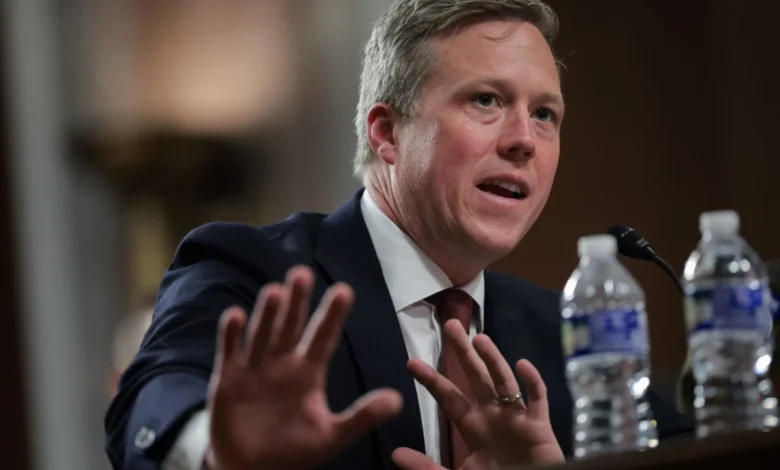
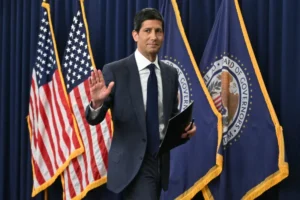
OpenAI has formally appointed former U.S. Army Secretary Dan Driscoll as its senior counselor for national security modernization, a high-profile move that underscores the artificial intelligence laboratory’s aggressive pivot toward the defense industry. The appointment, announced this past Monday, places a seasoned political and military strategist at the heart of the company’s efforts to integrate generative AI into the national security apparatus. Driscoll, who departed the Trump administration only two months ago following a well-documented rift with Defense Secretary Pete Hegseth, brings with him a background characterized by efforts to modernize military procurement and a history of unconventional diplomacy.
This hire represents more than a simple recruitment of executive talent; it serves as a critical milestone in OpenAI’s ongoing campaign to position itself as a foundational partner for the Pentagon. By bringing in a former Cabinet-level official, OpenAI is signaling to both shareholders and government agencies that it intends to navigate the complex, high-stakes intersection of frontier AI development and national sovereignty with internal expertise.
A Chronology of Institutional Integration
The recruitment of Driscoll is the latest in a series of strategic maneuvers by OpenAI to embed itself within the U.S. national security infrastructure. The timeline of this integration reveals a clear, accelerated trajectory:
- June 2024: OpenAI made its first major move into the national security sphere by appointing retired U.S. Army General Paul Nakasone, the former director of the National Security Agency (NSA), to its board of directors. This signaled a shift toward incorporating high-level intelligence and military oversight into the company’s governance structure.
- February 2026: Following a period of intense negotiation, OpenAI signed a landmark agreement with the Pentagon to deploy its AI models within the agency’s secure, classified networks. This deal followed a controversial ultimatum from Defense Secretary Pete Hegseth, who demanded that AI firms remove safety guardrails, leading to the designation of rival firm Anthropic as a "supply chain risk."
- June 2026: OpenAI secured a $200 million contract with the Department of Defense to design advanced AI tools tailored to address multifaceted national security challenges.
- Late 2026: The company entered a strategic partnership with Anduril, a prominent defense technology firm, to integrate OpenAI’s language models into real-time threat detection systems, specifically targeting unmanned drone threats.
- September 2026: Dan Driscoll stepped down from his position as Army Secretary after 18 months of service, a tenure marked by tension regarding the pace of Pentagon modernization and internal disagreements over military promotion lists.
- November 2026: OpenAI officially announces the hiring of Dan Driscoll as senior counselor for national security modernization.
The Strategic Rationale Behind the Appointment
Dan Driscoll’s tenure as Army Secretary was defined by a departure from traditional military procurement habits. He was a vocal proponent of transitioning the Pentagon away from bespoke, custom-built software toward commercial off-the-shelf software solutions—a shift that directly benefits tech firms like OpenAI. Furthermore, his efforts to streamline the development of low-cost battlefield drones established him as a champion of rapid, tech-forward military innovation.
For OpenAI, the value of this hire is twofold. First, Driscoll possesses the bureaucratic acumen required to navigate the Department of Defense’s labyrinthine procurement processes. Second, his background in international negotiation—notably his clandestine trips to Europe and the Middle East to facilitate dialogue regarding the Russia-Ukraine conflict—provides the company with a sophisticated perspective on the geopolitical risks inherent in deploying AI globally.
"The U.S. has an extraordinary opportunity to work with other countries to spread the adoption of democratic AI," OpenAI CEO Sam Altman stated in a press release accompanying the announcement. Driscoll echoed this sentiment, emphasizing that his role would focus on cutting through administrative "paperwork" and "making sense of more information" to ensure that the "right answer" reaches the "right person" at the speed of modern warfare.
Implications for the "Revolving Door" and Procurement
The appointment of a recently departed Pentagon official to a private-sector role with such significant government contracts has reignited the debate surrounding the "revolving door" phenomenon. Critics and governance experts argue that such movements create inherent conflicts of interest, potentially undermining the integrity of federal procurement.
Gwanhoo Lee, chair of the Department of Information Technology and Analytics at American University’s Kogod School of Business, highlights the systemic risk. "If AI companies can recruit high-level officers from the Pentagon immediately after they have left their organizations, the impartiality of the procurement process is naturally brought into question," Lee noted. According to Lee, when government agencies evaluate competing bids, the presence of former high-ranking officials within those private firms creates a risk that deals will be predicated on personal relationships and institutional familiarity rather than the objective merit of the technology.
This concern is particularly acute given the nature of the technology in question. As nations become increasingly reliant on AI for everything from logistics and maintenance to offensive cyber operations, the stakes of choosing the "right" provider are immense. If the procurement process is perceived as being influenced by lobbying or personal influence, it could lead to the adoption of inferior systems, ultimately compromising national security.
The Ethical and Legal Framework
The partnership between OpenAI and the Pentagon remains a lightning rod for privacy advocates. The deal, which permits the use of OpenAI’s models under an "all lawful use" clause, has been criticized for leaving significant legal loopholes.
Samir Jain, vice president of policy at the Center for Democracy & Technology, has previously warned that such language may be insufficient to prevent the mass surveillance of American citizens. Under current U.S. law, the government can legally purchase vast quantities of data from commercial brokers. If an AI system is used to analyze this aggregated data, it could effectively facilitate mass surveillance without violating existing statutes, even if the developer intends for the system to be used responsibly.
OpenAI has attempted to address these concerns through a series of public commitments. In a blog post updated in March, the company emphasized that its agreements with the Department of Defense include specific language prohibiting the intentional use of its AI for domestic surveillance, citing the Fourth Amendment and the National Security Act of 1947 as foundational constraints. The company maintains that it is fully aware of post-employment restrictions and is committed to compliance with all applicable regulations regarding the transition of former government officials into the private sector.
Broader Geopolitical Context
The move also reflects a larger, global race to secure an advantage in "democratic AI"—a term frequently utilized by Silicon Valley executives to distinguish their products from those developed in authoritarian regimes. By positioning its technology as the backbone of the U.S. military, OpenAI is effectively aligning its corporate trajectory with the strategic objectives of the United States.
However, this alignment carries risks. As the Pentagon increasingly relies on private-sector models, the distinction between the commercial entity and the state becomes blurred. This integration creates a target for foreign adversaries, who may view these companies as extensions of the U.S. military apparatus. Moreover, the reliance on a single, private company for critical defense infrastructure poses a long-term sustainability challenge; should the relationship between OpenAI and the government sour, or should the company shift its strategic priorities, the Pentagon could be left with significant technical debt.
Ultimately, the hiring of Dan Driscoll marks a new chapter in the maturation of the AI industry. As these frontier labs transition from speculative startups to essential components of national power, the scrutiny they face will only intensify. Whether OpenAI can successfully balance its mission of broad technological deployment with the rigorous ethical and security demands of the Pentagon remains the defining question of its current corporate strategy. With the appointment of a former Army Secretary, the company has staked its future on the belief that it can lead this integration responsibly—a claim that will be tested by regulators, the public, and the shifting landscape of global security.