General Motors (GM) stands at one of the most critical operational and strategic junctions in its storied history. As the global automotive industry undergoes a historic paradigm shift characterized by sweeping electrification, software-defined vehicle architectures, and shifting macroeconomic realities, industry analysts are closely scrutinizing how legacy automakers will navigate the remainder of the decade. A comprehensive production and performance forecast authored by automotive analyst Jonathan Storey for Automotive World examines the trajectory of General Motors through 2030, offering a granular look at the volumes, challenges, and strategic pivots that will define the Detroit-based automaker’s footprint on the global stage.
The scope of this forward-looking analysis encompasses key manufacturing hubs, brand-specific volume expectations, and the intricate transition from internal combustion engine (ICE) portfolios to battery-electric vehicle (BEV) architectures. While GM continues to generate robust profitability from its traditional truck and large SUV segments in North America, the long-term viability of the enterprise hinges on scaling EV production efficiently, managing supply chain dependencies, and defending its market share in fiercely contested international markets, most notably China.
Strategic Context and Industry Background
To understand General Motors’ projected trajectory to 2030, it is necessary to examine the broader industrial transformation that began in the late 2010s and accelerated into the 2020s. GM made headlines globally when leadership announced an ambitious target to phase out tailpipe emissions from light-duty vehicles entirely by 2035, positioning the company as an aggressive frontrunner among legacy original equipment manufacturers (OEMs) racing to challenge pure-play electric vehicle makers like Tesla.
Central to this transformation is the development and deployment of the Ultium proprietary battery and modular vehicle platform architecture. Ultium was designed to bring economies of scale, flexibility, and reduced battery cell costs to GM’s diverse lineup, ranging from affordable compact crossovers to heavy-duty commercial vans and high-performance luxury vehicles. However, the path to mass-market electrification has been fraught with well-documented industrial bottlenecks, including cell manufacturing ramp-up delays, software integration hurdles, and fluctuating consumer adoption rates for early-generation BEVs.
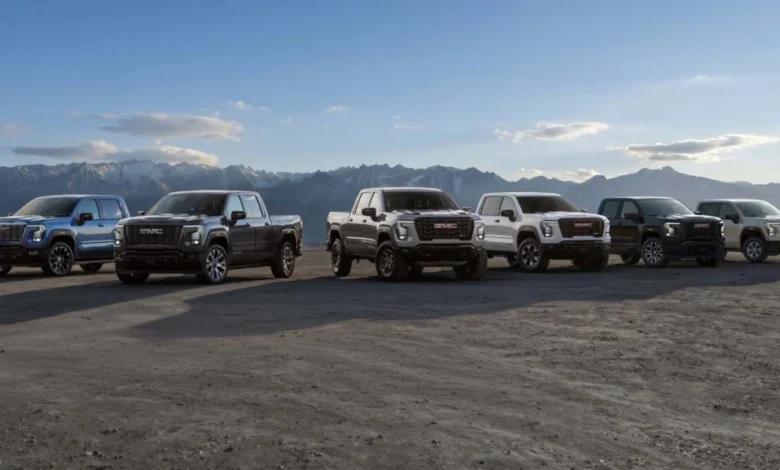
Concurrently, GM has had to carefully manage its legacy cash cow operations. The internal combustion engine portfolio—featuring profitable nameplates like the Chevrolet Silverado, GMC Sierra, and Cadillac Escalade—has provided the essential capital required to fund multi-billion-dollar investments in research, development, and retooled manufacturing facilities such as Factory ZERO in Michigan and the Orion Assembly plant.
Chronology of GM’s EV Transition and Production Milestones
The timeline leading up to the 2030 forecast window highlights a period of intense strategic pivoting and capital reallocation by General Motors:
- March 2020: GM unveils its proprietary Ultium battery platform and a modular vehicle strategy during an EV Day presentation in Warren, Michigan, outlining plans for 30 global EV models by 2025.
- January 2021: CEO Mary Barra announces the corporate aspiration to eliminate tailpipe emissions from new light-duty vehicles by 2035, signaling a total alignment with global decarbonization goals.
- December 2021: Production officially begins for the GMC Hummer EV at Factory ZERO, marking the first commercial rollout of a vehicle utilizing the Ultium architecture.
- Late 2022 to 2023: GM faces initial production constraints related to automated battery module assembly lines at joint-venture plants, prompting management to recalibrate near-term volume targets while reassuring investors of long-term commitments.
- 2024: The automaker adjusts its 2025 EV volume goals in response to slower-than-projected market adoption curves, emphasizing a balanced approach that maintains flexibility between ICE, hybrid, and fully electric powertrains.
- 2025–2030 (Projected Window): The forecast period analyzed by Automotive World, during which GM must achieve critical mass in EV profitability, phase out high-emission legacy platforms, and navigate evolving global trade policies and emissions regulations.
Production Forecast and Quantitative Outlook to 2030
The analysis by Jonathan Storey delves deep into quantitative projections for GM’s manufacturing output across its primary operating regions. While precise annual totals fluctuate based on supply chain variables and macroeconomic conditions, several overarching trends define the forecast leading to the end of the decade.
In North America, GM’s primary profit engine, total production volume is expected to stabilize, characterized by a gradual substitution of ICE vehicles by BEV derivatives. Full-size pickup trucks and body-on-frame SUVs will remain volume and margin anchors through the mid-2020s, but their share of total output will systematically decline as compact and mid-size electric crossovers enter the market. By 2030, industry models suggest that BEVs could account for 40% to 50% of GM’s total North American production, depending on regulatory enforcement and charging infrastructure deployment rates.
In international markets, the landscape is considerably more complex. In China, once a guaranteed source of immense volume and high margins for GM via its joint ventures with SAIC Motor, the rapid rise of domestic Chinese EV manufacturers has radically compressed foreign market share. GM’s strategy in China has pivoted toward restructuring operations, cutting structural costs, and introducing locally tailored New Energy Vehicles (NEVs) to defend its relevance in the world’s largest automotive market. Consequently, production output originating from GM’s Chinese joint ventures is forecast to register lower volume peaks compared to the highs of the late 2010s, with a stronger emphasis on value preservation and technological competitiveness over pure unit volume.
Other international regions, including South America and South Korea, are projected to maintain steady, localized production roles, serving regional demand with cost-optimized architectures and targeted export programs.
Official Responses and Corporate Strategy
General Motors leadership has consistently maintained that while near-term EV adoption curves may be uneven, the long-term destination of the automotive industry remains firmly electric. In communication with investors and industry stakeholders, CEO Mary Barra and Chief Financial Officer Paul Jacobson have emphasized capital discipline and manufacturing flexibility.
"Our fundamental strategy has not changed, but our tactical execution is designed to be agile," corporate representatives have frequently noted in financial briefings. "We have engineered our assembly plants and vehicle platforms to pivot fluidly based on actual market demand. Whether a customer wants a highly efficient internal combustion engine, a plug-in hybrid, or a zero-emission battery electric vehicle, General Motors will have a competitive, profitable product ready to deliver."
To address margin pressures associated with early-stage EV production, GM has implemented aggressive cost-reduction programs across its supply chain. These include renegotiating battery cell chemistry costs, localizing component sourcing to comply with the stringent requirements of regional trade agreements, and streamlining salaried and hourly workforce structures to optimize operational efficiency. Furthermore, GM’s Cruise autonomous vehicle subsidiary, despite facing its own regulatory and operational re-evaluations, remains a cornerstone of the company’s long-term vision for software-defined mobility services.
Broader Market Implications and Future Challenges
The comprehensive evaluation of GM’s production and performance outlook through 2030 carries significant implications for the broader automotive ecosystem, labor unions, and regulatory bodies.
First, the transition period tests the delicate balance between legacy capital expenditures and future-proof investments. If GM scales its Ultium-based portfolio too slowly, it risks ceding permanent market share to nimble EV-only competitors and aggressively expanding Asian manufacturers. Conversely, if it scales too quickly in an environment where consumer demand or charging infrastructure lags behind projections, it risks severe margin erosion and idle manufacturing capacity.
Second, labor relations will remain a pivotal factor. The historic United Auto Workers (UAW) strike of 2023 established new economic benchmarks for wages and benefits, alongside groundbreaking agreements regarding the integration of battery manufacturing plants into the master labor agreement. Managing these elevated labor costs while striving to achieve cost parity with non-unionized EV competitors represents a formidable managerial challenge for GM executives through the rest of the decade.
Finally, regulatory compliance will dictate regional production mixes. With stringent corporate average fuel economy (CAFE) standards and zero-emission vehicle mandates tightening in North America, Europe, and China, GM has no alternative path. The accurate forecasting of production output to 2030 serves not merely as an academic or financial exercise, but as a roadmap for corporate survival and leadership in an industry undergoing its most profound transformation since the invention of the assembly line.
Related posts: