Skillet Pierogi with Mushrooms: A Streamlined Culinary Innovation for the Modern Weeknight Kitchen

The contemporary landscape of home cooking is continuously evolving to accommodate the demands of busy modern schedules, forcing a re-evaluation of traditional preparation methods. Among the most recent culinary developments gaining traction in domestic kitchens is a technique that completely inverts the conventional preparation of pierogi, a beloved Central and Eastern European dumpling. Traditionally requiring a multi-step process involving boiling followed by separate pan-frying, a newly popularized one-skillet method allows home cooks to prepare the dish from its frozen state in under thirty minutes. This innovation aligns with a broader consumer trend favoring minimalist cooking, reduced dishwashing requirements, and efficient utilization of affordable pantry staples. As households navigate the intersection of tight schedules and a persistent demand for comforting, carbohydrate-forward meals during the autumn and winter months, streamlined cooking solutions have become a focal point of culinary media and home economics discourse.
Chronology and Execution of the One-Pan Method
The streamlined preparation strategy diverges sharply from historical culinary practices associated with pierogi and similar filled dumplings, such as Ukrainian vareniki or Italian ravioli. Historically, commercial or homemade frozen pierogi are submerged in boiling water until heated through, then transferred to a skillet containing butter or oil to crisp the exterior. The revised method prioritizes flavor development and textural contrast by utilizing a single deep skillet to handle both the aromatic component and the dumplings simultaneously.

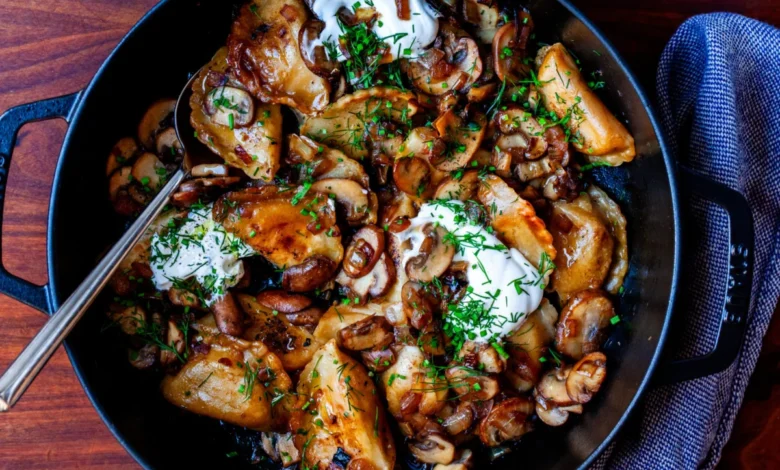
The process commences with the preparation of the vegetable base. A large, deep skillet—preferably equipped with a tightly fitting lid—is heated over medium-high heat with a combination of butter and olive oil. Sliced onions are introduced, seasoned, and sautéed until they achieve a softened texture and golden-brown edges, a process taking approximately five minutes. Minced garlic is subsequently incorporated for a brief, one-minute sauté before earthy mushrooms are added to the pan.
To achieve optimal browning, the mushrooms are left undisturbed for four to five minutes to develop a deep sear before being stirred until any naturally released moisture has completely evaporated. At this juncture, the vegetable mixture is temporarily removed from the skillet to a cutting board or holding plate.
In the second phase, the empty skillet receives an additional application of oil to accommodate frozen pierogi arranged in a single layer. Without any prior boiling, the dumplings are seared until the bottom crust turns golden brown, taking roughly five minutes, after which they are flipped. Water is then carefully introduced to the hot pan to create steam, and the skillet is immediately covered with the lid while the heat is reduced to medium. This steaming phase lasts between five and eight minutes, during which the frozen potato and cheese or potato and onion fillings thaw and cook thoroughly.

Once the interior is heated, the reserved mushroom and onion mixture is returned to the skillet to rewarm. The dish is finalized off the heat with a strategic splash of white vinegar to provide acidity, dollops of cold sour cream for dairy richness, and a generous garnish of fresh dill and chives.
Supporting Data and Consumer Trends in Weeknight Cooking
The popularity of one-pan skillet meals reflects broader shifts in consumer behavior regarding home meal preparation. According to market research on grocery and culinary trends, time-pressed consumers increasingly prioritize recipes that meet three distinct criteria: a total preparation and cooking time of under thirty minutes, total cleanup limited to a single cooking vessel and minimal utensils, and the utilization of shelf-stable or frozen ingredients that minimize food waste.
Frozen pierogi, long regarded as a budget-friendly convenience food found in the freezer aisles of supermarkets across North America and Europe, fit squarely into this economic and logistical framework. When combined with inexpensive fresh produce such as mushrooms, onions, and garlic, the resulting meal yields a low cost per serving. Furthermore, culinary data indicates that minimalist cooking techniques that reduce kitchen cleanup—in this case, restricting the post-meal workload to a single skillet, a cutting board, a knife, and a fork—significantly increase the frequency with which home cooks attempt scratch or semi-scratch recipes on weeknights.

This methodology parallels earlier successful one-pan adaptations popularized in food journalism, such as crispy tortellini prepared with peas and prosciutto, and skillet ravioli cooked directly with spinach. These recipes share a common mechanical foundation: utilizing the residual moisture of added water or broth to cook raw or frozen pasta products while simultaneously using the fats in the pan to achieve surface crispness.
Expert Perspectives and Culinary Context
Food writers and culinary professionals have increasingly emphasized the importance of acid and fresh herbaceous elements in balancing heavy, starch-dense comfort foods. The inclusion of white vinegar in the skillet pierogi recipe serves a vital chemical and sensory function. While rich carbohydrates like potatoes and dough, paired with fats like butter and sour cream, provide caloric density and mouthfeel, the addition of a sharp, clean acid cuts through the richness, elevating the overall flavor profile.
Deb Perelman, a prominent food writer and cookbook author who popularized this specific skillet technique, has frequently noted the necessity of efficiency in domestic cooking. Speaking on the convergence of family life, book writing, and household management, culinary commentators observe that the pressure on home cooks to produce satisfying meals without spending hours at the stove has never been higher. By removing the traditional boiling step, home cooks save both time and energy, while simultaneously avoiding the common pitfall of waterlogged dumpling dough that can occur when boiling and frying are treated as entirely separate sequential tasks.

Furthermore, culinary historians note the cultural resonance of modifying traditional dishes to fit contemporary lifestyles. While traditionalists may champion time-honored techniques like hand-rolled vareniki with delicate doughs and intricate folding methods, the adaptation of frozen convenience items allows a wider demographic to experience similar flavor profiles on an accelerated schedule. This blending of convenience products with artisanal cooking techniques—such as carefully caramelizing onions and properly searing mushrooms—represents a pragmatic evolution in modern home cooking.
Broader Economic and Nutritional Implications
From a nutritional and economic standpoint, the one-pan pierogi and mushroom dish offers a balanced perspective on contemporary home economics. Potatoes, the primary filling of traditional pierogi, provide complex carbohydrates and potassium, while mushrooms contribute dietary fiber, B vitamins, and umami compounds that reduce the need for excessive sodium. The addition of dairy fats and fresh herbs rounds out the macronutrient profile, though nutritionists generally advise monitoring portion sizes and sodium content when utilizing commercially manufactured frozen products.
Economically, the reliance on frozen dumplings and seasonal fungi underscores a resilient strategy for households facing food inflation. By transforming inexpensive, long-shelf-life staples into a cohesive, restaurant-quality meal using pantry basics like cooking oil, butter, and vinegar, consumers can maximize their grocery budgets without sacrificing culinary satisfaction.

Ultimately, the proliferation of streamlined skillet recipes highlights a permanent shift in how households approach the evening meal. As culinary innovators continue to re-engineer traditional recipes for maximum efficiency, dishes like the skillet pierogi with mushrooms demonstrate that speed, simplicity, and superior flavor are no longer mutually exclusive in the domestic kitchen.