‘Star Trek’ and ‘X-Men’ icon Patrick Stewart dies at 86: ‘We lost one of the greats of stage and screen today’ | Fortune

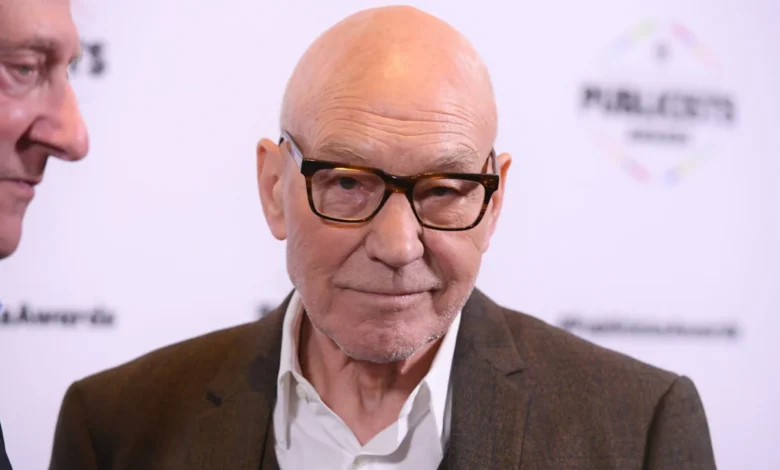
The passing of the British-born actor, confirmed by his spokesperson Kelly Bush Novak, occurred Wednesday in Los Angeles. His death followed what the family described as a brief and poignant struggle with Alzheimer’s disease and Lewy Body Dementia. The medical conditions, which had been kept private throughout the final stages of his life, mark the end of a career spanning more than six decades—a career defined by an unparalleled ability to bridge the gap between the high-brow traditions of the Royal Shakespeare Company and the global reach of 21st-century blockbuster cinema.
A Legacy Forged in Yorkshire
Born in 1940 in Mirfield, a working-class industrial town in Yorkshire, England, Stewart’s early life stood in stark contrast to the regal, commanding presence he would later project on screen. He was raised in a household characterized by severe economic hardship; notably, the family home lacked indoor plumbing. His upbringing was further marred by the volatility of his father, a regimental sergeant major in the British Army whose experiences in the service left him with a propensity for domestic violence.
In his 2023 memoir, Making It So, Stewart provided a candid account of the trauma he and his brother, Trevor, endured. He recalled the terror of nights punctuated by his father’s alcohol-fueled aggression toward his mother. These formative experiences profoundly shaped Stewart’s adult life, eventually leading him to become a prominent patron for Refuge, a leading UK charity providing shelter and support for victims of domestic abuse. For Stewart, the theater became more than a craft—it was an essential escape. "The stage would prove to be a safe space," he wrote, "a refuge from real life in which I could inhabit another person, living in another place and time."
Chronology of a Storied Career
Stewart’s ascent was rooted in rigorous training and an unwavering commitment to the craft. After winning a scholarship to the Bristol Old Vic Theatre School, he began a journey that would see him become one of the most recognizable faces in British theater.
- 1966–1980: Stewart joins the Royal Shakespeare Company (RSC), spending 14 years in a repertory environment where he refined his craft across dozens of roles, including Mark Antony, Shylock, and Henry IV.
- 1987: After years of resisting the pull of television, he accepts a role in a nascent science fiction project, Star Trek: The Next Generation. He famously assumed the series would be a failure.
- 1994: The final episode of The Next Generation airs, cementing his status as a global icon.
- 2000: Stewart pivots to the superhero genre, portraying Professor Charles Xavier in the inaugural X-Men film, a role he would revisit across two decades.
- 2008: He receives his sole Tony Award nomination for his titular performance in Macbeth, a production that traveled from the Chichester Festival to Broadway.
- 2010: Queen Elizabeth II confers knighthood upon him at Buckingham Palace for his services to drama.
- 2023–2026: Stewart concludes his final professional projects, including a return to the Picard character and his work on The Sheep Detectives.
The Shakespearean Captain
While the public best remembers him as the bald, authoritative Captain Jean-Luc Picard, Stewart’s approach to the character was deeply informed by his classical background. When tasked with leading the crew of the USS Enterprise, he bypassed traditional television tropes in favor of a regal, deliberate performance. He famously noted that he approached Picard as if he were a character in Henry IV.
This commitment to the text extended behind the scenes. Stewart established the Paramount Shakespeare Company, a workshop he facilitated for fellow actors during the grueling production schedules of Star Trek. His influence on the franchise was immense; the series spanned 178 episodes and four feature films, turning "Make it so" into a cultural shorthand for decisive leadership.
Tributes and Industry Impact
The loss of Stewart has reverberated through the entertainment industry, prompting an outpouring of grief from peers who worked alongside him in both the Marvel and Star Trek universes.
Hugh Jackman, who served as Stewart’s primary co-star in the X-Men franchise for years, issued a poignant statement on social media. "We lost one of the greats of stage and screen today," Jackman wrote. "And, in my book, a tremendous friend and man. I learned so much from him. I will miss you, Patrick Stewart, all of my days."
William Shatner, the original Captain Kirk, echoed these sentiments, highlighting the "intelligence, grace, and a deep sense of humanity" that Stewart brought to the bridge of the Enterprise. The loss is particularly heavy for the Star Trek community, occurring only days after the death of Walter Koenig, who played Pavel Chekov in the original series.
Beyond the Screen: A Modern Cultural Icon
Stewart’s career was defined by a unique willingness to subvert his own image. Despite his status as a "serious" actor, he actively cultivated a public persona that embraced the absurd. Whether he was voicing characters in The Emoji Movie, appearing in Seth MacFarlane’s Blunt Talk, or posting viral content of himself in a lobster suit, Stewart defied the expectations of his generation.
His internet-savvy nature and self-deprecating humor endeared him to a younger demographic. When he married singer-songwriter Sunny Ozell in 2013, with his long-time friend and collaborator Sir Ian McKellen officiating, the viral photo of the couple in a ball pit became a symbol of his approach to life: finding joy and playfulness in the wake of a disciplined and demanding career.
Analysis: A Shift in Performance Standards
The death of Sir Patrick Stewart represents the loss of a specific archetype of actor—one who moved fluidly between the rigorous, unamplified demands of the theater and the high-tech, green-screen environments of Hollywood.
Analysts note that Stewart’s influence is not merely in the characters he played, but in the legitimacy he brought to science fiction and comic book adaptations. By bringing the same technical precision to Professor X or Jean-Luc Picard that he brought to Claudius or Macbeth, he helped elevate these genres in the eyes of critics and the public alike. His career suggests a blueprint for future generations of actors: that intellectual rigor and "genre" work are not mutually exclusive, but rather complementary facets of the same artistic endeavor.
Final Honors and Survivors
Stewart’s contribution to the arts is marked by three Olivier Awards, a Grammy Award for his spoken-word performance of Peter and the Wolf, and a storied list of stage credits that include his celebrated collaboration with McKellen on Waiting for Godot.
Beyond his professional achievements, he leaves behind a family that includes his wife, Sunny Ozell, and his children, Sophia and Daniel. As the curtain falls on a career that spanned from the rural stages of northern England to the far reaches of the galaxy, the industry mourns not just a legendary performer, but a man who used his platform to advocate for social change and whose work continues to define the landscape of modern entertainment.
His life serves as a testament to the power of transformation—not just the transformation of the actor into a character, but the transformation of a young boy from a home without a bathroom into one of the most respected, knighted, and beloved figures in the history of the performing arts.
Related posts: