PNOĒ 2.0 Launches Self-Administered Metabolic Testing Mask to Bring Elite Fitness and Longevity Data to the Masses

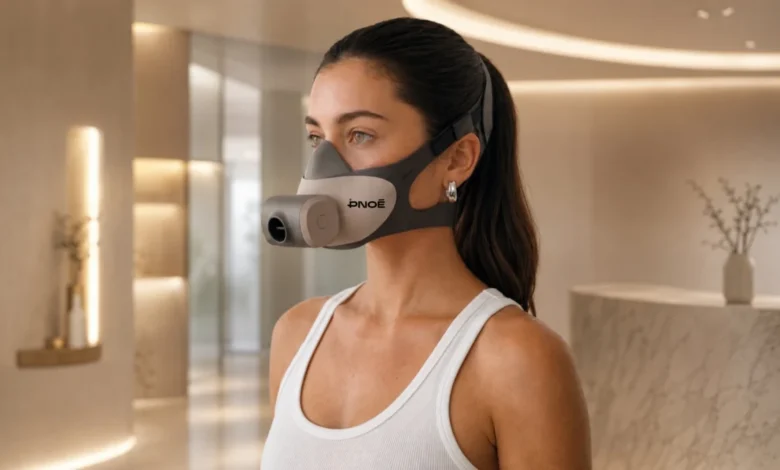
At first glance, the newest device developed by health-tech firm PNOĒ bears a striking resemblance to the intimidating face-covering worn by the fictional comic-book villain Bane. The apparatus, which fits snugly over the nose and mouth while strapping securely around the back of the head, is visually arresting. However, its underlying mission is entirely benign: to capture precise respiratory metrics by measuring inhaled oxygen and exhaled carbon dioxide, subsequently translating that physiological data into actionable guidance for nutrition, athletic training, and overall health optimization.
Headquartered in Malden, Massachusetts, with substantial research, development, and operational facilities based in Athens, Greece, PNOĒ is officially preparing to launch its flagship product, the PNOĒ 2.0, on October 1. The most significant technological leap from its predecessor lies in its accessibility. The new iteration is specifically engineered for self-administration, allowing users to conduct complex metabolic evaluations independently without the oversight of a certified technician.
According to Apostolos Atsalakis, co-founder and chief executive officer of PNOĒ, the testing process has been streamlined into a seamless, user-friendly experience. A member of a gym or wellness facility can simply enter a designated space, don the mask, press a button, remain seated, and breathe naturally for an eight-minute interval. Atsalakis noted that the entire procedure is designed to be as effortless as possible.
This operational shift carries profound commercial implications. The legacy PNOĒ device necessitated a trained medical or fitness professional to operate the equipment, inherently restricting its deployment to specialized clinical environments or premium athletic facilities. By introducing a self-service model, the company has effectively unlocked new distribution channels, opening doors to unstaffed 24-hour fitness centers, neighborhood pharmacies, and corporate wellness hubs.
The Evolution and Science of Metabolic Testing
While the hardware design is cutting-edge, the foundational science behind PNOĒ’s technology is rooted in decades of established physiological research. Metabolic testing—which analyzes the chemical composition of human breath to determine how the body metabolizes nutrients to produce energy—has been utilized in scientific laboratories for more than a hundred years.
For generations, breath gas analysis has served as the undisputed clinical gold standard for measuring VO₂ max. This metric defines the maximum volume of oxygen an individual can consume and utilize during incremental, exhaustive exercise, widely regarded as the single most dependable indicator of overall cardiorespiratory fitness. Despite its clinical value, traditional metabolic testing has historically been constrained by heavy, cumbersome, and expensive machinery. These massive metabolic carts were primarily housed within university sports science laboratories, elite training centers, and elite medical institutions, rendering them largely inaccessible to the general public and relegated to professional athletes and executive wellness clients.
Now, a decade after its founding, PNOĒ aims to democratize this diagnostic capability by packaging laboratory-grade accuracy into a portable, user-friendly system paired with proprietary analytics software. Atsalakis emphasized that the primary objective of the company has consistently been to make advanced physiological diagnostics universally accessible.
Decoding the Biomarkers of Human Health
The newly refined PNOĒ system claims to capture an extensive array of 23 distinct physiological biomarkers from a single testing session. Beyond quantifying VO₂ max, the software evaluates resting metabolic rate—calculating the precise number of calories an individual’s body expends while at rest—and metabolic flexibility, which measures the efficiency with which the body transitions between burning dietary fats and carbohydrates for fuel.
Atsalakis argues that these advanced metrics offer deep insights into human biology that standard routine blood panels simply cannot provide. While a blood test can reveal cholesterol levels, glucose counts, or inflammatory markers, it cannot directly quantify caloric expenditure requirements, cardiorespiratory efficiency, or optimal athletic training zones tailored to an individual’s current metabolic state.
The market timing for this technological rollout aligns favorably with broader cultural and scientific shifts. In recent years, VO₂ max has transitioned from an esoteric sports-science term into a prominent wellness buzzword. This mainstream adoption has been heavily catalyzed by longevity researchers and prominent medical podcasters who frequently cite compelling scientific literature linking superior cardiorespiratory fitness directly to reduced all-cause mortality and increased lifespan. Atsalakis positions VO₂ max as arguably the strongest predictive indicator of human longevity, framing his company’s diagnostic data as an essential scorecard for the rapidly expanding global longevity economy.
Hardware Engineering and Hygiene Innovations
Developing the PNOĒ 2.0 required a complete redesign of the physical architecture. The new device is significantly smaller, lighter, and more compact than its predecessor, featuring a reduced parts count designed to enhance long-term mechanical reliability.
To achieve this, PNOĒ partnered with the Milan-based industrial design firm Design Group Italia. Atsalakis noted that the creation of the device involved numerous iterative design cycles, largely because a reliable, self-administered metabolic testing device had never before been successfully commercialized at scale.
Furthermore, the design thoughtfully addresses post-pandemic consumer concerns regarding hygiene and shared equipment. Users frequently question the cleanliness of multi-user fitness hardware. PNOĒ resolved this challenge by engineering a modular system where the sensitive electronics completely detach from the medical-grade silicone mask and head straps. Consequently, commercial facilities can invest in a single set of expensive electronic hardware, while individual consumers retain ownership of their personal, detachable silicone masks, ensuring complete sanitary separation between users.
Regulatory Positioning and Clinical Ambitions
Despite its sophisticated clinical capabilities, PNOĒ maintains a cautious and deliberate regulatory posture. The device currently lacks clearance from the U.S. Food and Drug Administration (FDA) as a medical diagnostic tool. Atsalakis is explicit about the company’s legal and operational boundaries, stating that PNOĒ explicitly avoids issuing medical recommendations or diagnoses.
Instead, the company firmly categorizes its hardware within the wellness technology sector. Atsalakis compares the device to standard consumer body composition scales or fitness trackers, noting that a licensed physician cannot legally prescribe pharmacological interventions or medical treatments based solely on a PNOĒ report.
Nevertheless, the long-term vision for the platform extends well beyond basic fitness metrics. Medical researchers have long investigated whether volatile organic compounds and other molecular signatures present in human breath can serve as early warning indicators for complex pathologies, including certain types of cancer and metabolic diseases. Atsalakis acknowledges that as PNOĒ aggregates an increasingly massive repository of respiratory data, the platform could eventually assist in flagging underlying health irregularities. However, he candidly admits that full clinical diagnostic capabilities are still several years away, noting that complex regulatory hurdles will inevitably extend that timeline.
Chronology, Funding, and Growth Trajectory
The corporate origins of PNOĒ trace back to Atsalakis’s doctoral research in advanced sensing technologies at the University of Cambridge. During a period when the consumer wearables market was experiencing explosive growth, Atsalakis became fascinated by the hidden physiological narratives contained within human respiration. He subsequently co-founded the enterprise alongside Panos Papadiamantis, a childhood friend who currently serves as the company’s chief product officer.
A significant milestone in the startup’s early growth was its acceptance into the prestigious Y Combinator accelerator program during the Winter 2019 batch. At that time, the modern "longevity" industry was still in its infancy compared to its current multi-billion-dollar valuation. Following its time at Y Combinator, PNOĒ successfully secured approximately $22 million in total venture capital funding. This includes a recently finalized $11 million investment round backed by notable institutional investors, including early-stage fund 50 Years and Google Maps co-founder Lars Rasmussen, who is presently based in Athens.
From a business model perspective, PNOĒ operates strictly on a business-to-business (B2B) framework. The company does not sell directly to individual retail consumers; rather, it licenses its technology to commercial partners who subsequently offer the testing service to their respective clientele. Current enterprise clients include elite fitness operators such as Equinox—where the technology is integrated into nearly all club locations—as well as luxury hospitality brands like Four Seasons hotels, athletic entities like Red Bull, professional sports organizations such as the NBA, the Mount Sinai Health System, and the prominent medical spa franchise Restore Hyper Wellness.
Geographically, approximately 85% of PNOĒ’s total revenue is generated within the United States. Atsalakis characterizes the U.S. as the most advanced and receptive global market for longevity-focused technologies. Concurrently, the company is actively expanding its footprint across Europe and, through strategic distribution partners, into Latin America and Asia.
The Business Model and Competitive Landscape
Commercial clients subscribe to PNOĒ’s services through a recurring monthly fee ranging from $400 to upwards of $1,000. This subscription model encompasses the physical hardware, analytical software licenses, continuous staff training, and comprehensive marketing collateral—an all-inclusive package Atsalakis describes as a "business in a box."
The software platform is designed to integrate seamlessly with the existing service offerings of its host facilities. For instance, a high-end gym, physical therapy clinic, or medical spa can automatically generate personalized training regimens, nutritional plans, or specific spa treatments based directly on the diagnostic output of a customer’s metabolic test. Many corporate clients deploy the test during the initial client onboarding phase, positioning the diagnostic somewhere between an exhaustive clinical medical examination and the generalized estimations provided by standard consumer smartwatches.
This positioning places PNOĒ directly within an increasingly crowded and competitive market segment. Major consumer technology giants—including Apple, Garmin, and Whoop—currently estimate VO₂ max indirectly via continuous heart-rate variability and accelerometer data. Meanwhile, specialized consumer breath-analysis devices, such as Lumen, monitor metabolic substrate utilization on a daily basis. At the upper tier of the market, traditional hospital-grade metabolic carts continue to dominate institutional research facilities.
Operating with a dedicated global team of 110 employees, PNOĒ recently achieved corporate profitability while sustaining an annual revenue growth rate exceeding 100%. Looking forward, Atsalakis indicated that the company plans to initiate a Series B funding round within the next six to twelve months. As PNOĒ prepares for its October 1 launch of version 2.0, the company remains focused on its ultimate goal: positioning its distinct, albeit visually unconventional, respiratory mask in front of a rapidly growing global audience eager to optimize their healthspan and longevity.