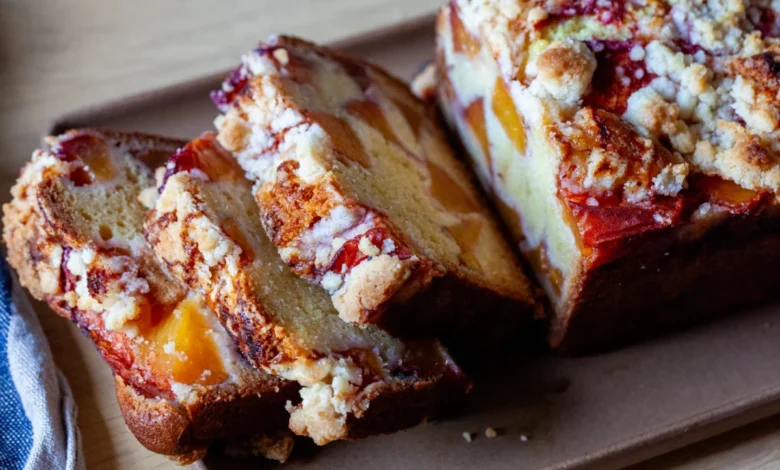
The pursuit of culinary perfection often demands immense patience, a reality underscored by a six-year recipe development cycle that recently culminated in the introduction of the Peach Cobbler Loaf. Crafting a baked good that successfully marries the rustic, juicy characteristics of a traditional summer cobbler with the structural integrity of a traditional loaf cake proved to be a formidable task for recipe developers. Iteration after iteration fell short of balancing moisture, fruit distribution, and structural density, illustrating the rigorous testing required in modern experimental baking.

The journey to the final recipe spanned six distinct stone fruit seasons, resulting in numerous discarded attempts and detailed troubleshooting notes. Early iterations consistently failed due to the inherent challenges of baking with fresh, high-moisture fruit. Diced peaches yielded a bland flavor profile within the batter, whereas thinly sliced peaches tended to disintegrate completely during the prolonged baking process. Furthermore, attempts to incorporate warm baking spices directly into the batter resulted in an unappealing aesthetic without adding meaningful depth of flavor. These persistent hurdles routinely forced developers to pause experimentation until the following summer season provided a fresh harvest of ripe peaches.

The technical specifications required to achieve a successful bake demanded precise measurements and specific equipment. The final formulation relies on a standard loaf pan with a liquid capacity of six cups (approximately 1,420 milliliters), measuring eight by four inches at the base and nine by five inches at the top. Because the batter fills the pan to its maximum capacity and fruit juices naturally bubble over during baking, the use of an underlying rimmed baking sheet is required to prevent oven spills. The ingredient list blends traditional cake components—such as melted butter, granulated and brown sugars, fresh yogurt or sour cream, eggs, baking powder, baking soda, and all-purpose flour—with fresh lemon zest and juice to brighten the flavor profile of the fruit.

Chronologically, the assembly process requires meticulous layering to ensure even distribution. The procedure begins by tossing peach wedges with freshly squeezed lemon juice, cinnamon, and brown sugar. Concurrently, the wet and dry cake ingredients are combined in a separate bowl. Half of the dense batter is poured into a parchment-lined loaf pan, followed by an initial layer of seasoned peaches. The remaining batter is carefully spread over the fruit, topped with the remaining peach wedges, any accumulated fruit juices, and a buttery streusel crumb topping. Baking takes place at 375 degrees Fahrenheit (190 degrees Celsius) for 60 to 70 minutes, requiring a tester to ensure the center and the areas beneath the top peach layer are fully baked.

Industry culinary experts and home baking enthusiasts alike have long recognized the inherent difficulties of translating southern-style skillet cobblers into portable, sliceable baked goods. Traditional cobblers rely on loose, bubbling fruit covered by a biscuit or cake topping, a structure that inherently collapses when inverted into a traditional loaf form. By engineering a dual-layer batter system combined with a protective streusel crust, the Peach Cobbler Loaf overcomes these structural limitations. Food scientists and pastry chefs frequently note that high-moisture fruits like peaches introduce variables such as syneresis—the weeping or release of liquid—which can compromise the crumb of a cake if not properly counterbalanced by fats, emulsifiers, and precise flour ratios.

The broader implications of this multi-year recipe development highlight a growing consumer appreciation for slow, deliberate culinary craftsmanship in an era dominated by rapid, trend-driven digital food content. As home baking continues to maintain the heightened popularity it gained over the past decade, detailed documentation of kitchen failures and iterative problem-solving resonates strongly with culinary audiences. Furthermore, utilizing seasonal produce at the exact conclusion of its harvest window emphasizes sustainability and resourcefulness, encouraging home cooks to maximize the final weeks of peak agricultural yields.

Storage and preservation guidelines further enhance the practical appeal of the finished baked good. Culinary recommendations suggest that the loaf improves in flavor and texture on the second and third days following preparation, provided it is stored at room temperature without an airtight wrapper to preserve the crispness of the streusel topping. Placing the loaf pan inside a deactivated oven or microwave functions as an effective makeshift bread box, protecting the crust from excessive ambient humidity. As the commercial and domestic baking communities analyze the technical merits of this recipe, it stands as a case study in persistence, material science in the kitchen, and the ultimate reward of refusing to settle for culinary compromise.