Parading BYD and CATL at a state dinner forces Washington to engage the exact firms it has flagged as security risks

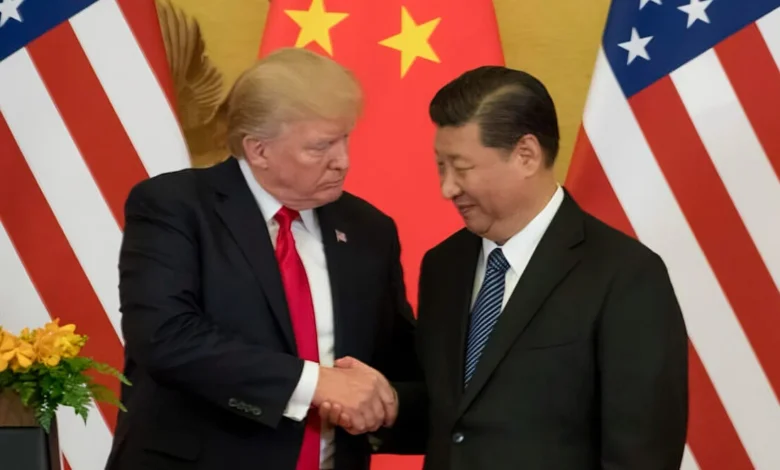
Washington and Beijing are currently finalizing a high-profile roster of Chinese corporate titans to accompany President Xi Jinping during his scheduled state visit to the American capital on September 24. According to diplomatic sources cited by Reuters, the prospective delegation features some of China’s most prominent advanced manufacturing and technology champions, including electric vehicle (EV) pioneer BYD, consumer electronics and EV manufacturer Xiaomi, and dominant battery behemoths CATL and Gotion. Final invitations are expected to be formally issued within days, pending critical bilateral discussions this weekend between US Treasury Secretary Scott Bessent and Chinese Vice Premier He Lifeng.
This high-stakes diplomatic maneuvering highlights a profound paradox in current US-China relations. By extending invitations to executives whose firms have been explicitly targeted by American regulatory and defense agencies, Beijing is orchestrating a deliberate stress test of Washington’s economic security architecture.
The Composition of the Delegation and Regulatory Friction
The likely composition of the Chinese delegation is striking given the heavy regulatory clouds hanging over several of the candidate companies. CATL and BYD have both been targeted by the US Department of Defense, placed on lists alleging ties to the Chinese military in January 2025 and June 2026, respectively. According to insiders close to the diplomatic planning, President Xi specifically intends to spotlight companies currently grappling with US sanctions, blacklists, and trade restrictions.
This strategy mirrors recent diplomatic playbooks. In May, President Donald Trump included several Chinese-scrutinized technology firms, most notably semiconductor titan Nvidia, in his own business delegation during a high-profile visit to Beijing. However, the inclusion of Chinese automotive and clean-energy heavyweights carries a vastly different domestic political and national security weight in Washington.
Bringing BYD Chairman Wang Chuanfu to the American capital serves as a direct probe into the boundaries of President Trump’s stated positions on foreign investment. Earlier in September, Trump indicated that he would be open to allowing Chinese automakers to establish manufacturing plants within the United States, provided they employ domestic American workers. Yet, this rhetorical openness coexists with aggressive protectionist walls: a 100 percent tariff regime on Chinese electric vehicles remains firmly in place, and a sweeping Biden-era Department of Commerce rule will formally bar China-linked automakers from selling new connected vehicles—including those assembled domestically—starting with the 2027 model year.
The Ford Motor Company Conundrum
The tensions surrounding Chinese automotive and battery technology are felt acutely by legacy US automakers, none more so than Ford Motor Company. Domestic automotive lobbying groups have strongly urged the Trump administration to bar Chinese automotive market access entirely. For Ford, however, the corporate strategy has involved a calculated, albeit controversial, embrace of Chinese technology through licensing agreements.
Ford’s licensing arrangement with CATL to build a lithium-iron-phosphate (LFP) battery plant in Marshall, Michigan, has placed the automaker in the crosshairs of federal regulators. Transportation Secretary Sean Duffy recently delivered a sharply critical letter to Ford leadership, lambasting the company over its deep-seated supply chain ties to China. Duffy also targeted Ford for its joint manufacturing venture with Geely in Spain and reportedly interrogated corporate executives during closed-door meetings regarding potential joint venture models that might allow Chinese automakers to scale operations inside the United States.
The operational and financial risks for Ford are substantial. CATL’s inclusion on the Pentagon’s restricted list carries concrete legal consequences beginning in 2027. Under Section 154 of the National Defense Authorization Act (NDAA), the US military will be legally prohibited from purchasing battery cells produced by CATL or sourced through its supply chains. This restriction threatens to complicate Ford’s ambitions to supply defense-related vehicle fleets with batteries manufactured at the Marshall facility.
Furthermore, Ford’s federal tax credit eligibility under the Inflation Reduction Act hangs in the delicate balance of regulatory compliance. The Treasury Department’s rules governing the Section 45X Advanced Manufacturing Production Credit currently utilize an "effective control" test. This framework allows Ford to qualify for subsidies by retaining direct ownership of the physical plant site and equipment. However, any structural modification to its intellectual property licensing agreement with CATL risks violating strict Foreign Entity of Concern (FEOC) guidelines. A disqualification under these rules could strip the automaker of tens of millions of dollars in annual production credits.
Broader Legal and Regional Flashpoints
The friction between Chinese industrial expansion and American regulatory enforcement extends far beyond traditional automotive boardrooms. In Michigan, Gotion is currently embroiled in federal litigation against Green Charter Township, alleging that local municipal officials improperly blocked its planned $2.36 billion EV-components manufacturing plant.
Meanwhile, supply chain compliance is being heavily enforced through the judicial system. In December, major automotive parts supplier Wanxiang agreed to pay more than $53 million to resolve a high-profile Justice Department investigation concerning allegations of customs fraud and the evasion of anti-dumping duties on imported Chinese auto parts. These ongoing legal battles demonstrate that the collision course between Chinese green technology investment and US trade enforcement is already playing out across American courtrooms, completely independent of any diplomatic breakthroughs at upcoming presidential summits.
Timeline of Key Events and Regulatory Milestones
- January 2025: The US Department of Defense adds Contemporary Amperex Technology Co. Limited (CATL) to its list of firms purportedly tied to the Chinese military.
- May 2025: President Donald Trump includes technology firms under foreign scrutiny in his official business delegation during a state visit to Beijing.
- June 2026: BYD is added to the Pentagon’s restricted list of companies with alleged military ties in China.
- September 2026 (Early): President Trump publicly reiterates conditional support for Chinese automakers building manufacturing facilities within the United States, provided they utilize domestic American labor.
- September 24, 2026: Scheduled state visit of Chinese President Xi Jinping to Washington, featuring a high-level business delegation designed to test the limits of US economic restrictions.
- 2027 Model Year: Implementation date for Department of Commerce connected vehicle bans targeting software and hardware linked to China, alongside the effective enforcement date of Section 154 of the NDAA barring military procurement of CATL-linked battery cells.
Fact-Based Analysis of Economic and Diplomatic Implications
The decision to parade executives from blacklisted enterprises like BYD and CATL through Washington presents a complex diplomatic puzzle for the White House. From Beijing’s perspective, the inclusion of these sanctioned leaders is a calculated assertion of industrial pride and an insistence on normalizing commercial relations despite geopolitical headwinds. It forces American policymakers to either engage directly with the very corporate entities they have designated as national security threats or risk an immediate diplomatic breakdown.
For the Trump administration, hosting figures like Wang Chuanfu tests the coherence of its "America First" industrial policy. While the administration has shown a transactional willingness to entertain foreign direct investment that creates immediate blue-collar jobs on US soil, the national security apparatus remains deeply entrenched in a containment mindset. The statutory prohibitions taking effect in 2027—ranging from NDAA procurement bans to Department of Commerce connected-vehicle restrictions—create an almost insurmountable legal barrier for Chinese firms attempting to integrate into the domestic US automotive supply chain.
Ultimately, whether the inclusion of these executives signals a genuine shift toward pragmatic economic accommodation or remains a purely superficial diplomatic tit-for-tat will depend entirely on the tangible outcomes of the upcoming summit. If the meetings yield a formal, structured framework that allows restricted Chinese firms to navigate American regulatory hurdles, it would represent a monumental pivot in US trade policy. Conversely, if the summit concludes without practical mechanisms for compliance, the presence of BYD and CATL executives in Washington will be remembered merely as a high-stakes diplomatic provocation that laid bare the deep, systemic fractures dividing the world’s two largest economies.
Related posts: