New Observations Reveal Comet 3I/ATLAS Is Bursting with Methanol in an Unprecedented Interstellar Mystery

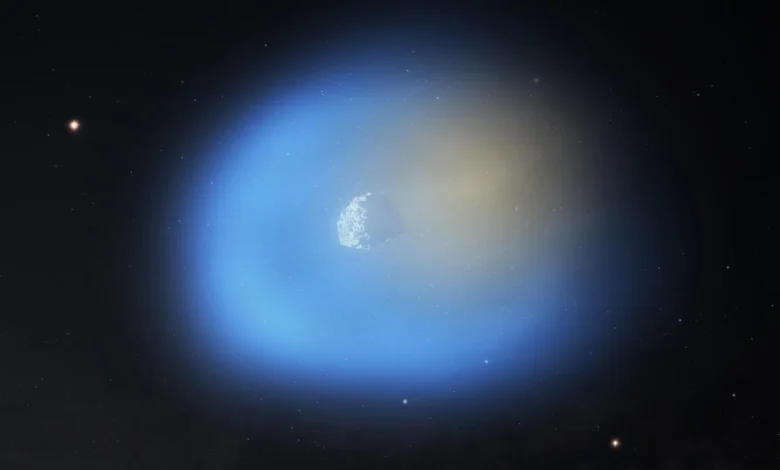
The scientific exploration of interstellar interlopers has taken a dramatic new turn as astronomers continue to decode the physical and chemical properties of Comet 3I/ATLAS. Recent data collected by the Atacama Large Millimeter/submillimeter Array (ALMA)—a premier international astronomical facility in which the U.S. National Science Foundation National Radio Astronomy Observatory (NSF NRAO) serves as a key partner—has unveiled a staggering chemical anomaly. According to the latest findings, this wandering celestial body contains an extraordinarily high concentration of methanol, dwarfing the methanol abundance found in the vast majority of native comets originating within our own solar system.
This groundbreaking discovery offers researchers an unprecedented geochemical fingerprint from an alien star system. By examining the volatile compounds boiling off the comet’s icy surface, scientists are effectively reading a cosmic manuscript written billions of miles away, long before our own planetary neighborhood took its current shape. The implications of these findings stretch far beyond a single interstellar visitor, offering vital clues regarding the universal processes of star and planet formation across the Milky Way.
A Rare Cosmic Visitor: Background Context and Discovery
Comet 3I/ATLAS is only the third confirmed interstellar object ever documented passing through our solar system, following a brief and historic lineage that began with 1I/’Oumuamua in 2017 and continued with 2I/Borisov in 2019. While ‘Oumuamua baffled scientists with its asteroid-like appearance and unexplained non-gravitational acceleration, and Borisov displayed a more traditional cometary coma rich in carbon monoxide, 3I/ATLAS is carving out its own unique scientific identity.
Discovered by the Asteroid Terrestrial-impact Last Alert System (ATLAS), this elusive visitor has been under intense global scrutiny as it journeys inward toward the inner solar system. Interstellar objects are pristine relics ejected from their parent planetary systems during the chaotic epochs of planetary migration and gravitational scattering. As they plunge through interstellar space for millions or even billions of years, they remain deep-frozen time capsules. When such an object happens to cross paths with our solar system, solar heating activates its volatiles, providing astronomers with a fleeting window to analyze alien materials without needing to launch a multi-billion-dollar sample-return mission to another star.
Chronology of Observations: From James Webb to ALMA
The scientific campaign to understand 3I/ATLAS has unfolded rapidly through a coordinated global effort utilizing some of the most advanced telescopes ever engineered. The investigative timeline highlights a progression of increasingly sophisticated discoveries:
Early Phase Observations: When 3I/ATLAS was still located at a considerable distance from the Sun, researchers directed the James Webb Space Telescope (JWST) toward the target. JWST’s sensitive infrared instruments revealed that the comet’s surrounding cloud, or coma, was heavily dominated by carbon dioxide. This initial finding hinted at a volatile-rich interior shaped by environmental conditions vastly different from those typical of our solar system’s Kuiper Belt or Oort Cloud.
Late 2025 Campaign: As the comet continued its relentless trajectory closer to the Sun, solar radiation began to aggressively heat its icy nucleus, causing frozen gases to sublimate and drag dust particles into space. During this crucial phase in late 2025, an international research team deployed the Atacama Compact Array—a component of the ALMA observatory situated high in the Atacama Desert of Chile.
Targeting Submillimeter Signatures: Researchers concentrated their observational efforts on the faint submillimeter spectral signatures emitted by specific molecules. Their primary targets were methanol (CH3OH), a common alcohol, and hydrogen cyanide (HCN), a nitrogen-bearing organic molecule frequently detected in native solar system comets.
Unveiling the Chemical Fingerprint: The ALMA data delivered an immediate surprise. The relative ratio of methanol to hydrogen cyanide measured on multiple observation dates yielded astonishing values of approximately 70 and 120. These high ratios firmly position 3I/ATLAS among the most methanol-dense cometary bodies ever recorded by modern astronomy.
Decoding the Alien Chemistry: Insights from the Research Team
The sheer concentration of methanol in 3I/ATLAS has forced astrophysicists to reconsider the chemical pathways active in protoplanetary disks surrounding distant stars. Nathan Roth, a professor at American University and the lead author of the recent research study, emphasized the profound nature of the discovery.
"Observing 3I/ATLAS is like taking a fingerprint from another solar system," Roth explained, highlighting the intimate connection between the comet’s molecular inventory and the conditions of its birthplace. "The details reveal what it’s made of, and it’s bursting with methanol in a way we just don’t usually see in comets in our own solar system."
This chemical signature implies that the ice comprising 3I/ATLAS condensed under thermodynamic and chemical conditions drastically distinct from the nebular environments that gave birth to comets in our stellar neighborhood. Whether this abundance is the result of cold interstellar grain-surface chemistry, high ultraviolet radiation exposure in its home system, or unique thermal processing remains an active area of theoretical modeling.
Microscopic Ice Grains Acting as Mini-Comets
Beyond the raw chemical abundances, ALMA’s exceptional spatial resolution enabled the research team to map the precise spatial distribution and dynamical behavior of the released molecules within the coma. This imaging revealed a fascinating dichotomy in how different volatiles escape the nucleus.
Data indicated that hydrogen cyanide primarily emanates directly from the comet’s central solid nucleus, mirroring the standard outgassing behavior observed in native solar system comets. Methanol, however, exhibited a far more complex emission pattern. Researchers found that methanol is being released not only from the main nucleus but also from microscopic ice grains drifting outward within the expanding coma.
These tiny, dust-sized ice particles act effectively as a swarm of miniature comets. As 3I/ATLAS barrels closer to the Sun and ambient temperatures rise, these floating grains undergo rapid thermal sublimation, continuously pumping additional streams of methanol vapor into the surrounding envelope of gas and dust.
While comparable phenomena have been sparsely documented in a select few comets native to our own solar system, this marks the first time scientists have successfully traced the detailed microphysics of grain-based outgassing in an interstellar traveler. Observing this process in real-time provides invaluable data on the mechanical strength, porosity, and thermal conductivity of alien ice aggregates.
Broader Implications for Astrobiology and Planetary Formation
The accumulation of anomalous chemical traits in 3I/ATLAS—ranging from its early carbon dioxide dominance detected by JWST to its newly confirmed methanol enrichment measured by ALMA—contributes a vital puzzle piece to our understanding of galactic chemistry.
Comets are widely hypothesized to have delivered crucial water and prebiotic organic molecules to the early Earth, potentially kickstarting the chemical evolution that led to the emergence of biological life. By studying interstellar comets like 3I/ATLAS, astrobiologists can test whether the building blocks of life are universally distributed throughout the galaxy or if planetary systems exhibit wildly divergent chemical profiles.
The stark chemical differences between 3I/ATLAS, 2I/Borisov, and 1I/’Oumuamua demonstrate that the interstellar medium is chemically heterogeneous. Different stellar nurseries produce small bodies with vastly different volatile budgets, shaped by the metallicity, radiation environment, and dynamical history of their parent star clusters.
Future Outlook and the Quest for More Interstellar Intruders
As ground-based survey telescopes grow more powerful—exemplified by upcoming facilities like the Vera C. Rubin Observatory—astronomers anticipate the discovery of many more interstellar visitors in the coming decades. Each newly detected interloper bridges the gap between our local solar system and the broader cosmos, transforming theoretical models of planetary formation into empirically testable hypotheses.
For now, Comet 3I/ATLAS remains a celestial ambassador from an unseen world, whispering secrets of distant stellar systems through its unusual chemical breath. As it rounds the Sun and begins its long, lonely journey back into the interstellar void, the data captured by ALMA and its sister observatories ensures that its unique fingerprint will be studied, debated, and referenced by planetary scientists for generations to come.