Archaeologists unearth monumental 2,700-year-old Etruscan tomb at Vulci revealing a trove of ancient artifacts

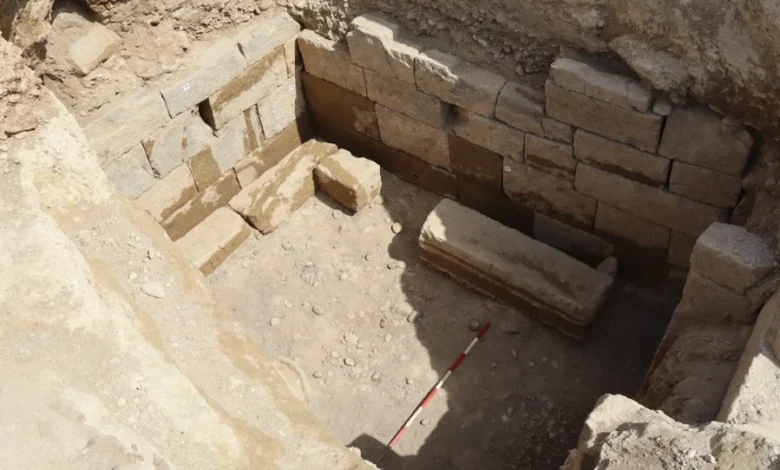
Archaeologists working in the province of Viterbo have announced the discovery of a remarkably preserved 2,700-year-old tomb at the site of Vulci, an ancient Etruscan city-state located north of Rome. The burial site, which dates back to the Orientalizing period of Etruscan civilization, has been designated the "Tomb of the Stone Chamber." Despite centuries of incursions by tomb robbers—an ongoing challenge for Mediterranean archaeology—the site yielded a significant collection of grave goods that provide new insights into the social hierarchy, economic reach, and funerary customs of the Etruscan elite during the 8th and 7th centuries BCE.
The excavation was led by the Superintendency of Archaeology, Fine Arts and Landscape for the Province of Viterbo and Southern Etruria (SABAP-VT-EM). According to official reports, the discovery was made during a systematic archaeological survey of the Polledrara necropolis, an area historically significant for its wealth of aristocratic burials.
Historical Context of the Vulci Necropolis
Vulci served as one of the most powerful and affluent cities in the Etruscan League. Positioned strategically along the Fiora River, the city commanded extensive trade routes that connected the Tyrrhenian coast to the interior of the Italian peninsula. The city reached its zenith between the 6th and 4th centuries BCE, though the necropolis at Polledrara suggests that Vulci was already a nexus of Mediterranean luxury and power as early as the late 8th century BCE.
The Orientalizing period, during which this tomb was constructed, is characterized by a dramatic surge in foreign imports and the adoption of Eastern Mediterranean artistic styles. This was an era of intense maritime commerce, where Etruscan princes engaged with Greek, Phoenician, and Near Eastern traders. The wealth found within the Tomb of the Stone Chamber reflects this cultural exchange, as the grave goods include materials that were likely sourced from distant regions, signaling the deceased’s status within the Mediterranean trade network.
A Chronology of Discovery and Investigation
The discovery at Polledrara is not an isolated event but rather the latest chapter in a long history of archaeological investigation in the region. The chronology of research at Vulci spans over 150 years:
- Late 19th Century: French archaeologists, most notably Lucien Bonaparte, Prince of Canino, conducted extensive excavations in the Vulci region. These early efforts were instrumental in uncovering the sheer scale of the necropolis, though they often lacked the modern stratigraphic precision utilized by today’s teams.
- Early-to-Mid 20th Century: The site saw sporadic investigation, though it also suffered significantly from "tombaroli" or tomb robbers who exploited the vast, unmonitored burial grounds.
- 2023-2024: The SABAP-VT-EM launched a renewed, systematic survey of the Polledrara site, employing non-invasive geophysical techniques to map subsurface structures before initiating physical excavation.
- Summer 2024: The Tomb of the Stone Chamber is formally identified and excavated, revealing that despite previous looting attempts, the core of the funerary assemblage remained largely undisturbed.
Inventory of the Grave Goods
The richness of the burial underscores the status of the individuals interred within. The artifacts recovered include a comprehensive "banquet set," which was a staple of high-status Etruscan burials. In Etruscan society, the banquet was not merely a social event but a ritualized demonstration of power and political allegiance. The presence of these vessels suggests the deceased were expected to continue their elevated social standing in the afterlife.
Key items identified by the excavation team include:
- Weapons and Armor: These artifacts, likely symbolic of the deceased’s role as a warrior-aristocrat, suggest a society that prioritized military leadership.
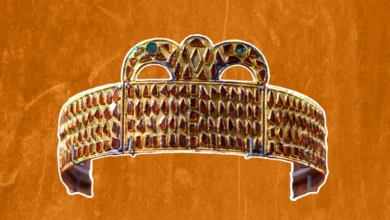
- Precious Metals: A variety of gold and bronze plates were found, showcasing the advanced metallurgical skills for which the Etruscans were renowned throughout the ancient world.
- Chariot Components: The presence of chariot parts is particularly significant, as these vehicles were the primary transport for the elite and served as status symbols in both life and death.
- Rare Footwear: Perhaps the most unusual find is a pair of women’s shoes. Organic materials like leather or cloth rarely survive the damp conditions of central Italy; their preservation provides a rare glimpse into the sartorial habits of Etruscan noblewomen.
Official Responses and Academic Significance
The Superintendency of Archaeology, Fine Arts and Landscape for the Province of Viterbo and Southern Etruria has lauded the find as a milestone for the preservation of cultural heritage. In a statement released following the excavation, representatives noted that the discovery confirms the "extraordinary archaeological potential" of the Polledrara necropolis.
Dr. Elena Rossi, a lead researcher on the project, noted, "The tomb provides a snapshot of a moment in history when Vulci was at the center of Mediterranean influence. Finding such a collection intact, despite the historical persistence of looting, is a testament to the effectiveness of current preservation policies and the precision of modern excavation techniques."
The scientific community has reacted with enthusiasm, noting that the data gathered from the tomb will allow for a more nuanced understanding of the social strata of Vulci. "The items recovered are not just objects; they are evidence of a complex, stratified society," says Dr. Marcus Thorne, a specialist in Iron Age Italian civilizations. "The banquet set, specifically, allows us to analyze the chemical residue of food and drink, which can tell us what these elites consumed and where those goods originated."
Analysis: Implications for Etruscan Studies
The discovery of the Tomb of the Stone Chamber has significant implications for future research. Firstly, it provides a control group for evaluating the thousands of artifacts currently held in private collections worldwide—many of which were looted from Vulci in the 19th and 20th centuries. By analyzing the context of this tomb, researchers can better understand the original placement and usage of similar items found in museum collections.
Furthermore, the survival of the organic artifacts—such as the women’s shoes—presents a unique opportunity for bioarchaeological study. Specialists are currently applying advanced imaging and carbon-dating techniques to these items, which may reveal the specific artisan techniques used in 7th-century Etruria, as well as the potential trade of luxury goods between the Etruscans and the Greeks.
The challenge of "tombaroli" remains a significant backdrop to this success. The Italian government has stepped up efforts to monitor the site through satellite imagery and increased security patrols. The fact that this tomb survived multiple attempts by robbers suggests that the burial’s structural integrity—likely due to the heavy stone slab construction—acted as a natural deterrent, preserving the historical record for modern scholars.
Future Directions
As the excavation phase concludes, the focus shifts to the long-term conservation and study of the artifacts. The SABAP-VT-EM plans to document the entire assemblage in a digital repository, ensuring that the findings are accessible to the international scientific community.
The discovery at Vulci serves as a reminder of the fragility of the past. As urban development and agricultural expansion continue to encroach upon historical landscapes, the systematic excavation of sites like Polledrara remains vital. The Tomb of the Stone Chamber is not merely a collection of gold and bronze; it is a vital bridge to understanding the complex, interconnected nature of ancient Mediterranean societies. The team expects to publish their full findings in a peer-reviewed monograph by the end of the next academic year, promising further revelations about the identity and daily lives of the people who resided in this monumental Etruscan city.