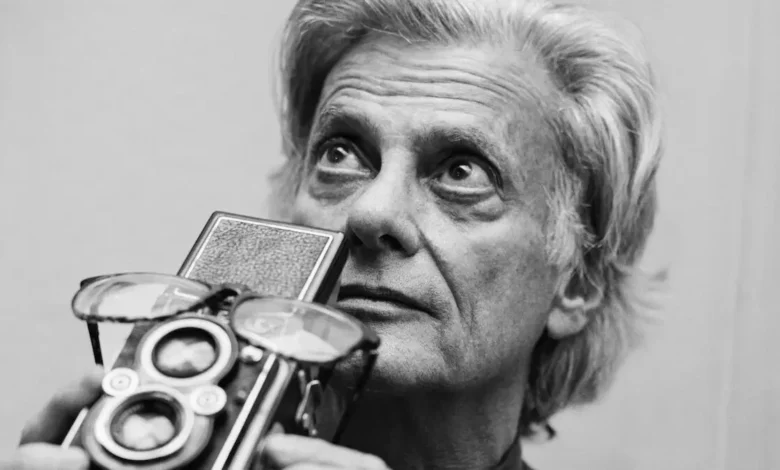
Ron Howard’s latest documentary, Avedon, serves as a definitive exploration of the life and work of Richard Avedon, the photographer who fundamentally altered the aesthetic landscape of the 20th century. Widely regarded as Howard’s most accomplished documentary work to date—surpassing even the acclaimed The Beatles: Eight Days a Week—the film provides a rigorous analysis of a man who bridged the disparate worlds of high-fashion editorial work and stark, democratic humanism. Edited with surgical precision by Andrew Morreale, the film utilizes hundreds of photographs and archival footage to deconstruct the "Avedon method," a technique that prioritized the psychological truth of the subject over traditional technical artifice.
The Evolution of a Visual Language
Richard Avedon’s career spanned six decades, beginning in 1944 and continuing until his death in 2004. During this period, he produced an estimated 16,000 portrait sittings, maintaining a consistent output of roughly one session per working day for sixty years. The documentary traces his trajectory from a young man in the U.S. Merchant Marines, where he was tasked with capturing identification photographs of personnel, to his tenure as a titan of the fashion industry at Harper’s Bazaar and Vogue.
It was during his military service that Avedon discovered the power of the minimalist background. While his contemporaries focused on complex lighting and elaborate settings, Avedon found that placing subjects against a stark white void stripped away the protective layers of social identity. By removing the context of the surroundings, he forced the viewer to engage directly with the individual’s countenance. This discovery would become the hallmark of his style, influencing portraiture for generations to come.
Chronology of an Artistic Pioneer
The film establishes a clear timeline of Avedon’s professional and personal development:
- 1923: Richard Avedon is born in New York City.
- 1942–1944: Serves in the Merchant Marines, where he captures his first professional portraits—thousands of ID photos that cement his preference for the white-background aesthetic.
- 1945–1965: Dominates the fashion photography industry, introducing a sense of kinetic movement and high drama to editorial layouts.
- 1957: The film Funny Face is released, featuring a character inspired by Avedon, signaling his transition into a pop-culture icon.
- 1969–1976: Executes the "In the American West" series, a collection of portraits documenting laborers, drifters, and everyday citizens that initially met with resistance from the fine art establishment due to its raw, unvarnished depiction of American life.
- 2004: Avedon passes away in San Antonio, Texas, while on assignment for The New Yorker.
Decoding the Avedon Method
The documentary features insights from a diverse array of figures, including Tina Brown, Larry Gagosian, John Lahr, Twiggy, Adam Gopnik, Hilton Als, and Calvin Klein. These contributors provide context to the paradox of Avedon’s career: he was a man who lived within the ephemeral, status-driven world of luxury fashion while simultaneously acting as an existentialist observer of the human condition.
Isabella Rossellini, reflecting on her experiences as an Avedon subject, notes that his process was defined by a deliberate lack of repetition. Unlike photographers who favored rapid-fire shutter releases, Avedon often spent the majority of an hour-long session in conversation or observation. He preferred to wait for a moment of vulnerability, often capturing the most iconic images only in the final minutes of a shoot. This approach is exemplified in his 1957 portrait session with Marilyn Monroe. While the day yielded numerous images of the star in her public persona, the definitive photograph—a candid, weary, and deeply human moment—occurred only when Monroe dropped her guard at the very end of the session.
The Intersection of Commerce and Art
A significant portion of the documentary addresses Avedon’s commercial work, including his iconic advertising campaigns such as the Obsession perfume spots. Critics have often debated whether commercial work compromises an artist’s integrity. However, the film posits that for Avedon, there was no meaningful distinction between his portraiture and his advertising.
Whether he was photographing J. Robert Oppenheimer, Orson Welles, or a series of Oklahoma oil workers, Avedon applied the same intellectual rigor. His ability to maintain a consistent visual vocabulary across sixty years—despite the changing technologies and cultural shifts—is presented as the primary evidence of his genius. By treating a fashion model with the same gravity as a war general, he dismantled the traditional hierarchies of portrait photography.
Technical Analysis and Legacy
From a filmmaking perspective, Howard and editor Andrew Morreale employ a narrative structure that moves beyond the traditional "talking head" documentary format. The film utilizes a rhythmic, musical approach to the placement of images, allowing the viewer to absorb the sheer volume of Avedon’s work without becoming overwhelmed.
The film also addresses the darker chapters of Avedon’s life, including the mental health struggles of his sister and the complexities of his personal relationships. By juxtaposing these intimate tragedies with his public success, the film provides a rounded, humanizing portrait of a man who was often viewed as a remote, untouchable figure.
James Martin, executive director of the Richard Avedon Foundation, provides unprecedented access to the artist’s archives. This access allows the documentary to highlight the sheer scale of the work, emphasizing that Avedon’s output was not merely a collection of moments, but a sustained, decades-long project of self-discovery through the faces of others.
Broader Implications for Photography
The legacy of Richard Avedon remains a subject of intense study in contemporary photography. His work shifted the medium away from soft-focus romanticism toward a hard-edged, psychologically dense realism. By forcing subjects to confront the camera—and by extension, the viewer—without the benefit of props or environmental cues, he challenged the notion that a photograph should merely represent beauty. Instead, he argued that a photograph should reveal the subject’s internal reality.
The film suggests that Avedon’s influence is so pervasive that it is now often invisible. When a modern portrait photographer chooses a plain background or asks a subject to hold a neutral expression, they are operating within a framework that Avedon not only popularized but essentially codified.
In the final assessment, the documentary makes a compelling case for Avedon’s continued relevance. By deconstructing the techniques of a master, the film invites audiences to look at the world with the same intensity that Avedon brought to his subjects. It is a work that underscores the essential nature of the medium: that the camera, in the hands of a visionary, is not merely a device for recording, but a tool for truth. As Avedon himself stated in archival footage featured in the film, he followed no rules and no laws, relying instead on an intuitive understanding of the fragile, fleeting intersection between the person in front of the lens and the light hitting the film. The result, as Howard’s film expertly demonstrates, is a visual record of the 20th century that remains as vital and provocative today as it was the moment the shutter clicked.