Mbappé is the latest global name to find himself on the wrong side of Chinese patriotism | Fortune

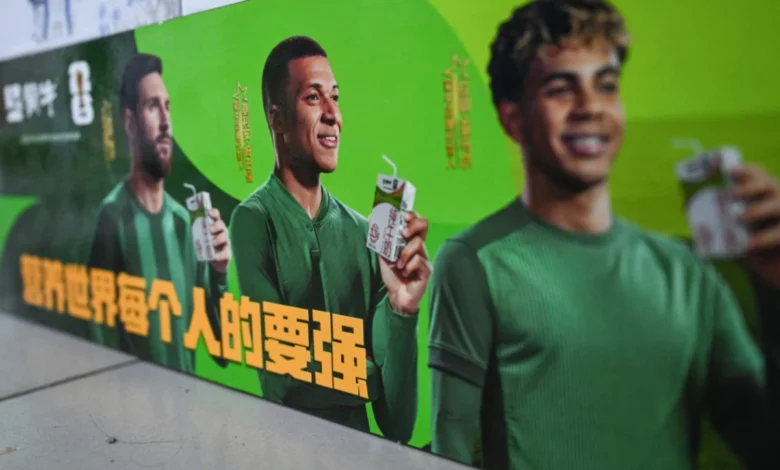
The world of international commerce and high-profile sports marketing has long been characterized by a delicate balancing act when engaging with the Chinese market. For global icons and corporations, the path to commercial success in the world’s second-largest economy is often paved with strict adherence to cultural sensitivities and political nuances. The latest figure to find himself on the wrong side of this invisible, yet formidable, red line is French soccer superstar Kylian Mbappe. His recent comments during a French talk show appearance have triggered a cascade of consequences, resulting in the termination of lucrative sponsorship deals and the suspension of his club’s broadcasts across Chinese state media.
The Incident and Immediate Fallout
During a casual appearance on a popular French online talk show, Kylian Mbappe engaged in a discussion regarding various internet memes. In a moment that has since cost him millions in potential earnings, he referred to a specific meme figure as a "Chinese dictator," a comment widely interpreted by Chinese audiences as a direct allusion to Mao Zedong. In the context of contemporary Chinese public discourse, references to the nation’s founding leader are treated with the utmost gravity; any perceived irreverence or characterization that deviates from the official state narrative is met with swift and severe public condemnation.
The backlash was instantaneous and systematic. Within 72 hours of the broadcast, three major Chinese brands—beverage giant Dongpeng, dairy conglomerate Mengniu, and cheese manufacturer Milkground—unilaterally severed their commercial ties with the Real Madrid forward. The companies opted for a brief, unified approach in their public communications, confirming the end of their partnerships without delving into specific justifications, a common tactic in the Chinese corporate sector to avoid further fueling public controversy.
The consequences extended beyond private sponsorship. China Media Group (CMG), the state-controlled broadcasting monolith, announced a suspension of broadcasts featuring LaLiga, the Spanish premier soccer league where Mbappe plays. By effectively de-platforming one of the world’s most popular athletes, the Chinese state sent a clear signal regarding the threshold for acceptable discourse.
A Chronology of the Controversy
The speed at which the situation escalated underscores the efficiency of modern digital sentiment in China.
- The Broadcast: Mbappe makes the remark during an interview on a French talk show.
- The Digital Reaction: Chinese social media platforms, including Weibo and Douyin, begin trending with hashtags criticizing the player.
- Day 1 (Post-Broadcast): Commercial partners begin internal reviews of their contractual obligations.
- Day 2: Dongpeng, Mengniu, and Milkground issue public statements confirming the termination of their contracts.
- Day 3: China Media Group confirms the suspension of LaLiga broadcasts, citing the need for "appropriate content standards."
- Day 4: Mbappe issues a formal apology via X, attempting to de-escalate the situation.
- Day 5: Real Madrid issues an official statement reinforcing its commitment to its Chinese fan base, and LaLiga President Javier Tebas initiates diplomatic outreach.
Corporate and Institutional Responses
In an effort to mitigate the damage to the league’s standing in a crucial market, LaLiga President Javier Tebas moved quickly to engage in damage control. Tebas held a high-stakes meeting with the Chinese ambassador to Spain to discuss the fallout. In a subsequent statement, he emphasized that the league is working to ensure that "an individual episode does not harm the important advances achieved nor affect the millions of Chinese fans who follow our competitions."
Real Madrid, one of the most commercially valuable clubs in global sports, also felt the pressure to intervene. The club’s official statement, released on Wednesday, sought to distance the institution from the individual’s comments while reaffirming its loyalty to the region. "Our club maintains a deep respect for China, its history, its culture, and its citizens," the statement noted, acknowledging the millions of Chinese fans who hold the club in high regard.
Mbappe’s own apology was structured to address the perceived slight directly. "My comment was ill-judged, and I now understand that it hurt many people in China and in Chinese communities around the world," he wrote. "I apologize to everyone my words have upset. This was absolutely not my intention. I have deep respect for the Chinese people and their history, and I am sincerely sorry."
Historical Precedents: The "China Trap"
Mbappe’s predicament is far from an isolated incident. Over the past decade, several high-profile entities have discovered that the Chinese market operates under a unique set of political and cultural parameters.
In 2019, the NBA faced a significant financial crisis when Daryl Morey, then-general manager of the Houston Rockets, posted a tweet in support of pro-democracy protests in Hong Kong. The Chinese government’s response was immediate: CCTV ceased broadcasting NBA games, and local sponsors withdrew their support. The blackout persisted for three years, resulting in estimated losses reaching into the hundreds of millions of dollars for the league.
Similarly, in 2021, Swedish retailer H&M experienced a massive consumer boycott after the company expressed concern over allegations of forced labor in the Xinjiang region. The backlash saw H&M stores removed from Chinese e-commerce platforms and a significant decline in the brand’s market share, demonstrating the power of consumer-led boycotts in the era of social media nationalism.
Even seemingly minor cultural faux pas can trigger significant disruptions. In June 2026, the lifestyle brand Lululemon faced intense scrutiny following a marketing activation on the Great Wall of China. The brand used a Japanese taiko drum during a performance, which was viewed as culturally insensitive by Chinese observers who noted the distinction between Japanese percussion and the Chinese dagu drum. The resulting social media outcry forced the company to scrub its digital presence of the event.
Even domestic entities are not immune to the volatility of public opinion. In 2024, the beverage giant Nongfu Spring, one of China’s most successful homegrown brands, was targeted by a nationalist boycott. Critics alleged that the company’s packaging incorporated Japanese-style architectural motifs, leading to a temporary but damaging decline in sales and public calls for stores to delist their products.
Economic Implications and Market Analysis
The case of Kylian Mbappe and the subsequent LVMH trademark dispute highlight a shifting reality for global brands: China is no longer just a growth market; it is a high-risk regulatory and cultural environment. The LVMH controversy, in which the luxury conglomerate won a legal battle against a Chinese tea chain only to face a massive public backlash, suggests that legal "victories" can result in significant brand equity loss.
For LVMH, the cost of this dynamic was measurable. Following the controversy involving Molly Tea, the parent company reported that its fashion and leather goods division saw a 5% decline in organic revenue, a rare stumble for a titan of the luxury industry. This indicates that for modern corporations, public sentiment often outweighs legal standing.
The financial data supports the observation that the Chinese market is increasingly sensitive to "perceived disrespect." In the sports and luxury sectors, where brand identity is inextricably linked to the persona of athletes and the exclusivity of the product, the inability to navigate these cultural landmines can lead to the erosion of years of investment.
Moving Forward: The Future of Cross-Cultural Brand Management
The incident involving Mbappe serves as a cautionary tale for global talent and multinational corporations. The ability to distinguish between "global" public discourse and the specific, localized expectations of the Chinese audience is becoming a requisite skill for those operating at the highest levels of international business.
As global brands attempt to maintain a presence in China, they are increasingly forced to adopt a strategy of "hyper-localization." This involves more rigorous vetting of promotional content and a deeper understanding of historical and cultural sensitivities that may be overlooked by Western PR teams.
Furthermore, the role of state media and social media platforms in shaping public opinion means that a singular, ill-judged comment can be amplified, contextualized, and weaponized within hours. For athletes like Mbappe, the future of their international brand may depend less on their performance on the pitch and more on their capacity to navigate the geopolitical complexities of a globalized, yet increasingly fragmented, world.
The resolution of this specific episode remains to be seen. While Mbappe has apologized and his club has attempted to mend fences, the long-term impact on his individual brand value in Asia remains in question. As the landscape of international commerce continues to evolve, the case of Kylian Mbappe will likely be cited as a seminal moment in the ongoing challenge of maintaining global appeal in a market where cultural and political sensitivities are paramount.