The culinary landscape has long revered the traditional Cobb salad as a masterclass in texture and flavor balance, combining crisp lettuce, juicy tomatoes, creamy avocado, smoky bacon, seasoned chicken, hard-boiled eggs, and sharp blue cheese into a singular bowl. In recent developments within home economics and culinary publishing, recipe developers have begun reimagining classic bowl-and-plate meals into portable formats. The introduction of the loaded Cobb sandwich—which encases the traditional salad components within a toasted focaccia loaf bound by a house-made buttermilk ranch dressing—represents a significant shift in how American lunch culture merges traditional dining staples with handheld convenience. This comprehensive guide outlines the methodology, historical context, nutritional implications, and structural adaptations of this viral meal-prep phenomenon.
Origins and Evolution of the Cobb Salad Paradigm
To understand the mechanics of the loaded Cobb sandwich, one must examine the provenance of its inspiration. The Cobb salad was famously invented in 1937 at the historic Brown Derby restaurant in Hollywood, California, by owner Robert Howard Cobb. As urban legend and culinary history record, Cobb foraged through the restaurant’s walk-in refrigerator late at night, combining leftover roast chicken, bacon, hard-boiled eggs, tomatoes, chives, lettuce, and Roquefort cheese, dressing the amalgamation with a French-style vinaigrette.
Over the decades, the salad transitioned from a Hollywood celebrity hotspot staple into an American institutional standard. Its enduring appeal lies in its distinct textural contrast: the crunch of iceberg lettuce, the yielding creaminess of ripe Hass avocados, the savory snap of cured pork, and the pungent tang of aged cheese. Translating this precise matrix of ingredients into a sandwich format requires careful architectural engineering. Traditional sandwich bread often fails under the immense weight and moisture content of a Cobb salad’s constituent parts. Consequently, contemporary recipe developers have turned to sturdy, porous vehicles like focaccia or ciabatta, which possess the structural integrity necessary to absorb dressing without disintegrating.
Anatomy of the Dish: Ingredients and Component Preparation
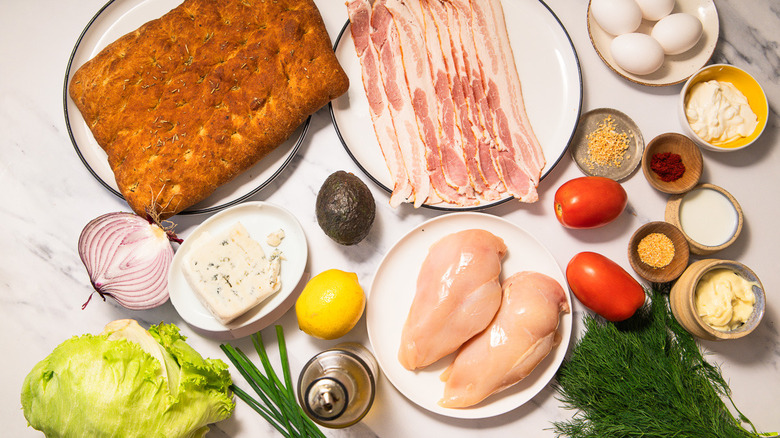
Constructing a high-end loaded Cobb sandwich requires meticulous attention to ingredient sourcing and preparation timelines. Culinary analysts note that the success of a complex sandwich hinges on the independent preparation of its individual components before final assembly.
The Foundation and Bread Selection
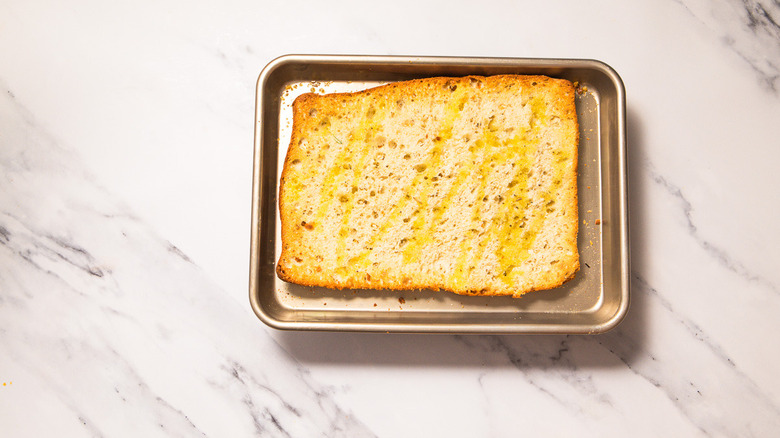
The structural anchor of the recipe is a large, high-quality focaccia loaf. Focaccia is chosen for its oil-rich crumb, which naturally resists moisture, and its golden, herb-scented crust. Before assembly, the loaf is sliced horizontally, brushed with extra-virgin olive oil, and toasted—either in a dry skillet or under a broiler for one to two minutes—until the cut surfaces develop a crisp exterior while maintaining a soft interior.
The Protein Elements
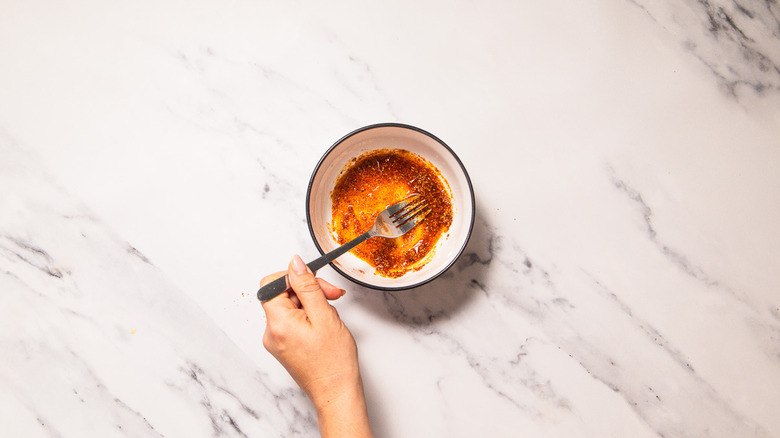
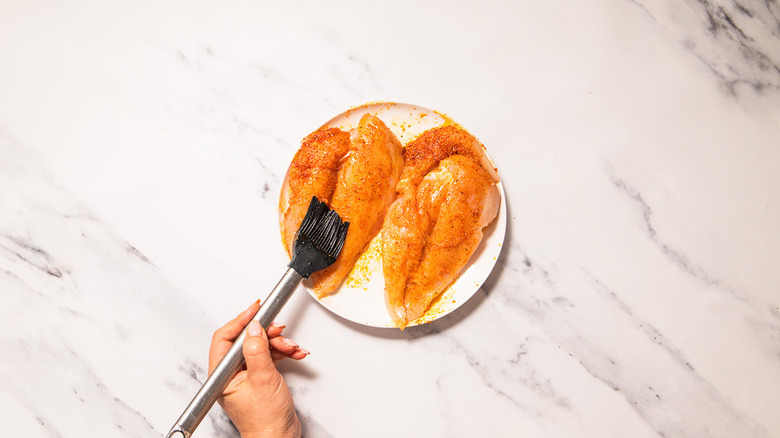
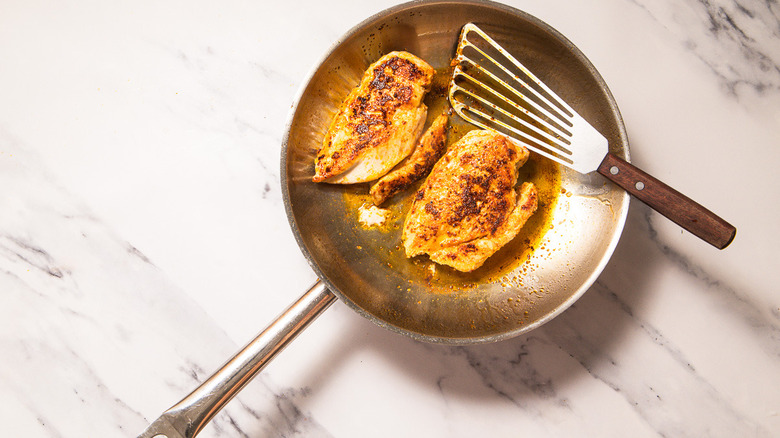
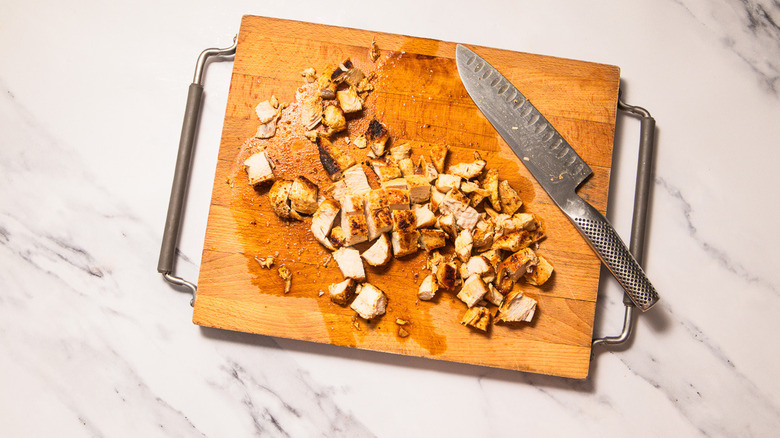
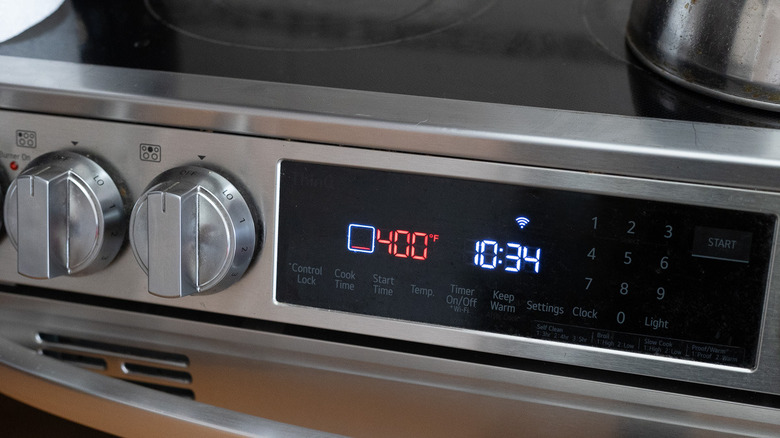
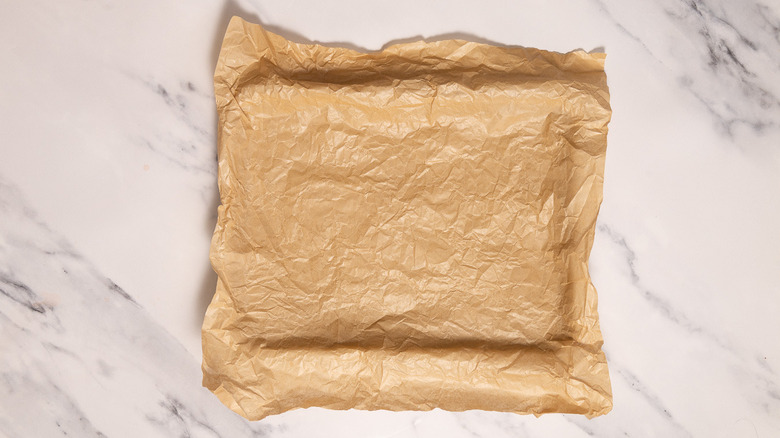
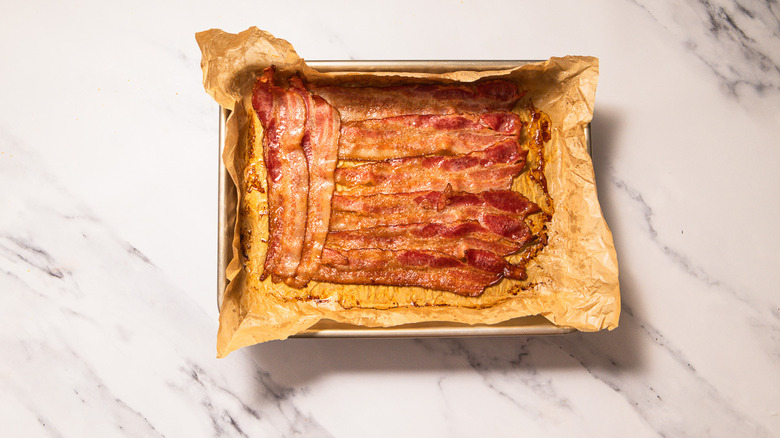
The protein profile combines poultry and cured pork. Boneless, skinless chicken breasts are seasoned with a dry rub consisting of extra-virgin olive oil, garlic powder, smoked paprika, kosher salt, and freshly ground black pepper. The chicken is seared in a skillet over medium-high heat for six to seven minutes per side, ensuring an internal temperature of 165 degrees Fahrenheit is reached, then rested for five minutes before being diced into bite-sized pieces. Concurrently, thick-cut bacon is arranged on a parchment-lined baking sheet and baked in a preheated oven at 400 degrees Fahrenheit for 15 to 18 minutes until uniformly crispy, then drained on paper towels to remove excess rendered fat.
The Produce and Dairy
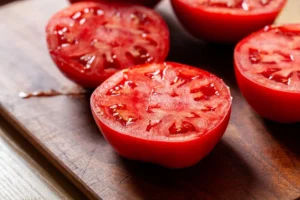
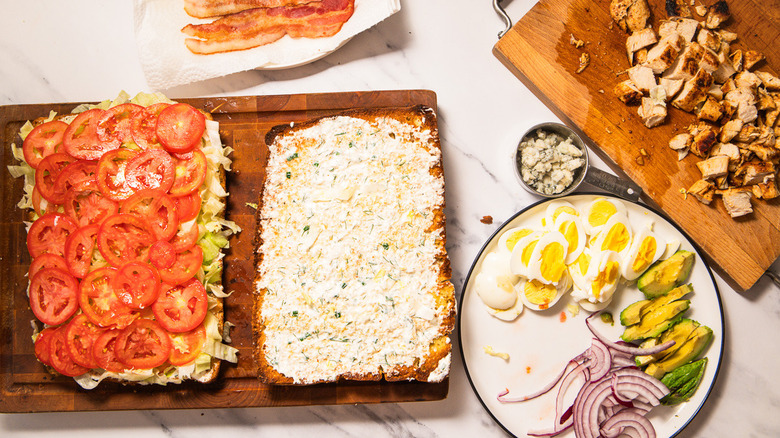
Freshness dictates the vegetable selection. Crisp iceberg lettuce provides the primary structural crunch, supplemented by ripe Roma tomatoes and sliced Hass avocados. Purple onions offer a sharp aromatic bite that cuts through the richness of the fats. Hard-boiled eggs, sliced evenly, introduce a velvety texture, while crumbled blue cheese provides a sharp, earthy finish. For those averse to traditional blue cheese, culinary alternatives such as milder gorgonzola dolce, feta, or goat cheese are frequently substituted to maintain the requisite dairy tang without overpowering the palate.
The Hero Element: House-Made Buttermilk Ranch
While the array of fillings garners initial visual attention, culinary professionals emphasize that the true unifying agent of the loaded Cobb sandwich is its dressing. Commercial bottled ranch dressings often rely on shelf-stable preservatives, thickeners, and pasteurized dairy that mute the bright, herbaceous notes characteristic of scratch-made variants.
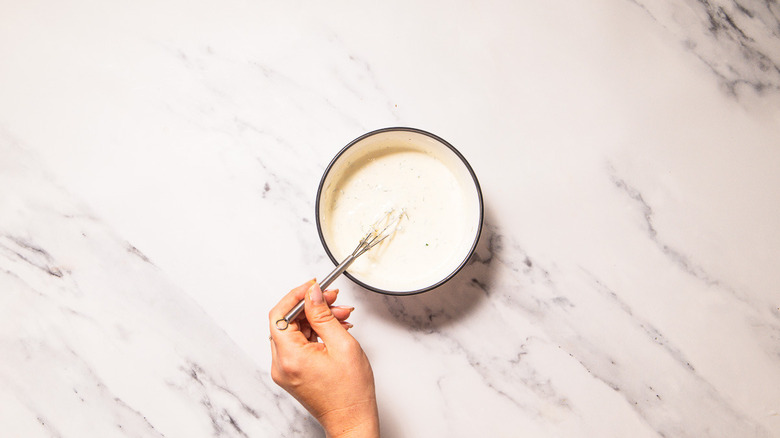
The house-made ranch dressing utilized in this recipe combines a base of high-quality mayonnaise, rich sour cream, and sharp cultured buttermilk. Buttermilk is chemically vital; its lactic acid provides a signature tang that balances the fats in the bacon and avocado. Freshly minced dill and chives, garlic powder, onion powder, lemon juice, and kosher salt are whisked into the dairy base. Culinary experts advise that allowing the dressing to rest for several hours before service permits the dried and fresh aromatics to fully coalesce, enhancing the overall depth of flavor. Furthermore, doubling or tripling the dressing recipe is strongly recommended by kitchen authorities, as it serves both as a sandwich binder and an accompaniment for raw vegetable dipping.
Step-by-Step Assembly Protocol
The assembly of a loaded Cobb sandwich demands a strategic layering methodology to prevent structural failure during consumption.
- Preparation of the Dressing: Whisk mayonnaise, sour cream, buttermilk, fresh dill, chives, garlic powder, minced onion, lemon juice, and kosher salt in a small bowl. Adjust seasoning to taste.
- Chicken Processing: Mix olive oil, garlic powder, smoked paprika, salt, and pepper. Coat boneless, skinless chicken breasts with the mixture and cook in a medium-high skillet for 6 to 7 minutes per side. Rest for 5 minutes, then dice.
- Bread Preparation: Slice the large focaccia loaf horizontally. Brush cut sides with olive oil and toast in a dry skillet or under the broiler for 1 to 2 minutes until golden brown.
- Bacon Rendering: Preheat oven to 400 degrees Fahrenheit. Line a rimmed baking sheet with parchment paper, lay bacon in a single layer, and bake for 15 to 18 minutes. Transfer to paper towels.
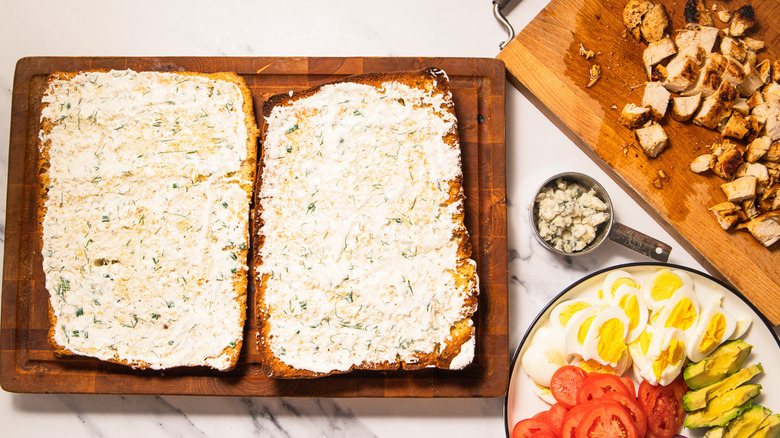
- Sauce Application: Spread the house-made ranch dressing generously across both interior cut surfaces of the toasted focaccia.
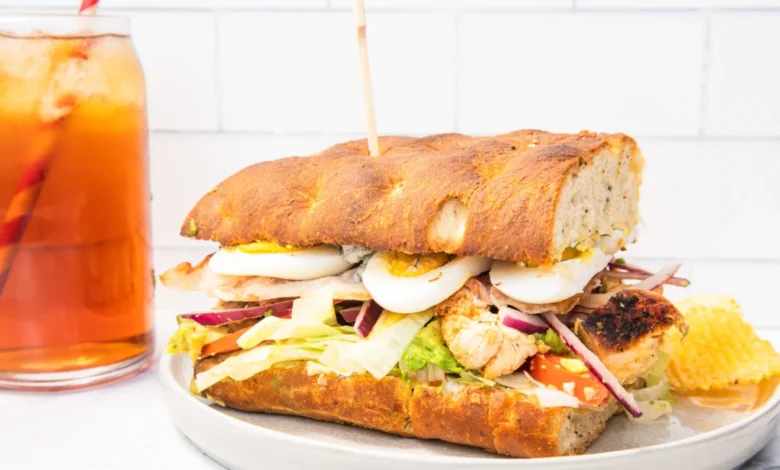
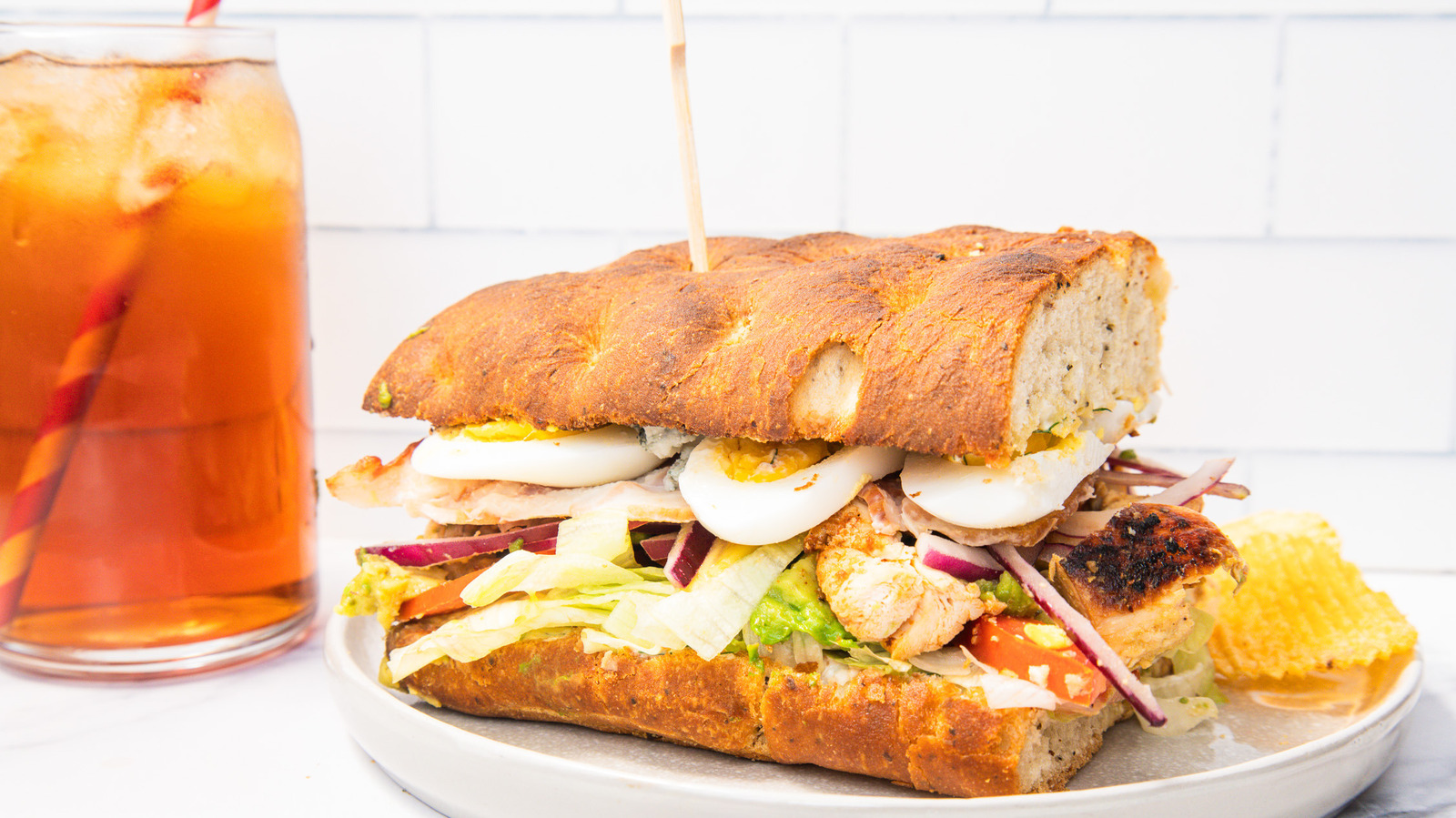
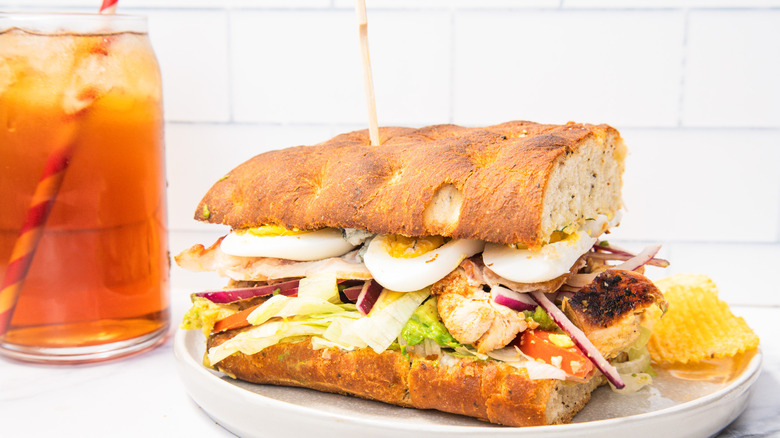
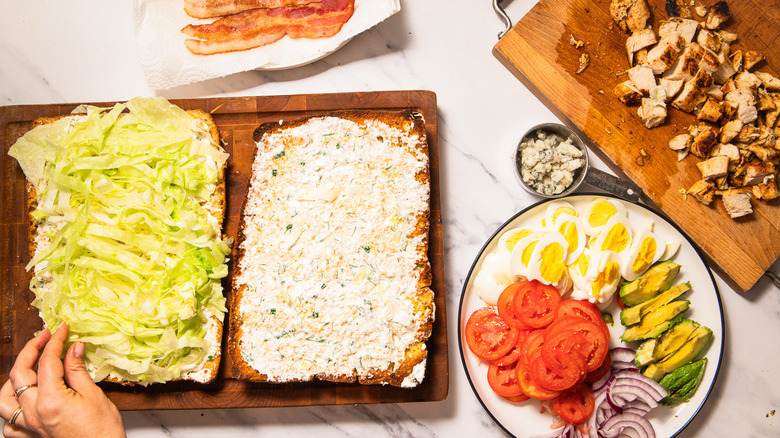
- Layering Sequence: On the bottom half of the focaccia, build the layers sequentially: begin with iceberg lettuce, followed by Roma tomatoes, ripe avocado slices, diced spiced chicken, purple onion, crispy bacon, hard-boiled egg slices, and crumbled blue cheese.
- Completion: Place the top half of the focaccia over the assembled ingredients. For structural stability, wrap the entire loaf tightly in parchment paper or plastic wrap before slicing into individual portions (typically four servings) with a serrated bread knife.
Nutritional Profile and Dietary Analysis
Given its dense composition of proteins, fats, and carbohydrates, the loaded Cobb sandwich functions as a robust, calorie-dense meal. According to nutritional estimations provided by data analysis tools such as Edamam, a single serving of the loaded Cobb sandwich contains approximately 1,466 calories.
The macronutrient breakdown per serving is significant:
- Total Fat: 106.9 grams (including 24.3 grams of saturated fat and 0.2 grams of trans fat)
- Cholesterol: 394.1 milligrams
- Total Carbohydrates: 66.3 grams
- Dietary Fiber: 17.5 grams (bolstered by the avocado, vegetables, and whole-grain or artisan focaccia components)
- Total Sugars: 7.5 grams
- Sodium: 1,702.2 milligrams (primarily derived from the cured bacon, blue cheese, and salted dressings)
- Protein: 65.6 grams (sourced primarily from the chicken, eggs, bacon, and dairy components)
Dietary nutritionists emphasize that while the sodium and fat contents are elevated—attributable to the classic American diner profile of the Cobb salad—the presence of fiber-rich vegetables, heart-healthy monounsaturated fats from the avocado and olive oil, and a substantial protein yield make it an exceptionally satiating meal option. For individuals monitoring caloric intake or sodium levels, modifications such as reducing the quantity of blue cheese, utilizing turkey bacon, or scaling back the volume of ranch dressing can adjust the nutritional profile downward.
Make-Ahead Capabilities and Storage Logistics
In the realm of modern meal preparation, the viability of a recipe for advance storage is a critical metric for working professionals and home cooks alike. The loaded Cobb sandwich possesses unique properties that make it surprisingly resilient when stored correctly.
When wrapped tightly in plastic wrap or parchment paper and sealed inside an airtight container, an assembled Cobb focaccia sandwich can be stored in a refrigerator for up to 24 hours. Food safety analysts note that the oil-rich crumb of the focaccia acts as a natural barrier, preventing the dressing and moisture from the tomatoes and lettuce from immediately turning the bread soggy. In fact, resting the sandwich for several hours can allow the flavors to meld effectively.
For optimal meal-prep results, component storage is recommended over pre-assembly if storing for longer than a single day:
- Cooked chicken and bacon can be refrigerated in sealed containers for up to two days. Bacon can be quickly re-crisped in a dry skillet before sandwich assembly to restore texture.
- Hard-boiled eggs remain viable in their shells for up to three days.
- House-made ranch dressing improves in flavor over time and can be stored safely for up to five days.
- Produce elements—specifically lettuce and avocado—are best handled immediately prior to consumption to prevent oxidation and loss of crispness, though commercially available frozen avocado slices can be utilized for advance packing if allowed to thaw naturally during transit.
Adaptability and Cultural Variations
The enduring popularity of the Cobb flavor profile has spawned numerous culinary adaptations tailored to dietary restrictions and regional preferences.
Protein Swaps
For a lighter alternative, roasted or deli-sliced turkey breast can replace the seared chicken breast, offering a leaner protein option while maintaining the foundational savory profile. Alternatively, leftover rotisserie chicken can be shredded or diced to drastically reduce preparation time for home cooks.
Cheese Substitutions
While blue cheese is a non-negotiable traditional element for purists, its assertive flavor profile is polarizing. Culinary developers frequently recommend substituting crumbled feta cheese or tangy goat cheese to provide acidity and saltiness without the sharp funk of blue mold. For those who appreciate blue cheese but desire a more muted experience, gorgonzola dolce offers a creamier, milder alternative.
Bread Alternatives
While focaccia remains the gold standard for structural integrity and oil-to-crumb ratio, large ciabatta loaves offer a comparable rustic texture and chewy crust. For individual portioning rather than a communal loaf, hearty slices of toasted sourdough can be employed, though diners should account for potential moisture seepage when utilizing thinner bread slices.
Broader Culinary Implications and Market Trends
The transition of classic salads into handheld sandwich formats reflects a broader movement within the American culinary industry toward comfort food fusion and functional portability. As consumers increasingly demand meals that bridge the gap between casual dining sophistication and on-the-go convenience, recipes that deconstruct traditional restaurant plates into sandwich architecture have surged in popularity across digital food platforms and culinary media.
The loaded Cobb sandwich exemplifies this trend by synthesizing disparate, labor-intensive components into a cohesive, sliceable format that serves multiple diners or provides structured meal prep for single households. By elevating standard condiments like ranch dressing through scratch-made techniques, home cooks can replicate and elevate restaurant-quality dining experiences within domestic kitchens. As food developers continue to explore the boundaries of sandwich engineering, recipes of this caliber underscore the enduring versatility of classic American culinary institutions.