Unearthed clip exposes what ‘DEI Queen’ in razor-thin House race thought of ‘Back the Blue’ law

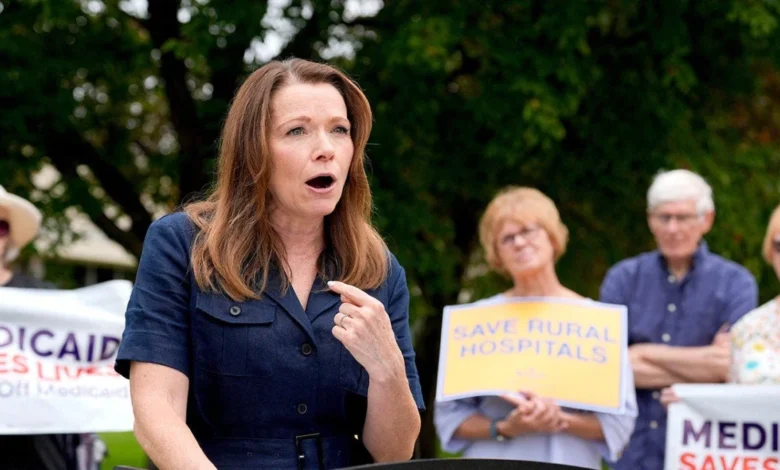
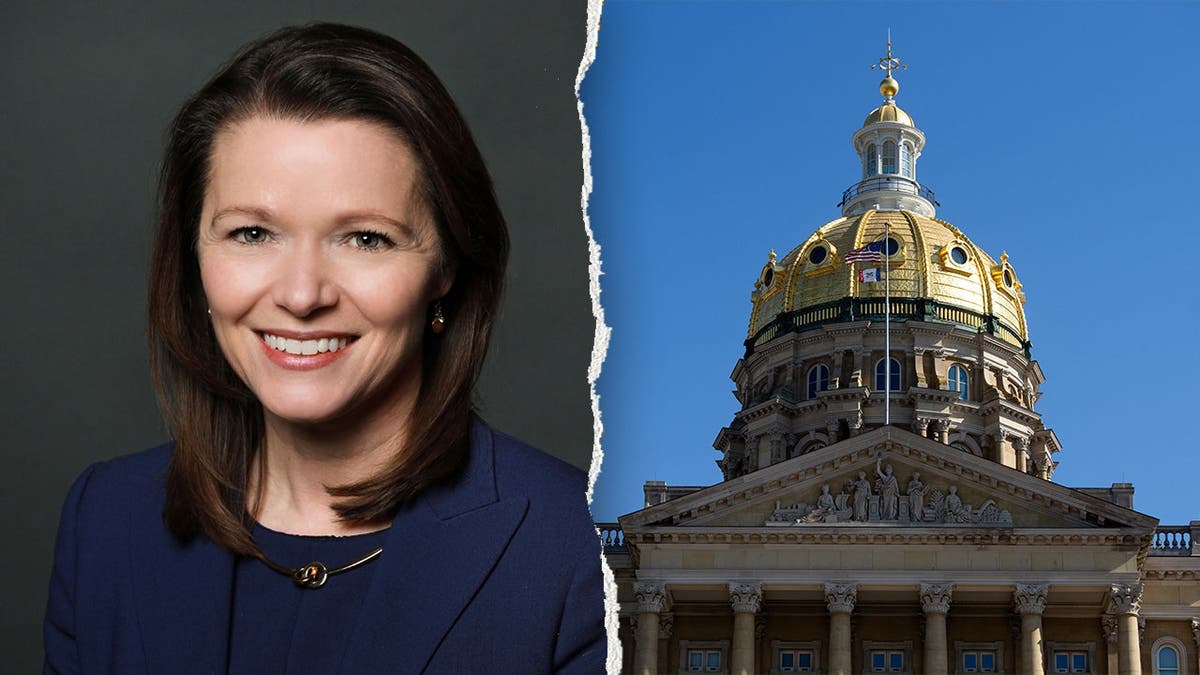
The political landscape in Iowa’s fiercely contested 1st Congressional District has heated up significantly following the resurfacing of archival footage featuring Democratic nominee Christina Bohannan. In a newly highlighted video clip from a 2021 virtual legislative forum addressing social justice, Bohannan characterized Iowa’s landmark "Back the Blue" law as an "overreaction" and criticized the political motivations behind its passage.
The comments, originally made during her tenure as an Iowa state legislator, have immediately injected the contentious debate surrounding public safety, law enforcement support, and criminal justice reform into her ongoing campaign. Bohannan is currently mounting her third consecutive bid to unseat incumbent Republican Representative Mariannette Miller-Meeks. As both political parties ramp up operations for the upcoming election cycle, the revived commentary has provided conservative opponents with a fresh line of attack, framing the former University of Iowa law professor as out of step with mainstream law enforcement values in the Hawkeye State.
Context and Chronology of the 2021 "Back the Blue" Legislation
To fully understand the weight of Bohannan’s 2021 remarks, it is essential to examine the socio-political climate from which Iowa’s Senate File 342 emerged. Following the May 2020 death of George Floyd in Minneapolis, Minnesota, nationwide protests ignited an intense, highly polarized debate regarding policing practices, racial equality, and systemic reform. While several progressive municipal and state governments across the United States enacted sweeping restrictions on police departments—ranging from bans on specific restraint techniques to proposals for defunding or reallocating law enforcement budgets—conservative state legislatures took a starkly different path.
In Iowa, Republican lawmakers and Governor Kim Reynolds prioritized a legislative agenda explicitly designed to bolster legal protections for police officers and increase penalties for public disturbances. This effort culminated in Senate File 342, popularly known as the "Back the Blue" act, which was formally signed into law by Governor Reynolds in June 2021.
The legislation introduced several stringent provisions:
- Elevated Riot Penalties: It heightened the legal classification of rioting to a Class D felony, carrying potential prison sentences of up to five years.
- Stricter Assembly Regulations: It created new criminal offenses for unlawful assembly and obstruction of traffic during protests.
- Law Enforcement Protections: It established legal safeguards for law enforcement personnel facing civil liability while performing their official duties.
Proponents of the legislation, including bill sponsor state Representative Jarad Klein and Governor Reynolds, argued that the measures were necessary to restore public order, safeguard infrastructure, and ensure that police officers operating in volatile environments retained adequate legal protection.
Bohannan’s Critique and the Core of the Political Dispute
During the 2021 virtual legislative forum, Bohannan took direct aim at the legislation, arguing that the Republican-led push was a disproportionate response driven by lawmakers who lacked diverse communities within their legislative districts.
"I think that we’re seeing a backlash and, frankly, an exaggerated backlash, an overreaction to all of that," Bohannan stated during the event. She added, "A lot of this is happening because they just don’t have a lot of minorities in their districts, they don’t interact with people on any kind of regular basis and so they don’t see these issues."
Furthermore, Bohannan specifically targeted a provision within the bill concerning traffic obstruction during protests, voicing severe ethical concerns over civil liability protections for motorists. She argued at the time that the statute could potentially grant immunity to drivers who negligently or grossly negligently struck demonstrators blocking public roadways.
Legal analysts and defenders of the legislation quickly countered those specific claims during the legislative debate, noting that the civil immunity provision applied strictly to motorists who were exercising "due care" while encountering individuals engaged in unlawful traffic-blocking activities, rather than providing blanket protection for reckless or malicious driving behavior. Nonetheless, Bohannan’s rhetorical framing of the bill as an "overreaction" has remained a focal point for her critics.
Republican Campaign Reactions and Broader Political Fallout
The recirculation of the 2021 remarks has drawn swift and sharp condemnation from national and state Republican organizations, who have sought to brand Bohannan with labels typically reserved for progressive candidates in urban coastal centers.
Zach Kraft, a spokesperson for the Republican National Committee (RNC), pulled no punches in a statement issued to digital media outlets. "Christina Bohannan achieved the ultra-rare-final-boss level of woke where police are bad, criminals are good, and anyone who disagrees is racist," Kraft asserted. He further contended that the Democratic nominee’s legislative record and academic background demonstrate a soft-on-crime agenda that fundamentally threatens public safety in Iowa.
GOP strategists argue that Bohannan’s record on criminal justice represents a critical vulnerability in a congressional district that historically prioritizes law and order, public safety, and rural-suburban stability. Opponents have also highlighted other points from her legislative tenure, including records indicating missed state House votes during previous federal campaigns, seeking to paint a picture of a candidate more focused on higher office than local constituent service.
The Electoral Battlefield: Iowa’s 1st Congressional District
The timing of this renewed scrutiny is particularly critical given the razor-thin margins that have characterized Iowa’s 1st Congressional District races over the past two election cycles. The district encompasses a diverse mix of university towns, agricultural communities, and growing suburban hubs, making it one of the most closely watched bellwether seats in the nation.
- The 2022 Matchup: Bohannan first challenged Representative Miller-Meeks in November 2022, falling short in a 53.4% to 46.6% defeat.
- The 2024 Rematch: The race tightened dramatically in the subsequent election cycle. Miller-Meeks secured victory by a minuscule margin of just 799 votes, finishing with 50.0% of the vote compared to Bohannan’s 49.8%.
Given the historic competitiveness of the district—where elections can be decided by a fraction of a percentage point—every historical statement, voting record, and policy stance is subjected to intense micro-targeting and media analysis by both campaigns and their respective political action committees.
Implications for the Upcoming Election Cycle
As the campaign progresses toward the upcoming primary and general election phases, the debate over the 2021 "Back the Blue" law highlights a broader national strategy employed by Republicans targeting battleground House seats. By elevating past statements on law enforcement and social justice, conservative campaigns aim to nationalize local races, tying challengers to broader national debates on public safety, civil unrest, and criminal justice reform.
Conversely, Democratic strategists and supporters of Bohannan’s campaign maintain that her academic background as a former University of Iowa law professor provides her with a nuanced understanding of constitutional rights, public safety, and legislative balance. They argue that her critiques of the 2021 statute were rooted in protecting fundamental freedoms of assembly and ensuring that laws maintain strict accountability for all citizens, including motorists and public officials alike.
As of press time, representatives for Christina Bohannan’s congressional campaign have not formally responded to requests for comment regarding the resurfaced 2021 footage or whether she maintains her previous objections to the legislation. With the political spotlight fixed firmly on Iowa’s 1st District, the debate over past legislative positions is expected to remain a central fixture of campaign messaging, television advertising, and voter outreach in the months leading up to Election Day.