The sartorial landscape of Hollywood is undergoing a perceptible shift away from the monastic minimalism of recent years toward a more tactile, expressive aesthetic, anchored most visibly by the return of the shiny dress shirt. This glossy revival—spanning iridescent silks, liquid satins, and shimmering synthetics—has rapidly transitioned from avant-garde runway propositions to the backs of leading men on international red carpets.
This resurgence marks a distinct pivot in contemporary menswear. For the better part of a decade, fashion has been dominated by the tenets of "quiet luxury"—a conservative palette of beige cashmeres, muted tones, and understated silhouettes designed to project wealth through subtlety rather than spectacle. The current embrace of lustrous, light-catching fabrics represents a collective cultural appetite for sensory engagement, theatricality, and a calculated return to nightlife-inflected decadence.
The Genesis of a Trend: From 1970s Glam to Y2K Cinema
The cultural lineage of the shiny shirt is deeply rooted in eras defined by hedonism and stylistic disruption. Julian Louie, the designer behind the contemporary menswear label Aubero, traces his fascination with the garment back to a formative visual memory: an iridescent purple dress shirt worn by director Todd Haynes during the 1998 press tour for Velvet Goldmine, a cinematic homage to 1970s glam rock. That single image planted a seed of rakish, decadent menswear that would eventually materialize in Aubero’s foundational design philosophy when the label launched in 2022.

However, the shiny shirt’s most prominent mainstream iteration prior to the current cycle occurred in the early 2000s. During this period, the garment was a staple of both red-carpet attire and high-profile cinematic styling. Brad Pitt’s wardrobe as Rusty Ryan in the Ocean’s franchise—comprising fluid, open-collared silk shirts worn beneath tailored jackets—mirrored the actor’s personal red-carpet choices of the era and established a blueprint for effortless, high-stakes cool. Concurrently, the characters popuring television series such as Entourage cemented the ubiquitous "going-out shirt" in the popular consciousness.
Yet, the Y2K iteration of the shiny shirt frequently walked a precarious line between effortless sophistication and stylistic excess, often threatening to devolve into the realm of bedazzled denim and gelled faux hawks. As the fashion industry cycles back toward the early aughts, contemporary designers and stylists have refined the garment, pairing high-shine textiles with modern, relaxed tailoring to avoid the stylistic pitfalls of the past.
Runway Catalyst and the Rise of the "Evening Shirt"
The definitive turning point for the current iteration of the glossy shirt occurred during the spring collections cycle, which served as a masterclass in reinterpreting evening wear for a modern masculine consumer. Sophie Jordan, menswear buying director at luxury retailer Mytheresa, points to the pivotal role played by high fashion houses during this window.
"Gucci’s collection under Demna showcased this shiny evening shirt in a sexy way but still [with] a strong edge of masculinity," Jordan notes, highlighting how major luxury houses successfully neutralized the potential costume-like qualities of the garment. Simultaneously, Haider Ackermann’s stewardship at Tom Ford delivered printed silk shirts that resonated immediately with Mytheresa’s high-spending clientele, proving that consumer demand for tactile, nightlife-ready pieces was robust and unfulfilled.

Jordan categorizes this resurgence under the broader umbrella of the "evening shirt"—a classification that encompasses not only high-sheen silks and satins, but also sequins, rich velvets, and sheer constructions. The strategic appeal of these garments lies in their ability to introduce sensuality and textural contrast without requiring a complete overhaul of traditional masculine tailoring. "This style of shirt plays into that without being too over the top," Jordan explains. "Fundamentally, the shape and silhouette is very classic. When styled with a pair of tailored pants, it’s very easy to wear and adds an evening feel to the styling without being overdone."
Red Carpet Adoption by Hollywood’s Leading Men
The runway momentum has been swiftly amplified by A-list actors and cultural figures who utilize the red carpet as a primary canvas for sartorial experimentation. The past year has yielded a succession of high-profile appearances that underscore the versatility of the trend.
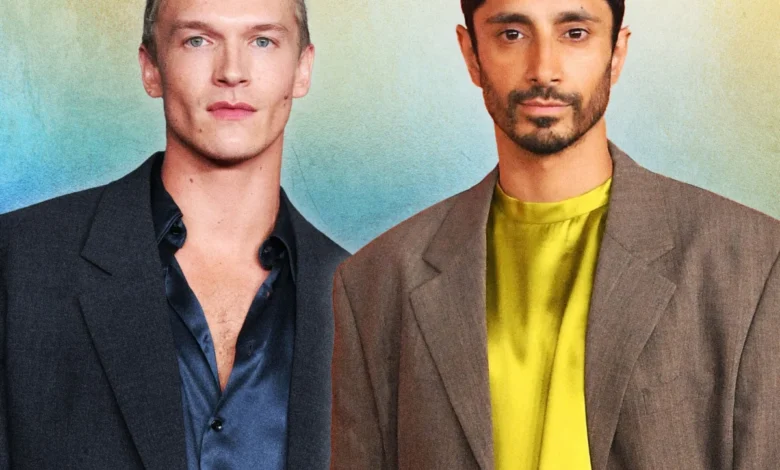
Earlier this year, actor Pedro Pascal stepped onto a major red carpet wearing a luminously green Aubero shirt whose vibrant hue rivaled the interior of a freshly cut lime, immediately generating widespread media coverage. Similarly, actor Riz Ahmed delivered a calculated series of sartorial statements during his recent press tour for Digger, alternating between a black silk habotai shirt by Lemaire and a silk chartreuse tee layered beneath a structured gray Saint Laurent suit.
At the Toronto International Film Festival, actor and skateboarder Nico Hiraga opted for a hyper-reflective mauve shirt, unbuttoned to the sternum, demonstrating the garment’s casual, off-duty potential. Connor Storrie, an actor and brand ambassador for Saint Laurent, has made glossy silk shirts a cornerstone of his public appearances, aligning closely with the house’s rock-and-roll heritage. Meanwhile, Resident Evil actor Austin Abrams expanded the trend beyond separates altogether, appearing in a fully reflective, shiny two-piece suit from Maison Valentino.

Architectural Approaches: Deconstruction and Material Innovation
For designers working within this space, the challenge lies in balancing expressive materials with grounded silhouettes. Julian Louie’s design process for Aubero exemplifies this methodology. Drawing inspiration from unexpected sources, Louie’s early work involved deconstructing mid-century silk taffeta cocktail dresses—fabrics traditionally reserved for feminine couture—and repurposing them into men’s board shorts and tailored shirts.
"I like the pairing of a very expressive material used on a super straightforward silhouette," Louie explains. "It was about taking a material that has always been associated with a more feminine couture sensibility and applying it to a men’s wardrobe in an unexpected way."
This philosophy of material subversion is shared by other influential labels. While houses like Tom Ford and Dolce & Gabbana have maintained the shiny shirt as a perennial runway fixture, and Dries Van Noten has consistently elevated the garment through intricate prints and artistic pattern-making, cult brands like Our Legacy continue to push the boundaries of adventurous shirting. The current market integration is further supported by contemporary tailoring houses such as Husbands in Paris and the concluding work of Anthony Vaccarello at Saint Laurent, both of which favor retro-inflected, fluid silhouettes that naturally accommodate high-luster fabrics.
Navigating the Trend: The Gateway Approach for Consumers
For mainstream consumers accustomed to the safety of neutral knits and matte cottons, transitioning into high-gloss evening wear can present a psychological barrier. Industry experts advise a gradual, calculated approach to avoid veering into "lounge lizard" territory.

Retailers and designers have responded by introducing hybrid textiles that bridge the gap between matte and shine. Labels including Auralee and Tom Ford have heavily invested in cotton-silk blend twills and poplins. These fabrics incorporate a higher ratio of matte cotton fibers with just enough silk content to catch ambient light subtly, offering a refined finish that avoids the overt reflectivity of pure disco-era polyester or heavy satin.
"For newbies, it’s a smart idea to build up to it," notes Jordan. Initiating the trend with textured weaves, muted jewel tones, or blended fabrics allows consumers to experiment with light reflection without committing to full-scale evening theatricality.
Economic and Cultural Implications
The resurgence of the shiny dress shirt points to a broader psychological recalibration within the fashion industry. After years of economic uncertainty and cultural fatigue, which manifested as a prolonged retreat into minimalist, risk-averse "quiet luxury," consumers and designers alike are signaling a renewed appetite for joy, self-expression, and calculated extravagance in menswear.
As Louie suggests, the current embrace of glossy, tactile garments may well signal that the market has exhausted its appetite for banal, utilitarian clothing. By offering a low-lift, high-impact method of elevating standard tailoring, the shiny shirt provides a viable pathway for men to reintroduce personality into their wardrobes—proving that menswear can remain grounded in classic silhouettes while unapologetically leaning into the fun, the theatrical, and the slightly absurd.