The Legacy of Interbreeding: Unraveling the Genetic Threads Connecting Modern Humans and Neanderthals

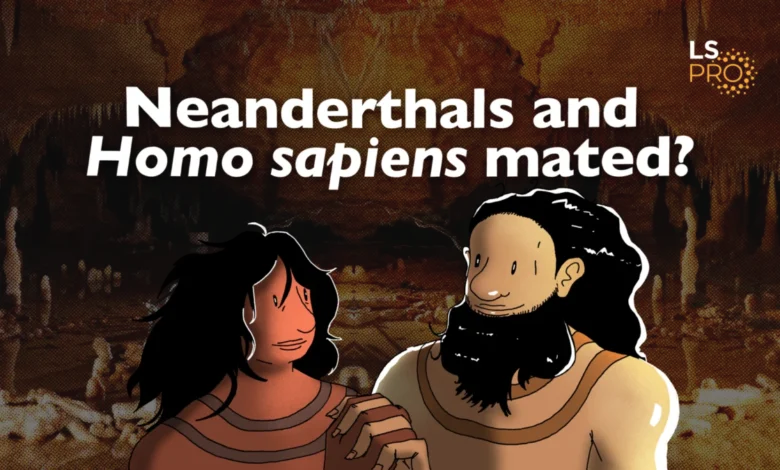
The story of human evolution is no longer viewed as a solitary march toward dominance but rather a complex, entangled web of encounters across the Eurasian landscape. For tens of thousands of years, modern humans (Homo sapiens) and their robust cousins, the Neanderthals (Homo neanderthalensis), coexisted, interacted, and ultimately interbred. Today, this ancient history is written into the genomes of nearly every person of non-African descent, with approximately 1% to 2% of their DNA inherited directly from Neanderthal ancestors. Scientists are now moving beyond the initial discovery of this admixture to address the deeper, more nuanced questions: What were the dynamics of these relationships, and did this genetic exchange contribute to the survival of our species while our cousins faced extinction?
A Chronology of Contact and Divergence
To understand the interbreeding events, one must first look at the timeline of human divergence. Genetic analysis suggests that the lineages of modern humans and Neanderthals split between 500,000 and 800,000 years ago. While Neanderthals thrived in the colder climates of Eurasia, adapting to the harsh environments of the Pleistocene, early modern humans evolved in Africa.
The first major wave of contact likely occurred shortly after modern humans began migrating out of Africa, approximately 60,000 to 90,000 years ago. Archaeological evidence from sites in the Levant—modern-day Israel and Palestine—indicates that these two groups occupied the same territories. However, the primary pulse of interbreeding is thought to have occurred in Western Asia or the Middle East before humans dispersed further into Europe and Asia.
Recent findings, including the 2010 sequencing of the Neanderthal genome by Svante Pääbo and his team at the Max Planck Institute for Evolutionary Anthropology, confirmed that this was not a one-off event. Genomic mapping has revealed multiple distinct pulses of interbreeding, suggesting that as human populations expanded, they encountered localized Neanderthal groups repeatedly over several millennia.
The Genomic Evidence and Quantitative Insights
The legacy of these encounters is not merely a biological curiosity; it is a significant factor in human physiological diversity. Researchers have identified specific Neanderthal-derived alleles that have persisted in the human gene pool because they offered an evolutionary advantage. For instance, certain Neanderthal genes involved in immune system response—specifically those related to the Toll-like receptor proteins—likely helped early modern humans adapt to new pathogens they encountered upon exiting Africa.
Conversely, some inherited genetic material appears to have been deleterious. Scientists have observed "deserts" in the modern human genome where Neanderthal DNA is conspicuously absent. This suggests that some of the hybrids produced from these unions faced reduced fertility or health complications, leading to natural selection stripping away those specific sequences over time.
Quantitative analysis of the human genome indicates that the distribution of this DNA is not uniform. East Asian populations, on average, carry a slightly higher percentage of Neanderthal DNA than European populations. This disparity remains a subject of intense study, with theories ranging from multiple, separate interbreeding events in Asia to differing levels of selection against Neanderthal DNA across different environmental pressures.
Archaeological Perspectives and Behavioral Exchanges
While DNA provides the "what," archaeology provides the "how." Excavations at sites like Grotte du Renne in France have unearthed tools and ornaments that challenge the traditional narrative of the "primitive" Neanderthal. These findings include sophisticated bone tools and personal adornments that appear during a time when Neanderthals were in contact with modern humans.
Some researchers argue that this indicates cultural transmission—that Neanderthals were observing human behavior and adopting new technologies. Others suggest that the evidence is more ambiguous, pointing to potential contamination of layers or the independent development of these skills by Neanderthals. The debate underscores the difficulty of interpreting the social dynamic between the two species. Were they rivals for the same resources, or did they form stable, long-term social units?
In the absence of a written record, paleontologists look for markers of environmental resource sharing. There is evidence that both species hunted the same megafauna, such as mammoths and woolly rhinoceroses, suggesting that they occupied the same ecological niches. This competition for food, combined with the smaller population density of Neanderthals, may have been a critical factor in their eventual decline.
Scientific Implications and the "Replacement" Theory
The disappearance of the Neanderthals approximately 40,000 years ago remains one of the most debated topics in paleoanthropology. While some theories once posited that modern humans systematically exterminated their cousins, the genomic evidence of interbreeding paints a more complex picture. Many scientists now favor a model of "assimilation," where smaller, fragmented Neanderthal populations were gradually absorbed into larger, more mobile groups of modern humans.
The implications for human health are profound. Current research is exploring how Neanderthal DNA influences modern medical conditions. Studies have linked certain Neanderthal alleles to increased risks for autoimmune diseases, skin conditions, and even different responses to respiratory viruses. Conversely, some of these same genes provided the robustness needed to survive in the changing climates of the Ice Age, a testament to the resilience of our hybrid ancestry.
Expert Perspectives and Future Research
Dr. Janet Kelso, a computational biologist who has led extensive research into the archaic human genome, notes that the integration of ancient DNA into modern clinical research is the next frontier. "We are moving from simply identifying Neanderthal DNA to understanding its functional impact on the human phenotype," Kelso stated in recent discussions regarding the field. The ability to use CRISPR and organoid technology to "test" how these ancient genes function in a laboratory setting is providing unprecedented insights into human biology.
Furthermore, the discovery of Denisovans—a sister group to the Neanderthals—has added another layer to the story. We now know that early humans did not just interbreed with Neanderthals; they also interbred with Denisovans in parts of Asia, and potentially other, as-yet-undiscovered archaic hominin groups in Africa. This suggests that the "human" identity was formed through a mosaic of ancestral influences.
Broader Impact: Reclaiming Our Identity
The study of Neanderthal-human interbreeding has fundamentally altered our understanding of what it means to be human. It has moved the definition away from a narrow, exclusionary biological category toward a broader, more inclusive one. We are, quite literally, the product of a diverse ancestral heritage that thrived by adapting to and merging with other hominin populations.
As technological advancements in paleogenetics continue to accelerate, we can expect a clearer picture to emerge. Future research will likely focus on the social structures of these ancient communities—the roles of men and women, the dynamics of migration, and the linguistic capacities of our ancestors.
In conclusion, the Neanderthal legacy is not a remnant of a failed species but a living, breathing part of the human experience. By unraveling these genetic threads, we are not only discovering our past but are also gaining vital knowledge about the biological mechanisms that allow our species to adapt and survive. The study of our ancestors remains, ultimately, a study of our own potential, reminding us that diversity and interaction have been the cornerstones of our species’ success for tens of thousands of years. As the investigation into these ancient relationships continues, the distinction between "them" and "us" continues to dissolve, revealing a shared, interconnected human history.
Related posts: