Daredevil: Born Again will conclude its run on Disney+ following the release of its third season in 2027.

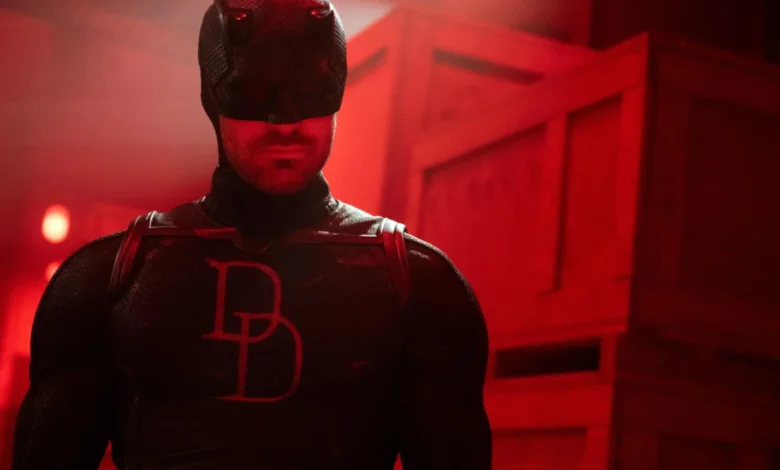
The announcement marks the definitive end of a television saga that has spanned over a decade, crossing network boundaries and streaming platforms to become one of the most resilient properties in the Marvel Cinematic Universe (MCU) canon. While Marvel and Disney have confirmed that the upcoming third season will serve as the swan song for the series, the production has already wrapped, and the creative team, led by departing showrunner Dario Scardapane, is currently finalizing the project in post-production. This conclusion brings a sense of finality to the arduous journey of Matt Murdock, the blind lawyer of Hell’s Kitchen who balances his courtroom responsibilities with a nocturnal crusade against organized crime.
A Decade of Darkness and Redemption: The Chronology of Daredevil
The journey of the Man Without Fear began in 2015, during the initial partnership between Marvel Television and Netflix. At the time, the strategy was to establish a grounded, "street-level" corner of the Marvel Universe that existed parallel to the grand, cosmic spectacle of the Avengers.
- 2015–2018: The original Daredevil series premiered on Netflix, running for three critically acclaimed seasons. It became the cornerstone of a shared universe that expanded to include Jessica Jones, Luke Cage, Iron Fist, and the ensemble limited series The Defenders.
- 2018–2021: Following the cancellation of the Netflix-Marvel series, the future of these characters remained in legal limbo due to licensing agreements. Fans engaged in a multi-year campaign, often trending #SaveDaredevil on social media, to see Charlie Cox and Vincent D’Onofrio reprise their roles.
- 2021–2022: The transition began in earnest with D’Onofrio’s appearance as Wilson Fisk in Hawkeye and Cox’s cameo as Matt Murdock in Spider-Man: No Way Home.
- 2025: Disney+ officially revived the franchise under the banner Daredevil: Born Again, integrating the characters into the broader MCU narrative framework.
- 2027: The scheduled premiere of the third and final season, bringing the total number of seasons across both platforms to six, cementing the character’s legacy in television history.
Strategic Shifts and the Return of the Defenders
The narrative arc of Daredevil: Born Again has served as both a continuation and a soft reboot. While Season 1 and 2 focused on the re-establishment of Murdock’s law practice and the political machinations of Wilson Fisk, Season 2 and the forthcoming Season 3 represent a massive convergence of the former Netflix-era characters.
The creative decision to bring back Krysten Ritter as Jessica Jones in a recurring capacity, alongside cameo appearances from Mike Colter’s Luke Cage and Finn Jones’s Iron Fist, signals a thematic reconciliation with the legacy of The Defenders. Industry insiders suggest that this decision was driven by audience demand for closure regarding the original street-level ensemble. In the final act, the plot is expected to center on the remnants of this group teaming up to thwart Kingpin, whose political downfall—specifically his removal as the Mayor of New York City—has left him in a position of extreme desperation and unpredictability.
From a production standpoint, the series has faced its share of turbulence. The transition from the gritty, R-rated tone of the Netflix era to the more moderated Disney+ ecosystem required significant creative recalibrations. Showrunner Dario Scardapane, who steered the ship through the latter part of this journey, was instrumental in balancing the dark, noir-inspired roots of the character with the requirements of the modern MCU. His departure, while sudden, is described as a natural conclusion to the series’ production cycle.
Fact-Based Analysis: The Implications of the Cancellation
The cancellation of Daredevil: Born Again after its third season represents a significant shift in Disney’s content strategy. Over the past two years, the studio has transitioned from an aggressive "quantity-over-quality" approach on Disney+ toward a more curated, legacy-focused model.
Several factors contribute to this decision:
- Narrative Exhaustion: After six total seasons of television, the creative team has explored the primary conflicts between Murdock and Fisk to their logical limits. Prolonging the series further risks narrative dilution, a criticism often leveled at long-running superhero procedurals.
- Streaming Consolidation: As Disney+ continues to refine its subscriber acquisition and retention strategies, high-budget legacy series are being evaluated based on their ability to draw new viewers versus the cost of production. A three-season arc for Born Again allows for a cohesive, high-impact narrative that can be marketed as a definitive limited event.
- MCU Integration: Matt Murdock has already been established as a recurring player in the wider MCU, appearing in She-Hulk: Attorney at Law and the upcoming Echo. By closing the Daredevil series, Marvel Studios is free to utilize the character in ensemble films or miniseries without the constraints of maintaining an ongoing, season-to-season standalone plot.
Official Stances and Industry Reception
While Marvel Studios has not provided a formal press release regarding the "cancellation" as a negative event, the tone from studio insiders suggests this was a planned creative exit. There is a strong sense of internal satisfaction regarding the completion of the Born Again arc.
"We have always viewed the story of Matt Murdock as one that needed a specific, powerful beginning, middle, and end," a source close to the production noted. "By bringing in the characters from the wider street-level lore, we were able to provide the audience with the resolution they have been asking for since 2018. It is a triumphant conclusion."
The industry reaction has been largely one of respect for the longevity of the series. Despite the shifting tides of the streaming landscape, Daredevil remains one of the few comic-book adaptations to receive near-universal critical acclaim for its stunt choreography, character depth, and exploration of moral ambiguity. The series effectively proved that "superhero television" could sustain a mature, character-driven tone without sacrificing the spectacle of the source material.
Looking Toward the Future
As the production team moves into the final stages of post-production for the 2027 release, the focus remains on the stakes established at the end of Season 2. With Matt Murdock incarcerated and his secret identity as a vigilante exposed to the public, the final season promises to be the most high-stakes entry in the series.
The inclusion of the full Defenders cast—Ritter, Colter, and Finn Jones—suggests a massive, street-level climax that will likely reshape the landscape of the MCU’s New York City. Whether this marks the permanent retirement of these versions of the characters or merely the end of their standalone television vehicle, the cultural footprint left by the Daredevil franchise is undeniable.
For fans, the final season is not merely the end of a show, but the conclusion of an era. The series has survived corporate mergers, platform shifts, and the complexities of the Marvel cinematic timeline. By choosing to end the series on its own terms, rather than letting it drift into indefinite cancellation or premature conclusion, Disney and Marvel are signaling a commitment to quality control that prioritizes the legacy of their most iconic street-level hero.
As we look toward 2027, the anticipation for the final confrontation between the Devil of Hell’s Kitchen and the Kingpin will undoubtedly dominate the discourse. For now, the mask remains on the mantle, waiting for the final act to unfold. The journey that began in the dark corridors of a Netflix set will finally find its resolution under the Disney banner, bringing one of the most compelling chapters in modern superhero fiction to its long-awaited, definitive conclusion.