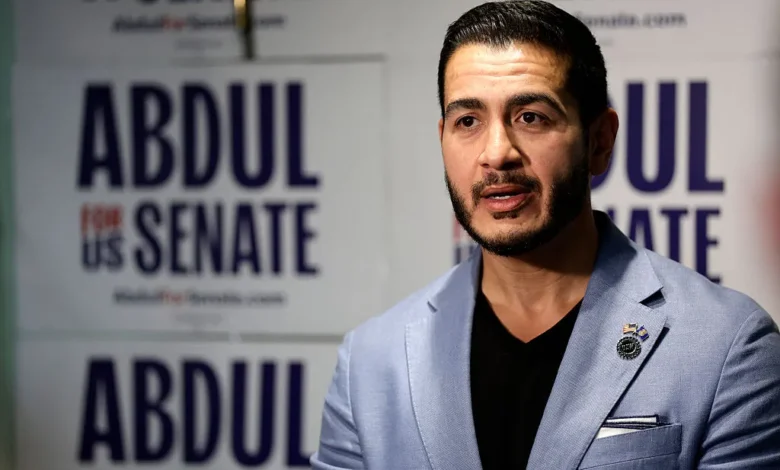
The political landscape in Michigan intensified significantly following a heated exchange on national radio regarding historical framing and foreign policy. Byron York, the chief political correspondent for the Washington Examiner, launched a sharp critique against Michigan Democratic Senate nominee Abdul el-Sayed during a Tuesday broadcast of The Hugh Hewitt Show. The controversy centers on el-Sayed’s past or comparative commentary linking the devastating September 11, 2001, terrorist attacks orchestrated by al-Qaeda to the subsequent military and geopolitical responses executed by the United States and its Western allies.
The remarks, which have drawn swift condemnation from conservative commentators and political opponents alike, ignite a broader debate over how candidates running for high-profile federal office interpret modern American history, national security, and the moral equivalence sometimes drawn between sovereign democratic states and transnational terrorist organizations. As the campaign cycle progresses toward the November elections, the friction between domestic policy debates and foreign policy ideology is increasingly taking center stage.
The Genesis of the Controversy and York’s Critique
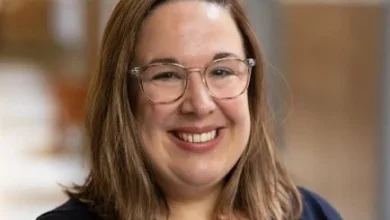
Appearing on The Hugh Hewitt Show, Byron York dissected the rhetoric used by Abdul el-Sayed, arguing that equating the deliberate, mass-casualty slaughter of nearly 3,000 innocent civilians by al-Qaeda terrorists with the subsequent military operations of the United5 States and Western coalitions is fundamentally misleading and morally indefensible.
"The idea of equalizing what was done on 9/11 by al-Qaeda and what was done afterwards by the United States and other Western powers is just absolutely offensive," York stated during the program.
York’s commentary underscores a deep-seated sensitivity within American political discourse concerning the framing of the War on Terror. While critics of post-9/11 American foreign policy—including various human rights organizations, progressive activists, and academics—have extensively cataloged the civilian casualties, strategic miscalculations, and legal controversies associated with the wars in Iraq and Afghanistan, mainstream political figures generally maintain a distinct line between the premeditated aggression of a terrorist network and the military actions of a democratic republic responding to an unprovoked attack on its homeland.
By drawing a direct equivalence between the two, candidates like el-Sayed open themselves up to rigorous scrutiny regarding their worldview on American exceptionalism, national defense, and international security architecture.
Chronology of the Event and Campaign Context
To understand the weight of Byron York’s rebuke, it is necessary to examine the broader timeline of Abdul el-Sayed’s political career and the current Michigan Senate race.
Abdul el-Sayed, an epidemiologist, progressive political activist, and former executive director of the Detroit Health Department, first gained widespread national attention during his unsuccessful bid for the Democratic nomination for Governor of Michigan in 2018. During that campaign, as well as in subsequent commentary, public speaking engagements, and written works, el-Sayed established himself as a prominent voice on the progressive wing of the Democratic Party, championing policies such as Medicare for All, environmental justice, and progressive social reforms.
As el-Sayed transitioned from local and state health administration into higher-stakes federal electoral politics, his past statements, essays, and social media commentary became subjects of intense opposition research. The specific framing of American foreign policy and the War on Terror has repeatedly emerged as a friction point for progressive candidates who critique historical U.S. military interventions in the Middle East.
On September 30, 2026, the discussion crystallized during the interview on The Hugh Hewitt Show, where York and the host analyzed how el-Sayed’s past statements could impact a competitive statewide Senate race in a crucial battleground state like Michigan. Michigan boasts a diverse electorate, including one of the largest Arab-American populations in the United States, making foreign policy debates in the Middle East particularly resonant among voters in districts stretching from Dearborn to Metro Detroit.
Background Context: The Debate Over 9/11 and Western Foreign Policy
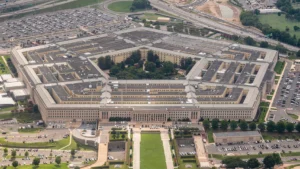
The ideological collision between how the UnitedSates understands the September 11 attacks and how critics view the ensuing two decades of conflict is not new. Following the attacks on the World Trade Center and the Pentagon on September 11, 2001, the George W. Bush administration declared a Global War on Terror, leading to the invasion of Afghanistan in October 2001 and the invasion of Iraq in March 2003.
Over the subsequent two decades, the human, financial, and geopolitical toll of these conflicts prompted widespread debate. According to data compiled by the Costs of War Project at Brown University, the post-9/11 wars resulted in the deaths of an estimated 432,000 civilians due to direct violence, with indirect deaths pushing total fatalities significantly higher. Furthermore, the federal government allocated upwards of $8 trillion toward these military engagements.
Critics from the progressive and libertarian wings of American politics have frequently pointed to Abu Ghraib, civilian casualties from drone strikes, waterboarding, and the destabilization of the broader Middle East as evidence of profound policy failures. However, foreign policy hawks and mainstream analysts argue that drawing a moral equivalence between state-directed military campaigns—subject to domestic legal frameworks, congressional oversight, and international scrutiny—and an extremist religious cult that deliberately targeted civilians constitutes a dangerous distortion of history.
It is precisely this philosophical chasm that Byron York targeted in his critique, suggesting that candidates seeking to represent a major U.S. state in the United States Senate must demonstrate an uncompromised understanding of the nation’s foundational security imperatives.
Statements and Reactions from Related Parties
While el-Sayed’s campaign has not issued a comprehensive retraction regarding every historical critique levied against him, defenders of the progressive candidate argue that scrutinizing foreign intervention is a legitimate and patriotic exercise. Supporters frequently maintain that true national security requires honest reflection on the unintended consequences of past military actions, including the rise of regional sectarian violence and the erosion of civil liberties under measures such as the USA PATRIOT Act.
Conversely, Republican strategists and conservative organizations have seized upon the remarks to paint the broader Democratic field as out of touch with mainstream American values. In competitive Senate races—where every percentage point among independent and moderate voters can determine the balance of power in Washington—foreign policy missteps or controversial statements regarding national security are frequently leveraged in television advertisements and debate stages.
Political analysts note that Michigan represents a vital battleground where national security rhetoric carries heavy electoral consequences. With a sizable and politically active Arab-American and Muslim-American constituency that has expressed deep frustration with U.S. foreign policy in the Middle East, Democratic candidates often walk a precarious political tightrope. They must balance appeals to progressive voters who demand accountability for past and current military strategies with the broader, more traditional electorate that expects unequivocal condemnation of terrorism and staunch defense of American allies.
Fact-Based Analysis of Implications for the Michigan Senate Race
The collision between Byron York and Abdul el-Sayed highlights several broader implications for the trajectory of the Michigan Senate race and the national Democratic Party:
-
The Battle for the Political Center: While progressive policies on healthcare and the economy enjoy robust support within the Democratic base, national security and foreign policy remain areas where moderate and independent voters lean heavily toward traditional postures. Controversies involving the framing of 9/11 can complicate a candidate’s appeal beyond the progressive base.
-
Weaponization of Opposition Research: In modern Senate campaigns, opposition research functions as an immediate trigger for national media commentary. Pundits and columnists from platforms like the Washington Examiner play a crucial role in framing these local controversies for a national audience, directly influencing fundraising, media narratives, and voter perception.
-
The Intersection of Domestic Demographics and Foreign Policy: Michigan’s unique demographic profile means that international conflicts and historical grievances are not abstract academic concepts; they are lived realities for many voters. Navigating these complexities requires immense political dexterity, and missteps can quickly be magnified by political adversaries.
Broader Impact on National Security Discourse
As the United States continues to grapple with the long-term legacy of the post-9/11 era—including the withdrawal from Afghanistan in 2021 and ongoing conflicts in the Middle East—the vocabulary used by political figures to discuss these events remains deeply contentious. The debate between Byron York and Abdul el-Sayed is emblematic of a broader cultural and political struggle over how history is taught, remembered, and applied to contemporary policymaking.
For voters in Michigan and across the United States, evaluating candidates involves weighing not only their domestic legislative proposals but also their worldview on America’s role in the world. As the campaign advances toward November, statements regarding the foundational tragedies and conflicts of the 21st century will undoubtedly continue to serve as a litmus test for candidates seeking the public trust.