Dr. Hanan Balkhy Navigates Geopolitical Tensions and Global Health Leadership Amidst Regional Crisis

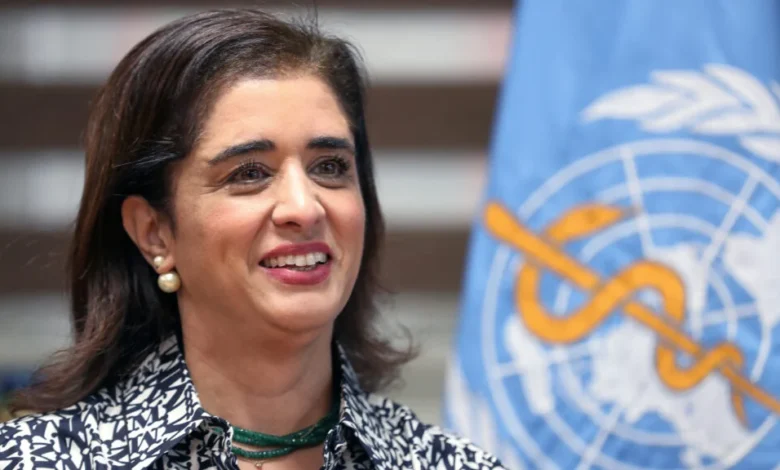
The weight of unprecedented challenges rests heavily on the shoulders of Dr. Hanan Balkhy, the newly appointed Director of the World Health Organization’s Eastern Mediterranean Regional Office (EMRO). Her tenure, barely commenced in early 2024, is immediately thrust into a maelstrom of escalating geopolitical conflicts, a situation that not only threatens the health and safety of millions but also strains the very fabric of healthcare systems across a vast and volatile region. Simultaneously, Dr. Balkhy finds herself a name whispered in corridors of power, a potential contender for the prestigious role of WHO Director-General, a decision that looms large against the backdrop of an intensely troubled world.
The upcoming selection process for the next WHO Director-General, with the current incumbent Dr. Tedros Adhanom Ghebreyesus’s second and final term concluding in the summer of 2027, is set to officially commence with a call for nominations later this month or in May. While the nomination period will close in September or October, offering Dr. Balkhy a window to deliberate her potential candidacy, the reality is that this crucial decision, which may necessitate administrative leave from her current, demanding role, must be made during an exceptionally precarious period for her region.
In a recent, candid interview with STAT, Dr. Balkhy shared insights into her considerations regarding a potential bid for the WHO’s top leadership position. She also addressed the complex diplomatic landscape that candidates will inevitably face, particularly concerning engagement with the United States, and elaborated on the multifaceted crises confronting EMRO due to ongoing conflicts in Iran and its surrounding areas.
A Distinguished Background in Global Health
Dr. Hanan Balkhy, a pediatrician by training, hails from Saudi Arabia. Her academic journey includes studies at King Abdulaziz University, followed by a pediatric residency at Massachusetts General Hospital in the United States. Her specialized training continued with a fellowship in pediatric infectious diseases at the Cleveland Clinic Foundation and Case Western Reserve University. Prior to her election as the EMRO Regional Director in early 2024, Dr. Balkhy served a significant five-year tenure as the WHO’s Assistant Director-General for Antimicrobial Resistance, a critical area of global public health concern.
Her dual U.S.-Saudi citizenship, stemming from her birth in the United States, adds another layer to her international profile, though she firmly identifies as Saudi. This unique background provides her with a nuanced understanding of both regional and global health dynamics, potentially equipping her with a distinct perspective should she pursue higher office within the WHO.
Navigating the Director-General Selection Process
The prospect of Dr. Balkhy entering the race for WHO Director-General has ignited considerable discussion. The WHO’s leadership selection process, while not formally rotating among regions, often witnesses informal considerations and pressures. Notably, the EMRO region, along with the South-East Asia Region (SEARO), has historically not had a Director-General at the helm of the global organization. This fact, coupled with Dr. Balkhy’s prominent leadership role and impressive credentials, has fueled speculation about a potential "turn" for EMRO.
When questioned about her aspirations, Dr. Balkhy expressed a measured approach. "For me, running, I think at this point, it’s not 100% clear," she stated. "I have such a very busy region, and I’m very focused on my current work." This sentiment underscores the immense demands of her current position, particularly in light of the escalating crises. She further elaborated on the timing of her decision, indicating a preference to "play it by ear" due to the overwhelming volume of ongoing issues. "Any regional director, if we were to run, you can only make your candidacy better by just doing a good job in what you’re doing," she added, emphasizing the primacy of her current responsibilities.
The U.S. Factor in the DG Race
A significant element shaping the Director-General selection process is the stance of the United States. Despite its formal withdrawal from the WHO, the U.S. remains a critical player in global health due to its scientific prowess, research institutions, and financial contributions. Candidates are expected to engage with U.S. administration officials, a move that could be perceived as strategic or, conversely, as undue deference, potentially eliciting resentment from other member states.
Dr. Balkhy acknowledged the pragmatic necessity of such engagement. "Because of its talent, because of its science acumen, because of its scientists, the U.S. CDC, its NIH, its academia, the U.S. has been of extreme value to global public health in general. And it’s really been difficult for all of us to see the U.S. step away," she remarked. She stressed the imperative for candidates to maintain open lines of communication with all member states, including the U.S. and China. "We have to go everywhere, and we have to keep our communications open all the time. We only lose if we don’t communicate." Her conviction was clear: "We want the U.S. to come back. We want all of our member states to be at the table. Absolutely, yes. And I would bet a million dollars that every candidate will be doing it, whether they say it or not." This highlights a strategic imperative for any aspiring leader to navigate complex geopolitical relationships effectively.
A Region Under Siege: Health and Humanitarian Catastrophe Looming
The immediate and most pressing concern for Dr. Balkhy is the profound health and humanitarian crisis unfolding in her region. The escalating conflicts, which she refers to as involving "the United States, Israel, and Iran," have far-reaching implications that extend beyond regional borders.
Escalation to Weapons of Mass Destruction
Dr. Balkhy’s deepest fear is the potential for an escalation into full-blown nuclear, biological, or chemical warfare. "That’s what keeps me up at night," she confessed. The WHO EMRO is actively engaged in ensuring preparedness and support mechanisms are in place for member states. The complex web of alliances and rivalries means that the conflict’s impact transcends the immediate geographical area. While 16 to 17 of the 21 countries involved in the current conflict are within EMRO’s purview, the European region (EURO), which includes Israel, is also affected, necessitating cross-regional collaboration.
The Threat to Desalination Infrastructure
Another catastrophic scenario that weighs heavily on Dr. Balkhy’s mind is the potential targeting of desalination plants. These facilities are the lifeline for numerous countries in the region, providing between 70% and 100% of their water supply. An attack on these plants would trigger an immediate and severe water crisis, leading to shortages for drinking, cooking, and agriculture. This would inevitably precipitate mass migration, exacerbating existing humanitarian challenges and leading to widespread chaos and displacement.
Existing Humanitarian Crisis and Displacement
The region is already grappling with a significant humanitarian crisis. According to Dr. Balkhy, Iran has over 3.2 million displaced people, and Lebanon hosts more than a million. Across the region, with a population of 750 million, one in every seven individuals already requires humanitarian assistance. The potential for further displacement due to conflict and water scarcity would overwhelm already strained resources.
Disruption of Humanitarian Supply Chains
The closure of airspace, a direct consequence of the geopolitical tensions, severely disrupted the WHO’s critical humanitarian supply chain, primarily managed through its hub in Dubai. Millions of dollars worth of essential medical supplies were grounded, creating immediate shortages. While flights are slowly resuming, the incident underscored the fragility of humanitarian logistics in conflict zones. The United Arab Emirates government has been instrumental in facilitating alternative routes and ensuring the continuation of vital aid.
Economic Repercussions and Energy Security
Beyond the direct health impacts, the geopolitical instability has significant economic ramifications. The closure of the Strait of Hormuz, a vital oil transit route, coupled with the surge in energy prices for gas and oil, further destabilizes the region and has global economic implications. These interconnected crises have consumed Dr. Balkhy’s focus for the past month.
The Future of Global Health Architecture
In concluding the interview, Dr. Balkhy highlighted a broader, long-term concern: the ongoing discussions surrounding the global health architecture and its restructuring. As the Regional Director of EMRO, she is acutely aware of the need to build robust systems capable of addressing both chronic health issues and sudden emergencies. "Things take time, and if we really want to build robust systems, we have to invest, even in the midst of a humanitarian response," she urged. This underscores her commitment to not only managing immediate crises but also to advocating for sustainable investments in public health infrastructure, even in the most challenging environments.
Dr. Hanan Balkhy’s current role positions her at the epicenter of multiple overlapping crises, demanding exceptional leadership, resilience, and strategic foresight. Her potential candidacy for WHO Director-General, while still under deliberation, adds another layer of complexity to an already fraught geopolitical landscape. Her focus, however, remains steadfastly on the immediate needs of her region and the imperative to strengthen global health resilience for the future.