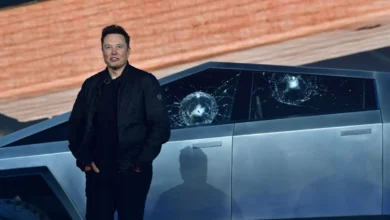
Netflix series The Altruists faces industry backlash over historical distortions and controversial portrayals of the FTX collapse

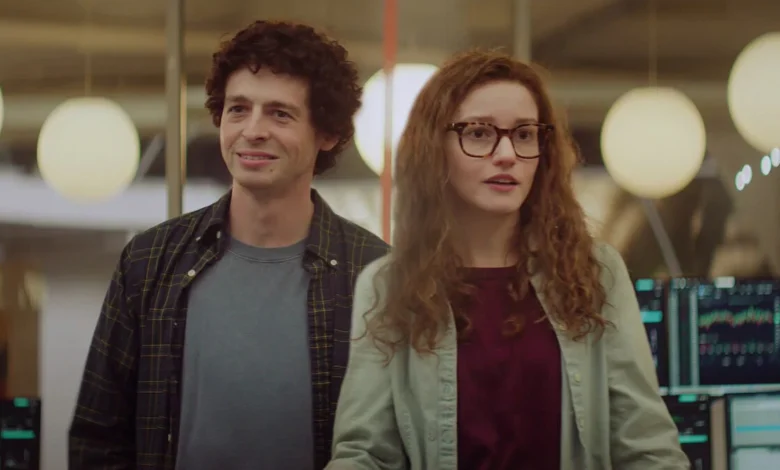
The release of the eight-part Netflix series The Altruists has ignited a firestorm of criticism from the cryptocurrency industry, legal experts, and observers who argue that the production takes excessive creative liberties with the well-documented collapse of Sam Bankman-Fried’s FTX empire. While the series has garnered a generally positive reception from mainstream television critics for its pacing and production values, those who lived through the 2022 crypto contagion are condemning the project for what they describe as a deliberate, and potentially politically motivated, rewriting of history.
The series, which counts former President Barack Obama and Michelle Obama among its executive producers, purports to dramatize the rise and fall of FTX, once one of the world’s largest cryptocurrency exchanges. However, industry veterans and legal analysts have taken to social media to challenge the show’s narrative, specifically its portrayal of Bankman-Fried as a victim of coercion and its depiction of Binance founder Changpeng Zhao (CZ) as a primary antagonist.
A Chronology of the FTX Collapse
To understand the controversy surrounding The Altruists, one must first look at the factual timeline of the events that led to the bankruptcy of FTX in November 2022.
- November 2021: FTX reaches its peak valuation of $32 billion, positioning itself as a legitimate, regulated alternative to offshore exchanges.
- November 2, 2022: A leaked balance sheet reveals that Alameda Research—Bankman-Fried’s hedge fund—held a massive amount of FTT, the native token of FTX, suggesting that the exchange was essentially printing its own currency to shore up its balance sheet.
- November 6, 2022: Changpeng Zhao announces that Binance will liquidate its remaining holdings of FTT, citing "recent revelations."
- November 11, 2022: FTX, along with Alameda Research and dozens of affiliated companies, files for Chapter 11 bankruptcy protection.
- December 2022: Bankman-Fried is arrested in the Bahamas and extradited to the United States.
- November 2023: A federal jury finds Bankman-Fried guilty on all seven counts of fraud and conspiracy.
- March 2024: Judge Lewis Kaplan sentences Bankman-Fried to 25 years in federal prison for the theft of over $8 billion in customer funds.
The Netflix series appears to depart from this established record by introducing fictionalized scenes in which Zhao allegedly threatens to destroy the company unless Bankman-Fried and Caroline Ellison, the former CEO of Alameda Research, collude in illegal market manipulation. Legal experts point out that no such coercion was ever presented during the criminal proceedings, nor was it part of the testimony provided by Ellison, who served as a key government witness against her former romantic partner.
The Allegation of Anti-Chinese Bias
Perhaps the most damaging critique of the series involves its portrayal of Changpeng Zhao. Beyond the narrative inaccuracies, viewers have pointed to the characterization of Zhao—played by actor Terry Chen—as leaning into harmful racial stereotypes. Critics have highlighted the character’s affected, heavy accent and the portrayal of his motivations as cartoonishly villainous.
Changpeng Zhao himself addressed the depiction on the social media platform X, noting, "I grew up in Canada, worked in New York, Tokyo, and many places. I almost never felt targeted by racism. But this is something to think about." The sentiment was echoed by veteran industry journalist Laura Shin, who stated, "I’m just going to say it: Racism has to have played a role in how they portrayed Zhao. There’s no other explanation."
The decision to lean into such tropes has led to accusations that the show’s writers intentionally caricatured a Chinese-Canadian executive to provide a convenient villain in a narrative that otherwise struggles to justify the sheer scale of the fraud committed by Bankman-Fried.
Discrepancies in Accountability
Another point of contention is the series’ depiction of Caroline Ellison. While the criminal trial established that Bankman-Fried directed the fraudulent activities—including the commingling of customer funds—the Netflix series allegedly shifts a significant portion of the culpability onto Ellison. By framing her as a mastermind of the accounting fraud rather than an accomplice operating under the influence and direction of the founder, the series risks distorting the legal reality established by the Department of Justice.
Constance Wang, the former COO of FTX, expressed her frustration with the show’s tone, noting that while it might function as a compelling romantic drama, it failed to reflect the reality of those who worked at the company. "For those of us who watched it together, it felt like someone else’s story with our names attached," she wrote. This criticism aligns with the broader industry view that the series treats a multibillion-dollar financial crime as a backdrop for interpersonal drama, thereby minimizing the impact on the millions of customers who lost their savings.
The Political Economy of Production
The involvement of the Obamas has served as a lightning rod for those seeking to explain the show’s perceived biases. Throughout the 2021-2022 election cycle, Bankman-Fried was a prolific political donor, contributing nearly $40 million to Democratic candidates and causes, including a $5.2 million donation to the campaign of President Joe Biden.
Lawyer and crypto-policy analyst Hailey Lennon suggested that the show’s narrative choices may be a byproduct of these high-level political connections. "The framing of the movie as some love story and to make SBF look more innocent is even more calculated than I initially realized," Lennon wrote on X. "Always follow the money."
While there is no direct evidence that the production team intentionally curated the script to protect political interests, the timing of the show and the involvement of high-profile Democratic figures have fueled speculation. Critics argue that by humanizing Bankman-Fried as a "misguided idealist" rather than a white-collar criminal, the production subtly softens the public’s perception of a donor who was once seen as a star within the party’s donor class.
Broader Implications for Media and Truth
The backlash to The Altruists underscores a growing tension between creative storytelling and historical accuracy in the age of streaming. When massive platforms like Netflix produce content based on recent, high-stakes criminal trials, the "based on a true story" label carries significant weight. For the general public, these dramatizations often become the primary source of information, potentially overshadowing the complex reality of judicial outcomes.
From a data-driven perspective, the reality of the FTX case remains stark: the exchange held approximately $900 million in liquid assets against $9 billion in liabilities at the time of its collapse. The theft of $8 billion remains one of the largest financial crimes in American history. When a series chooses to obscure these facts in favor of a narrative of bullying or coercion, it does more than just annoy industry professionals; it distorts the public understanding of institutional failure and fiduciary responsibility.
As Bankman-Fried continues his 25-year sentence at the federal facility in Victorville, California, the debate over his legacy—and how that legacy is curated by the entertainment industry—is likely to continue. The negative reaction to The Altruists serves as a warning to content creators that when dealing with recent, sensitive, and high-consequence events, audiences are increasingly capable of fact-checking narratives against the public record.
The failure of the series to address the "effective altruism" ethos that Bankman-Fried cited as his justification for the fraud—an ideology that many now argue was merely a cover for hubris—is seen by many in the crypto community as a missed opportunity to provide a meaningful critique. Instead, the series appears to have chosen a path of simplification, resulting in a product that critics claim is not only factually flawed but also ethically compromised.
In the final analysis, The Altruists may prove to be a cautionary tale not for the crypto industry, but for the media industry. As the line between documentary and drama blurs, the necessity for transparency and rigorous adherence to the truth becomes paramount. For now, the series stands as a controversial case study in how the pursuit of dramatic impact can inadvertently lead to the erasure of victimhood and the sanitization of institutional corruption.
Related posts: