Chiwetel Ejiofor Reflects on a Storied Career and the Unpredictable Nature of Cinema at the Torino Film Festival

The trajectory of an actor’s career is rarely a linear progression, yet few performers have experienced as abrupt an ascent as Chiwetel Ejiofor. For most, the pinnacle of professional success is a lifelong pursuit; for Ejiofor, the summit was his starting point. Making his feature film debut under the direction of Steven Spielberg in the 1997 historical drama Amistad, the British actor found himself confronted with a unique existential dilemma: how does one move forward when the beginning feels like the finish line?
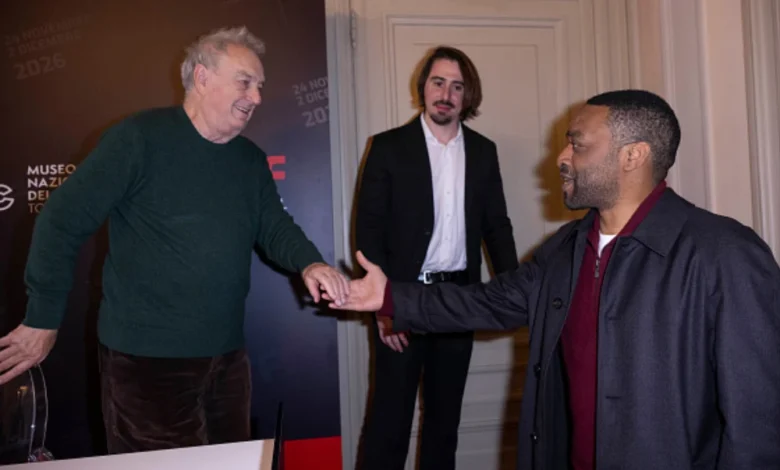
Speaking at the 2024 Torino Film Festival, where he was honored with the prestigious Stella della Mole award for lifetime achievement, Ejiofor opened up about the anxiety that defined his early years in the industry. The festival, which celebrates international cinematic excellence, served as an appropriate backdrop for the actor to reflect on a career that has spanned nearly three decades, bridging the gap between the intimate discipline of the London stage and the expansive, often volatile, world of global blockbuster filmmaking.
The Burden of an Early Peak
The apprehension Ejiofor felt as a young actor following the release of Amistad was not merely a matter of insecurity; it was a pragmatic assessment of an industry that often relies on momentum. "I was definitely worried about it at the time," Ejiofor admitted during his keynote discussion. "You feel that there are stages to how you develop as an actor and the opportunities you get, and you think they might follow a very linear path. But of course, my first film role was with Steven Spielberg. I realized then, very early on, that it’s a deeply unpredictable profession."
This realization—that the path of a performer is dictated by forces far outside one’s personal control—is a recurring theme in Ejiofor’s retrospective analysis. He describes the profession as one requiring a constant negotiation between anxiety and adaptation. "The opportunities can be sporadic or come from different places and angles that you didn’t imagine," he noted. "Part of the challenge, but also the exciting thing about being an actor, is having the capacity and ability to roll with it, to travel on the journey of it and see where it takes you."
From the West End to the Global Stage
While the world may recognize Ejiofor primarily through his filmography, his roots are firmly planted in the rigorous tradition of British theater. For many years, despite his high-profile film credits, Ejiofor maintained a staunch identity as a theater actor. His body of work with the National Theatre and various West End productions provided a foundational technical skill set that would eventually inform his cinematic performances.
His theatrical pedigree reached a high-water mark in 2008, when he received the Laurence Olivier Award for Best Actor for his portrayal of Othello. This accolade confirmed his standing as one of the preeminent stage actors of his generation. However, the transition from theater to film was not immediate. It required a shift in perspective, one that he credits to the collaborative environment fostered by director Stephen Frears and cinematographer Chris Menges on the 2002 thriller Dirty Pretty Things.
"I think it was around that time when I started to fall in love with film as well, with film acting and the rhythm and poetry of cinema," Ejiofor recalled. The Torino Film Festival highlighted this pivotal moment in his career by screening the film, reminding audiences of the subtle, internal intensity that would eventually define his more iconic roles.
A Career Defined by Human Complexity
Ejiofor’s filmography is marked by a deliberate selection of roles that prioritize human dignity and the complexities of the human condition. This commitment culminated in his Academy Award-nominated performance as Solomon Northup in Steve McQueen’s 12 Years a Slave (2013). The film, which depicts the harrowing true story of a free man kidnapped and sold into slavery in the antebellum South, remains a defining piece of modern cinema.
"I hadn’t heard of his story at all," Ejiofor said of Northup. "When I was sent the script, I was incredibly moved and shocked by it. Then I read Northup’s own memoir. I thought it was an extraordinary story, an extraordinary tale." His portrayal of Northup was lauded for its restraint, providing a window into a period of history characterized by the "absence of humanity."
For Ejiofor, the collaboration with Steve McQueen was a transformative experience. "Steve McQueen is a phenomenal filmmaker, incredibly passionate, detailed and thorough, with a wonderful vision and cinematic heart," he said. The global reception of the film, which went on to win the Academy Award for Best Picture, solidified Ejiofor’s reputation as an actor capable of carrying immense emotional weight with profound grace.
The Evolution into Direction and Future Aspirations
In recent years, Ejiofor’s career has taken another turn as he moved behind the camera to pursue writing and directing. His directorial efforts—The Boy Who Harnessed the Wind (2019) and Rob Peace (2024)—demonstrate a desire to control the narrative structure of the stories he tells. This shift in focus has necessitated a departure from the constant stage work that previously defined his professional life.
"It was when I became more involved in writing and directing that it started taking up a lot of my time outside of acting in films," he explained. "Historically, this would have been the time I spent on stage."
Despite this focus on directing, Ejiofor maintains that his passion for theater remains undiminished. He is currently in discussions for a return to the stage, which he hopes to materialize by late 2025. This balancing act—between the technical demands of directing and the raw, immediate connection of theater—is perhaps the current "stage" of his development, reflecting his ongoing commitment to evolving as an artist.
Industry Implications and Legacy
The career of Chiwetel Ejiofor serves as a case study for the sustainability of talent in a modern media landscape. By refusing to be pigeonholed into a single medium, he has successfully transitioned from a breakout star in historical dramas to an acclaimed stage performer, and finally to a filmmaker in his own right.
The Stella della Mole award serves not merely as a celebration of past work but as an acknowledgement of an actor who has successfully navigated the pitfalls of early success. His ability to maintain a consistent standard of excellence while exploring different facets of the industry—writing, directing, and stage performance—highlights a broader trend among contemporary actors who seek greater agency over their professional output.
As he looks toward the future, Ejiofor’s career trajectory continues to be defined by a refusal to adhere to a linear path. His story is a testament to the idea that the most profound artistic growth often occurs in the spaces between the "peaks" of one’s career. For an actor who began at the very top, the subsequent decades have been spent proving that the beginning was merely an invitation to explore the vast, unpredictable landscape of storytelling.
In the context of the current film industry, where trends move rapidly and digital content consumption has changed the nature of stardom, Ejiofor’s path remains a model of intentionality. By balancing the "rhythm and poetry of cinema" with the "human respect and dignity" that defined his most iconic performance in 12 Years a Slave, he continues to occupy a unique space in the cultural consciousness—one that is both deeply rooted in tradition and constantly seeking the next challenge.
As the Torino Film Festival concluded its tribute to his body of work, the sentiment was clear: Chiwetel Ejiofor’s legacy is not defined by the height of his first step, but by the breadth and depth of the journey that followed.