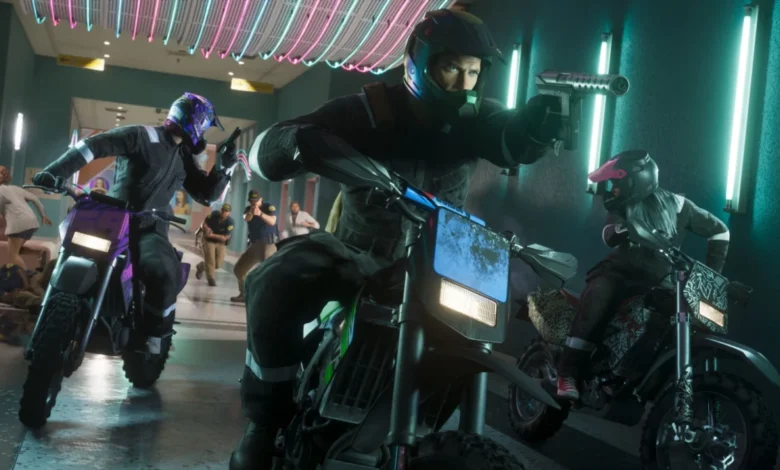
Grand Theft Auto VI, the highly anticipated successor to Rockstar Games’ record-breaking 2013 title, introduces a significantly expanded suite of player interactions and environmental controls designed to deepen the immersion within the fictional state of Leonida. While the core gameplay loop—centered on vehicular traversal, criminal enterprise, and narrative-driven missions—remains consistent with the series’ heritage, the complexity of the control scheme has evolved to support a more granular level of player agency. Mastering these nuanced, often undocumented, input combinations allows players to engage with the game’s sophisticated AI systems, traffic dynamics, and environmental details in ways that fundamentally alter the traditional open-world experience.
The Evolution of Player Agency and Interaction
Since the release of the first Grand Theft Auto title in 1997, Rockstar Games has incrementally increased the number of interactive variables available to the player. In the context of Leonida, the developers have implemented a "living world" philosophy where environmental objects, NPCs, and vehicle systems are no longer merely aesthetic, but functional components of the gameplay. By integrating specific controller inputs that trigger secondary actions—such as dynamic vehicle management, localized social interactions, and environmental navigation—Rockstar has provided a toolkit that encourages emergent storytelling. Industry analysts suggest that this shift reflects a broader trend in high-budget open-world design, where player satisfaction is increasingly tied to the ability to manipulate the simulation beyond scripted sequences.
Tactical Vehicular Management and Navigation
The navigation of Leonida’s expansive road network has been refined through the inclusion of advanced vehicle control modes. The "Auto-Drive" feature serves as a significant departure from previous entries, allowing players to delegate navigation to the game’s pathfinding AI. To engage this, players must set a waypoint on the map, enter a vehicle, hold the down arrow on the D-Pad, and press the Option button to enter cinematic mode. Subsequent engagement of the Circle button activates the autonomous driving feature. This system is not merely for convenience; it allows players to observe the dense traffic patterns and environmental design of Leonida without the cognitive load of manual steering.
Beyond navigation, vehicular survival is a core component of the gameplay. When evading law enforcement, players can minimize their detection profile by holding the Circle button while driving, effectively ducking below the dashboard. This mechanic, combined with the ability to toggle high beams and headlights via the Circle button, provides a tactical advantage during nocturnal chases or off-road excursions. Furthermore, the inclusion of a comprehensive vehicle management menu—accessed by holding the left arrow on the D-Pad and manipulating the right analog stick—allows players to control hazard lights and window positions. This adds a layer of simulated realism that is increasingly common in contemporary sandbox titles, where the utility of a vehicle extends beyond mere transport.

Social and Aggressive Interaction Mechanics
Leonida is populated by a sophisticated ecosystem of NPCs, and the game provides specific tools to manipulate social outcomes. The ability to "flip the bird" remains a staple of the series, triggered by holding L2 to focus on an individual while pressing R1. However, this action is context-sensitive and requires the player to be unarmed, underscoring the developers’ intent to create a system of cause-and-effect where social provocations lead to tangible consequences, such as NPC hostility or police intervention.
For combat and transit efficiency, players can utilize physical actions such as kicking while on a motorcycle or while in a vehicle. Pressing the Square button during a bike ride allows the player to strike nearby targets, a callback to classic arcade-style racing mechanics, while the same input in a stationary or slow-moving vehicle initiates a door-opening maneuver that acts as a melee strike. Trash-talking, initiated by pressing R3, further complicates NPC interactions, serving as an effective tool for baiting enemies or de-escalating confrontations through distraction.
Environmental Awareness and First-Person Observation
The integration of a specialized first-person observation mode represents a shift toward more detailed environmental investigation. By holding L2 and pressing R3, players can lock the character in a stationary first-person perspective. While this mode limits movement, it allows for a forensic-level inspection of textures, environmental clues, and interior design—elements that are often overlooked in the third-person camera perspective. This feature is particularly relevant for players engaged in side quests or those attempting to uncover the narrative secrets hidden within the game’s more obscure locations.
In addition to static observation, the game’s movement system includes context-sensitive animations such as sliding across a vehicle’s hood. By sprinting toward a car and pressing the X button, players can execute this maneuver, which serves both as a stylistic flourish and a functional shortcut to bypass obstacles in high-density urban environments. For those wishing to engage with the world at a slower pace, holding the Circle button near walls or the L3 button near ledges allows the character to rest, providing an opportunity to monitor the surrounding environment or eavesdrop on NPC conversations, which often contain hints regarding potential high-value targets or hidden locations.
Strategic Implications for Law Enforcement Evasion
The "Heat" system in Grand Theft Auto VI is significantly more reactive than in previous iterations. To manage this, the rear-view functionality, accessed by holding R3, becomes a critical survival tool. Unlike the standard camera rotation, this immediate rear-facing view allows players to track the positioning of police cruisers or pursuing threats without sacrificing forward momentum.

For players who successfully secure emergency vehicles, the siren control system offers an additional layer of tactical manipulation. By holding L3 and moving the left stick upward, players can cycle through various siren tones to navigate through traffic, effectively clearing a path through high-density intersections. This mechanic, while high-risk, provides a strategic benefit for those attempting to traverse the map during high-wanted-level scenarios.
Analysis of Gameplay Integration
The design philosophy behind these controls suggests that Rockstar Games is prioritizing player-led experimentation. By masking these functions behind complex input combinations rather than explicit UI prompts, the developers have created a "high-skill ceiling" that rewards long-term engagement. Data from previous Rockstar titles indicates that player retention is higher in games where discovery is a core pillar of the experience.
From a broader perspective, the inclusion of such granular controls signals a shift toward "simulative gaming," where the environment acts as a partner in the gameplay loop rather than a backdrop. As players continue to map the boundaries of Leonida, the community is expected to uncover further undocumented features, reinforcing the game’s position as a landmark in open-world technical achievement. These hidden inputs are not merely "easter eggs"; they are essential components of a robust, highly interactive, and evolving virtual world.
The successful implementation of these features in Grand Theft Auto VI establishes a new benchmark for systemic complexity in open-world titles, proving that even a decade after the industry’s shift toward accessible, streamlined controls, there remains a significant demand for depth and tactile mastery among the player base. The ongoing discourse surrounding these mechanics highlights the success of Rockstar’s approach in balancing narrative accessibility with the technical requirements of a complex simulation.