BYD Unveils the Second-Generation Seal 07: Redefining Electric Vehicle Affordability and Technology with Advanced Body Control Systems

The automotive industry continues to witness a rapid acceleration in electric vehicle (EV) innovation, and Chinese automaker BYD is once again at the forefront of this transformation. Marking a significant milestone in the company’s product rollout strategy, BYD officially launched the second-generation Seal 07 last week. While the vehicle occupies a physical footprint comparable to a mid-size sedan such as the Toyota Camry, its technological integrations, performance metrics, and pricing architecture position it in an entirely different league. Available in both battery electric vehicle (BEV) and plug-in hybrid electric vehicle (PHEV) configurations, the Seal 07 aims to democratize luxury-tier features for the mass market.
Main Facts and Pricing Structure
The second-generation Seal 07 introduces a comprehensive suite of mechanical and digital upgrades designed to appeal to cost-conscious consumers seeking premium specifications. The vehicle’s entry-level pricing strategy is aggressive, challenging legacy automakers on cost efficiency without compromising on modern amenities.
For consumers opting for the plug-in hybrid powertrain, prices start at an accessible 139,900 yuan (approximately $21,000 USD). Meanwhile, the fully electric iterations begin at 149,900 yuan (around $22,500 USD). For a limited promotional period, BYD is also introducing a "Super trade-in price" special, reducing the entry barriers further to 135,900 yuan ($20,500 USD) for the PHEV and 145,900 yuan ($22,000 USD) for the base EV variant.
Despite its highly competitive price point, the Seal 07 does not skimp on dimensions. Both powertrain variants measure 5,080 millimeters in length, 1,960 millimeters in width, and 1,495 millimeters in height. It features a generous wheelbase of 2,960 millimeters, providing interior spaciousness that slightly surpasses the traditional dimensions of the Toyota Camry, thereby offering substantial legroom and cabin volume for families and long-distance travelers alike.
Chronology and Background Context of the Launch
The debut of the second-generation Seal 07 is the culmination of years of iterative research and development by BYD’s engineering teams, particularly within the company’s Ocean sales division. Over the past several years, BYD has transitioned from a prominent battery manufacturer into a dominant global EV powerhouse, systematically updating its vehicle portfolio to incorporate proprietary innovations.
The timeline leading up to this release includes several pivotal technological breakthroughs by BYD:
- The initial introduction of the Blade Battery architecture, which revolutionized safety and volumetric efficiency in LFP (Lithium Iron Phosphate) chemistry.
- The continuous refinement of the e-Platform architecture, enabling higher integration of powertrain and chassis systems.
- The development of intelligent body control systems, such as the Disus series, which were previously reserved for high-end luxury brands and specialized vehicle segments within the BYD ecosystem (such as Yangwang and Fang Cheng Bao).
By filtering these high-end technologies down to the sub-$30,000 price bracket, BYD is executing a deliberate market strategy to capture mid-tier consumer segments while pressuring global competitors to accelerate their own technological timelines.
Supporting Data: Battery Performance and Flash Charging

At the heart of the fully electric Seal 07’s capabilities is BYD’s second-generation Blade LFP battery technology. The top-tier EV variant houses a 76.7 kWh battery pack, engineered to deliver an impressive CLTC (China Light-Duty Vehicle Test Cycle) driving range of up to 481 miles (775 kilometers) on a single charge.
Beyond raw range capacity, the vehicle introduces cutting-edge thermal management and high-voltage architecture referred to as Flash Charging technology. This system fundamentally addresses one of the primary consumer pain points associated with electric vehicle adoption: refueling downtime.
According to official specifications provided by BYD, the second-generation Blade Battery and associated charging infrastructure allow the vehicle to replenish its energy reserves from 10% to 70% in a mere five minutes. Furthermore, completing a near-full charge—moving from 10% to 97%—requires just nine minutes. This charging velocity drastically narrows the gap between the operational convenience of traditional internal combustion engine vehicles and modern battery-electric alternatives.
Engineering Innovation: The Disus-M Body Control System
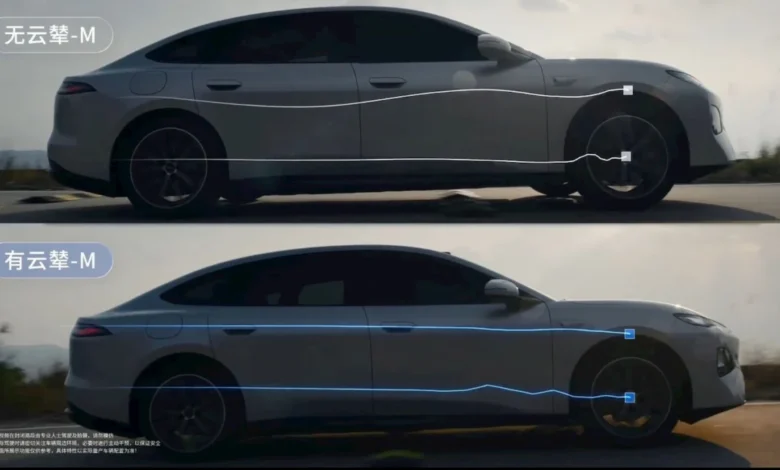
One of the most noteworthy technological advancements accompanying the Seal 07 launch is the integration of BYD’s proprietary body control systems. The Seal 07 serves as the debut vehicle for the Disus-M Intelligent Magnetorheological Body Control System, elevating the vehicle’s dynamic stability and ride comfort far beyond conventional suspension setups in its class.
The Disus-M architecture utilizes a sophisticated mechanical layout featuring a front double-wishbone suspension paired with an enhanced rear five-link suspension setup. This hardware operates in tandem with an advanced network of road-surface sensors, which incorporate roof-mounted LiDAR technology, and the iTAC 2.0 (Intelligent Torque Adaptation System) software.
During public demonstrations managed by Zhang Zhuo, general manager of BYD’s Ocean sales division, the real-world capabilities of the Disus-M system were showcased to media and prospective buyers. The system is engineered to deliver lightning-fast response times measured in milliseconds. By dynamically adjusting the damping force across a broad operational range of 100 to 10,000 Nm, the vehicle can effectively counteract body roll, smooth out irregular road surfaces, and optimize traction during aggressive maneuvers or adverse weather conditions.
While the flagship all-electric variant of the Seal 07 comes standard with the advanced Disus-M setup, lower-priced trims are equipped with BYD’s competent Disus-C intelligent body control system. The top-tier EV model featuring the Disus-M architecture is priced at 172,900 yuan (approximately $26,000 USD), representing exceptional value for a sedan equipped with magnetorheological damping.
Interior Luxury and Smart Ecosystem 2.0
Stepping inside the cabin, the second-generation Seal 07 reflects a major design overhaul aimed at blending minimalism with high-tech functionality. The interior centers around a large 15.6-inch floating central infotainment screen, complemented by a 10.25-inch digital instrument cluster for the driver. In a nod to rear-passenger comfort and modern digital consumption, BYD has also integrated dual rear entertainment screens.
To reinforce its positioning as a luxury-grade offering, the cabin incorporates several premium amenities rarely found at this price point:

- A built-in 6.8-liter smart refrigerator suitable for maintaining beverage temperatures during long journeys.
- Ergonomically designed zero-gravity seats aimed at reducing fatigue on extended drives.
- Integrated driver headrest audio systems for personalized media consumption and navigation prompts.
On the software front, the Seal 07 debuts BYD’s Smart Ecosystem 2.0. A standout feature within this ecosystem is "Diva," a companion smartwatch designed to interface directly with the vehicle. The smartwatch allows drivers to interact remotely with core vehicle functions, manage security settings, and monitor vehicle status without needing physical key fobs or smartphones.
Autonomous Driving and Safety Systems
For consumers prioritizing active safety and autonomous driving assistance, higher-priced trims of the Seal 07 are equipped with BYD’s advanced "God’s Eye B" intelligent driving system. Leveraging the vehicle’s exterior camera arrays and roof-mounted LiDAR hardware, the system provides comprehensive active safety interventions and convenience features.
The God’s Eye B suite enables advanced functionalities such as Navigation on Autopilot (NOA) for both urban environments and highway driving, significantly reducing driver workload during complex commutes. Additionally, the system supports full-scenario intelligent parking, allowing the vehicle to autonomously identify and maneuver into challenging parking spaces with minimal human intervention.
Broader Market Impact and Implications
The commercial rollout of the second-generation Seal 07 carries significant implications for the global automotive landscape. By coupling aggressive pricing—starting near the $21,000 threshold—with advanced features such as magnetorheological suspension, ultra-fast flash charging, and sophisticated autonomous driving hardware, BYD is exerting intense competitive pressure on both domestic and international rivals.
For traditional internal combustion engine manufacturers producing vehicles in the mid-size sedan segment, such as Toyota and Honda, the rapid technological advancement and cost-competitiveness of Chinese EV offerings present a formidable challenge. Consumers are increasingly expecting high-end digital ecosystems, rapid charging capabilities, and sophisticated ride-comfort systems as baseline expectations rather than luxury luxuries.
Furthermore, the integration of cutting-edge innovations like the Disus-M system and second-generation Blade batteries into moderately priced sedans demonstrates BYD’s manufacturing scale and supply chain vertical integration. As these vehicles begin making inroads into international markets where BYD continues to expand its footprint, legacy automakers will be forced to re-evaluate their pricing models, technology roadmaps, and supply chain strategies to remain viable.
Ultimately, the second-generation Seal 07 is more than just an affordable commuter car; it serves as a technological showcase for what modern automotive engineering can achieve when advanced chassis control, rapid energy replenishment, and intelligent software ecosystems are synthesized into a single, accessible package.