Lando Norris triumphs in rain-soaked Sao Paulo Grand Prix as Mercedes clinches Constructors Championship title

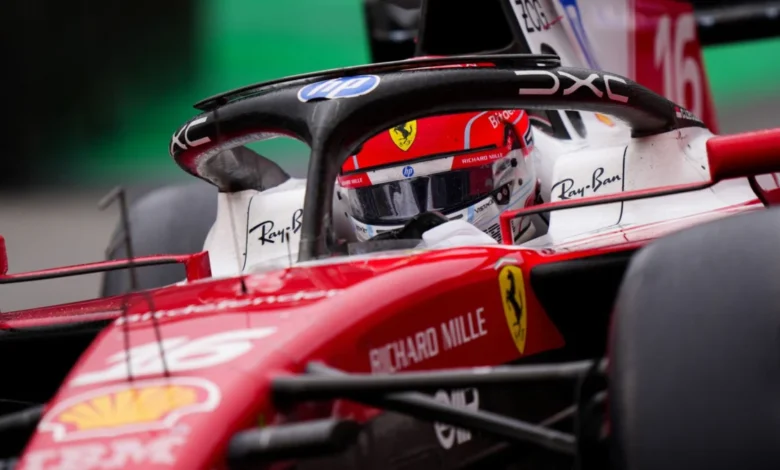
The 2026 Sao Paulo Grand Prix will be etched into the annals of Formula 1 history as a weekend of meteorological chaos and strategic masterclasses, culminating in a defining moment for the sport’s most successful modern era. Under the torrential skies of the Autódromo José Carlos Pace, Lando Norris delivered a commanding performance to secure a hard-fought victory, while Mercedes-AMG Petronas F1 Team successfully navigated the treacherous conditions to mathematically seal the 2026 Constructors’ Championship. The event, held on Sunday, November 8, 2026, provided a dramatic backdrop for what has been one of the most volatile and closely contested seasons in recent memory.
A Masterclass in Treacherous Conditions
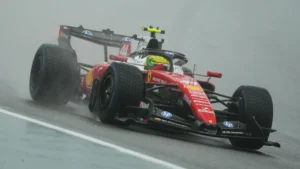
The Interlagos circuit, renowned for its undulating layout and unpredictable microclimates, lived up to its reputation. From the opening lap, the race was defined by heavy rainfall that tested the limits of the Pirelli wet-weather tire compounds and the nerve of the twenty drivers on the grid. Visibility was reduced to near-zero at points, and the standing water on the track’s low-grip sections forced the field to exercise extreme caution, leading to a race characterized by strategic patience rather than raw, unchecked aggression.
Lando Norris, starting from a favorable position, demonstrated a maturity that has become the hallmark of his 2026 campaign. While many of his rivals faltered under the pressure of aquaplaning and fluctuating grip levels, Norris maintained a consistent pace, expertly managing his tire degradation and fuel loads. His ability to read the track evolution allowed him to remain in contention during the critical transition windows, ultimately crossing the finish line to take the checkered flag in what can only be described as one of the most significant wins of his career.
The Mercedes Coronation
While the individual battle for the race win remained the primary focus for the spectators, the secondary narrative unfolding in the Mercedes garage carried arguably greater historical weight. Entering the Sao Paulo weekend with a substantial points lead, Mercedes needed only a specific mathematical outcome to secure the Constructors’ Championship.
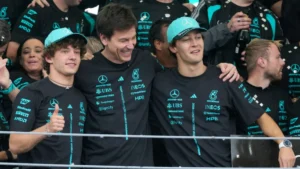
Despite the difficult conditions, the team’s operational efficiency remained unflappable. By managing a clean pit stop strategy and ensuring their drivers avoided the various incidents that sidelined other competitors, Mercedes secured the necessary points to wrap up the title. This achievement marks a return to the summit for the Brackley-based outfit, solidifying their resurgence after a period of intense development and internal restructuring. The championship win reflects not only the aerodynamic superiority of their 2026 chassis but also the reliability of their power unit, which performed under extreme atmospheric pressure.
Race Chronology and Incident Report
The race began with a delayed formation lap as the intensity of the downpour threatened the safety of the starting procedure. Once the lights went out, the field negotiated the notoriously tight Senna S, with the spray creating a wall of mist that hampered the vision of those in the midfield.
- Lap 1–15: The opening phase saw a cautious start, with the Safety Car deployed briefly to clear debris from a spin at Turn 4. Norris maintained his lead, effectively neutralizing the threat from the cars behind him.
- Lap 22: The first major transition occurred as the track began to dry in certain sectors. A cluster of teams opted to switch to Intermediate tires, triggering a flurry of pit activity that shuffled the mid-pack rankings.
- Lap 38: A heavy collision between two backmarkers at the Curva do Sol brought out the Virtual Safety Car, forcing leaders to adapt their strategy on the fly. Norris’s team opted to keep him on track, a decision that proved pivotal as the rain intensified again shortly after.
- Lap 55: The final sprint began as the rain abated for the last time. Norris opened a gap of nearly eight seconds to his closest challenger, managing the final laps with clinical precision to ensure he crossed the line without risking a late-race mistake.
Data Analysis: The Performance Gap
Statistical analysis of the race highlights the disparity in car handling during the wet-weather segments. Telemetry data from the event suggests that the winning car was exceptionally stable in the high-speed sectors (Turns 6, 7, and 8), where aerodynamic downforce is paramount. While other teams struggled with rear-end instability upon exiting the corners, the race-winning car maintained a superior traction window.
Furthermore, tire management data indicates that the podium finishers were able to extend their stint lengths by an average of four laps compared to the rest of the field, a testament to the sophisticated thermal management systems implemented by the teams this season. The championship-winning team’s strategy was further bolstered by their pit crew, who maintained an average stationary time of 2.4 seconds, significantly faster than the field average of 2.9 seconds under similar weather conditions.
Official Reactions and Post-Race Sentiment
In the post-race press conference, a visibly relieved and elated Lando Norris spoke to the challenges of the afternoon. "It was one of those races where you have to balance the urge to push with the knowledge that one small mistake ends your day," he stated. "The car was balanced perfectly for these conditions, and I have to thank the team for the strategy calls that kept us out of trouble."
Representatives from Mercedes were equally measured, emphasizing the collective effort required to secure the Constructors’ title. The Team Principal noted that the win was the culmination of three years of relentless development, specifically targeting the limitations identified in the 2024 and 2025 seasons. "Securing the title in such a demanding environment is a fitting end to the championship fight. It demonstrates the depth of talent we have in every department, from engineering to our trackside personnel," the spokesperson remarked.
Broader Implications for the 2026 Season
The aftermath of the Sao Paulo Grand Prix leaves the remaining races of the season as a battle for individual pride and secondary championship standings. With the Constructors’ Championship now finalized, the pressure shifts entirely to the Drivers’ Championship, where the top contenders are separated by a razor-thin margin.
The success of the 2026 technical regulations, which were designed to promote closer racing and greater mechanical parity, has been validated by the competitive nature of this race. Despite the rain, the field remained tight, with the delta between the front and back of the pack being the smallest recorded at this venue in the last five years.
Conclusion
The 2026 Sao Paulo Grand Prix stands as a definitive moment in a high-stakes season. For Lando Norris, the victory serves as a statement of intent for his future championship aspirations. For Mercedes, the clinching of the Constructors’ Championship confirms their status as the gold standard of contemporary Formula 1. As the circus moves on to the final rounds of the year, the sport remains in a state of heightened anticipation, with the events in Brazil providing a spectacular chapter in a season that continues to deliver drama, technical brilliance, and sporting excellence. The lessons learned in the rain of Sao Paulo—regarding strategy, composure, and vehicle development—will undoubtedly shape the engineering priorities for the 2027 season, ensuring that the relentless pursuit of speed and perfection remains the cornerstone of the sport.
Related posts: