Thailand says its 35% import levy protects Japanese supply chains, but locally built Chinese EVs face just a 2% excise tax. By Stewart Burnett

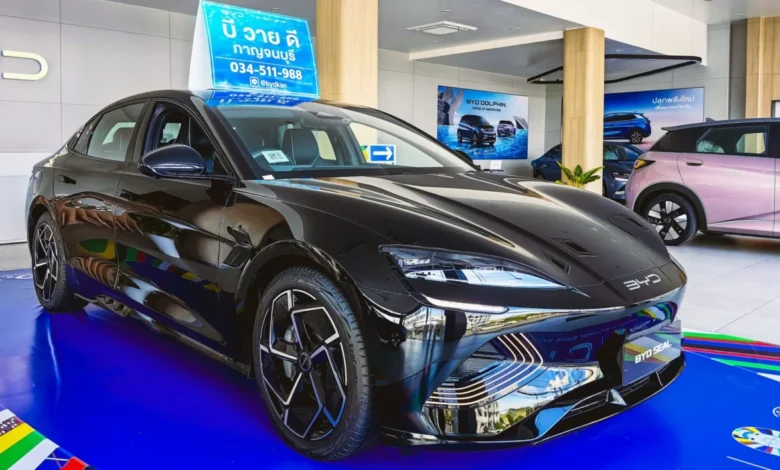
The Thai automotive landscape is bracing for a profound transformation following a pivotal cabinet decision that underscores the delicate balancing act governments face in the global energy transition. On November 3, the Thai government approved a sweeping overhaul of its automotive excise tax structure, slated to take effect on January 1, 2027. Under the new policy, fully imported battery-electric vehicles (BEVs) will face a steep hike in their excise tax, jumping from the current 10% to 35%. Simultaneously, extended-range electric vehicles (EREVs) will see their base rate rise from 15% to match the 35% threshold.
While official rhetoric frames this regulatory shift as a strategic defense of long-established Japanese manufacturing partnerships that have anchored the Thai economy for decades, the practical economic fallout reveals a much more nuanced reality. Rather than halting the meteoric rise of Chinese automotive giants, the tax hike primarily penalizes import-only brands—ranging from Western luxury marques to smaller Chinese players without domestic production footprints. Meanwhile, Chinese automakers that have established local assembly lines will remain heavily insulated, enjoying a preferential 2% excise tax rate that threatens to accelerate industry consolidation rather than level the playing field.
Background Context and the Evolution of Thailand’s EV Policy
To understand the weight of the 2027 tax adjustment, one must examine Thailand’s historical status as the undisputed "Detroit of Southeast Asia." For more than half a century, the kingdom has served as the regional manufacturing and export hub for Japanese legacy automakers, including Toyota, Honda, Isuzu, and Nissan. These companies built an intricate, highly localized supply chain encompassing thousands of Tier-1, Tier-2, and Tier-3 component suppliers, providing hundreds of thousands of jobs and generating substantial export revenues.
However, the rapid global pivot toward electrification caught the traditional ecosystem somewhat flat-footed. Recognizing the imperative to capture the future of mobility, the Thai government aggressively courted electric vehicle investments through generous subsidies, tax holidays, and infrastructure incentives under its various EV package schemes (such as EV 3.0 and EV 3.1).
These incentives successfully attracted massive capital inflows, drawing over US$4bn in foreign direct investment into the country’s burgeoning EV sector. Crucially, the earliest and most aggressive responders were Chinese automotive powerhouses. Brands such as BYD, Great Wall Motor, SAIC Motor (MG), and Changan Automobile committed billions to construct local manufacturing facilities. Consequently, while Thailand became a magnet for Chinese EV assembly, the speed of consumer adoption dramatically outstripped domestic production capacity, creating a severe structural trade imbalance that alarmed policymakers in Bangkok.
A Chronology of Regulatory Shifts and Market Pressures
The trajectory leading to the November 2026 cabinet approval is marked by escalating market tensions and shifting trade dynamics:
- 2010: The implementation of the ASEAN-China Free Trade Agreement completely eliminates import duties on finished vehicles traded between China and ASEAN member nations, laying the groundwork for tariff-free vehicle influxes years later.
- 2021–2023: Thailand introduces aggressive EV incentive packages to stimulate local consumer adoption, lowering import tariffs and excise taxes temporarily to jumpstart the market.
- 2024: Japanese automakers experience a noticeable contraction in market dominance, with their collective market share sliding to 76.7% as affordable Chinese BEVs capture consumer imagination and wallet share.
- 2025: Japanese market share erodes further down to 69.3%, while total passenger BEV sales surge, cementing a structural divide between imported vehicles and local assembly output.
- January–September 2026: Passenger BEV sales reach a staggering 161,532 units, accounting for 31% of the total domestic automotive market. However, domestic BEV production over the same nine-month period totals just 70,472 units. Commerce Ministry data reveals that the value of BEV imports hits US$2.36bn, with an overwhelming 96% originating from China.
- November 3, 2026: The Thai cabinet formally approves the 35% excise tax on fully imported BEVs and EREVs, effective January 1, 2027, explicitly citing the need to safeguard traditional supply chains.
Data-Driven Realities: The Import Gap and Market Disconnect
The urgency behind the upcoming tax revisions is laid bare by recent industrial data. According to the Federation of Thai Industries (FTI), the chasm between domestic consumption and local manufacturing output highlights a persistent reliance on foreign-built vehicles. Despite government mandates requiring foreign manufacturers receiving subsidies to eventually localize production at a specified ratio, the immediate market demand has been overwhelmingly satisfied by direct imports.
Because traditional customs tariffs are legally bound by regional free trade agreements—most notably the 2010 ASEAN-China pact that scraps finished vehicle duties—the Thai government cannot utilize standard import tariffs to curb the influx. Instead, the Ministry of Finance has leaned on internal excise taxation as its primary policy lever.
By hiking the excise tax on fully imported BEVs to 35% while keeping the rate for locally manufactured BEVs at an exceptionally low 2%, the government has constructed a powerful financial incentive for automakers to build within Thailand’s borders. However, this creates a starkly uneven playing field. Major Chinese assemblers like BYD, Great Wall, MG, and Changan are largely insulated because they have already established operational local plants. Conversely, brands relying purely on importation—such as Tesla, Volvo, Porsche, Audi, and various smaller Chinese exporters without domestic factories—face a severe margin squeeze or the prospect of pricing themselves out of the competitive Thai market.
Official Responses and Ministerial Justifications
Articulating the rationale behind the cabinet’s decision, Thai officials emphasized the necessity of protecting the nation’s industrial heritage and labor force.
"The government prioritizes supply chains and investors who have invested in Thailand, helped develop our auto industry and supported the Thai economy for decades, particularly the Japanese companies," stated Industry Minister Varawut Silpa-archa, according to translations published by Nikkei.
Echoing this sentiment, Finance Minister Ekniti Nitithanprapas underscored that the ultimate strategic objective is to secure Thailand’s position as a robust, diversified production and export hub. The policy is explicitly designed to retain multinational firms that employ hundreds of thousands of Thai citizens, ensuring that the transition to electric mobility does not hollow out the foundational manufacturing workforce.
At the same time, the hybrid tax structure offers targeted relief to legacy Japanese players. Locally built regular hybrid electric vehicles (HEVs) are subject to a modest excise tax ranging between 6% and 15%, compared to the 25% to 35% levy applied to traditional internal combustion engine (ICE) vehicles. This favorable treatment is intended to throw a lifeline to a supplier base heavily engineered around Toyota and Honda. Yet, the data shows that hybrid incentives alone are struggling to stem the tide; Japanese brands saw their market share slip below 60% in 2026 registration data, with their dominance now effectively restricted to the one-tonne pickup truck segment, where they maintain over 90% control.
Global Parallels: Following the European Playbook?
Thailand’s regulatory maneuver does not occur in a vacuum; it mirrors, and in some ways refines, protectionist strategies currently deployed in Western markets. The European Union, for instance, implemented countervailing duties of up to 45% on Chinese-built BEVs, a move that successfully compelled companies like BYD to explore manufacturing hubs in Hungary and Chery to establish footprints in Spain, while temporarily leaving hybrid shipments untouched.
Furthermore, the European bloc has grown increasingly vigilant regarding hybrid shipments routed through alternative international corridors, prompting discussions around import caps. By deliberately pulling EREVs into the 35% excise tax band alongside standard BEVs, Bangkok has proactively closed a potential loophole. In global trade, EREVs have frequently been utilized by manufacturers to bypass stringent BEV-specific regulatory barriers. By applying parity to both drivetrains, Thailand ensures that powertrain-swapping tactics cannot be weaponized to evade domestic production requirements.
Broader Industry Implications and Future Outlook
Rather than reversing the broader trends of Chinese market penetration, the 2027 excise tax policy is anticipated to catalyze a sharp phase of market consolidation. The structural burden will fall disproportionately on smaller, undercapitalized players that lack the capital expenditure required to build localized assembly plants. Brands such as Neta, which has already encountered public financial pressures and operational headwinds in various regional markets, face an increasingly precarious climb.
At the same time, top-tier Chinese manufacturers that moved early to establish local factories—cementing their presence among the eight Chinese automakers currently manufacturing in Thailand—are positioned to tighten their grip on the sector. Having already captured close to 90% of Thailand’s domestic electric vehicle sales, these dominant firms will likely absorb the regulatory shifts with minimal disruption, leveraging their economies of scale to outcompete both Western import brands and struggling niche competitors.
Ultimately, Thailand’s 2027 tax overhaul represents a calculated regulatory gamble. It attempts to honor a half-century-old industrial partnership with Japan while simultaneously embracing the undeniable reality of Chinese automotive dominance. Whether this policy successfully revitalizes domestic manufacturing without alienating consumers accustomed to affordable vehicle choices will depend entirely on how swiftly non-localized brands adapt to the new economic landscape.