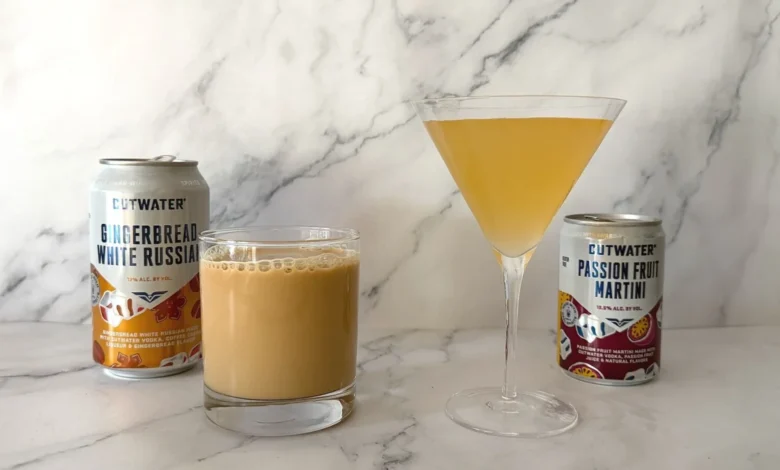
The ready-to-drink (RTD) beverage market has experienced unprecedented expansion over the past half-decade, transforming from a novel category dominated by basic malt beverages into a sophisticated segment of the broader alcoholic beverage industry. As consumer preferences shift toward convenience without a compromise in flavor complexity, major producers continually innovate to capture seasonal market share. Entering the crucial fourth-quarter retail period—traditionally responsible for a significant percentage of annual alcohol sales—Cutwater Spirits has introduced two distinct additions to its portfolio: the Passion Fruit Martini and the Gingerbread White Russian.
These seasonal releases arrive as manufacturers increasingly target specific holiday consumption occasions, leveraging nostalgia, festive flavor profiles, and the inherent convenience of canned formats for hosting and gifting. Evaluated through a rigorous sensory methodology that tests balance, authenticity, and overall drinkability, these new offerings provide insight into how established RTD producers are navigating consumer demands for both high-end cocktail experiences and comforting, traditional winter flavors.
The Evolution of the Ready-to-Drink Holiday Market
The timing of Cutwater’s latest releases aligns with broader economic and cultural trends surrounding at-home entertaining and convenience. Historically, the winter holiday season prompted surges in the sales of bottled spirits, liqueurs, and wine, requiring hosts to stock multiple ingredients, fresh mixers, and specialized glassware to craft traditional cocktails. However, the maturation of the RTD sector has fundamentally altered consumer expectations. According to industry data from organizations such as the Distilled Spirits Council of the United States (DISCUS), spirits-based RTDs have consistently outperformed other segments of the alcoholic beverage market, driven by consumer migration toward convenience, portion control, and premium ingredients.
Makers of canned cocktails no longer rely solely on summer-centric hard seltzers or simple citrus-and-spirit combinations. Instead, the market has pivoted toward complex, multi-ingredient formulations that replicate labor-intensive bar programs. Classics like espresso martinis, margaritas, and old fashioneds have successfully transitioned into aluminum cans. By introducing seasonal iterations—such as holiday-themed white russians and globally inspired fruit martinis—brands aim to capture holiday shoppers looking for low-friction solutions to party hosting. This strategy not only capitalizes on festive consumer spending but also drives brand visibility through limited-time-only (LTO) scarcity models.
Sensory Evaluation and Tasting Methodology
Assessing high-ABV and complex flavored canned cocktails requires a structured sensory protocol designed to evaluate aroma, mouthfeel, flavor balance, and the integration of the base spirit. In evaluating the Cutwater portfolio additions, testers focused on how closely the canned formulations mirror their freshly prepared bar counterparts.
In the RTD space, a common pitfall is either the overwhelming dominance of artificial flavoring or an unmasked, harsh alcoholic burn resulting from poor spirit integration. A successful canned cocktail must maintain structural integrity over its shelf life, utilizing carbonation, acidity, dairy alternatives, or fruit extracts to create a cohesive sensory profile. Both the Passion Fruit Martini and the Gingerbread White Russian were evaluated chilled, poured into appropriate glassware, and assessed across multiple parameters, including olfactory presentation, mid-palate flavor delivery, and finish.
Taste Profile Analysis: Passion Fruit Martini
The Passion Fruit Martini presents a unique formulation challenge within the canned cocktail category. Passion fruit possesses a polarizing flavor profile characterized by intense tropical acidity, high aromatic pungency, and sharp tartness. When combined with vodka in a canned format, the risk of producing an overly medicinal or cloying beverage is high.
Cutwater’s approach to the Passion Fruit Martini centers on brightness and balance. Upon pouring, the beverage exhibits a vibrant, fruit-forward aroma that accurately mimics fresh passion fruit puree rather than synthetic candy flavoring. On the palate, the tartness of the tropical fruit is immediately counterbalanced by a clean, neutral vodka base. Crucially, the spirit does not impart an unwanted astringent burn, allowing the fruit’s natural citrus notes to lead the profile. The finish is remarkably crisp and refreshing, defying expectations for a canned tropical drink released during the colder months. This formulation provides a modern, elevated alternative to traditional heavy winter punches, making it well-suited for holiday hosts seeking a brighter, fruit-forward option to contrast with richer seasonal fare.

Taste Profile Analysis: Gingerbread White Russian
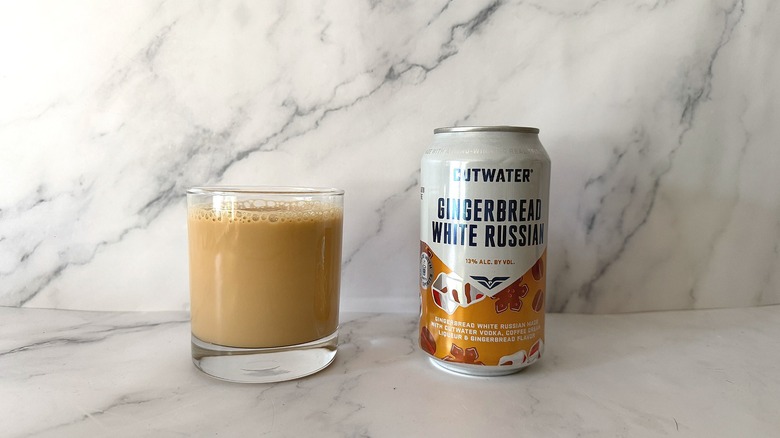
Conversely, the Gingerbread White Russian leans entirely into the rich, warming, and nostalgic flavor profiles traditionally associated with cold-weather consumption. The White Russian—traditionally a combination of vodka, coffee liqueur, and heavy cream or milk—is a winter staple; however, integrating gingerbread spices introduces technical hurdles, particularly regarding dairy stability and spice calibration.
The beverage successfully evokes traditional holiday baking without crossing into an overly sugary profile. The nose offers distinct notes of warm molasses, ginger, and subtle clove, supported by the deep aroma of coffee liqueur. On the palate, the mouthfeel is thick, creamy, and satisfying, fulfilling the sensory expectations of a decadent dessert cocktail. The gingerbread spice blend does not overpower the underlying coffee and dairy elements; rather, it complements them, adding a layer of complexity that elevates the standard White Russian template. The result is a dessert-style beverage that feels both comforting and novel, presenting a significant appeal for consumers seeking rich, warming profiles during winter gatherings.
Market Placement, Pricing, and Availability

Logistically, the commercial rollout of these two products utilizes distinct distribution strategies tailored to consumer buying habits during the fourth quarter. The Gingerbread White Russian is being distributed as a standalone offering, sold in standard four-packs at participating retailers nationwide. Pricing for the four-pack generally ranges between $10 and $15, depending on local excise taxes and state-by-state liquor distribution laws. This accessibility makes it an easy impulse purchase for holiday shoppers looking to supplement home bar inventories.
In contrast, the Passion Fruit Martini is incorporated into Cutwater’s broader Martini Variety Pack strategy. Packaged alongside established offerings such as the Espresso Martini and the Lemon Drop Martini, the 12-pack variety format is typically retailed between $25 and $30. This bundling strategy serves a dual purpose for the manufacturer: it introduces consumers to the new passion fruit expression while mitigating the commercial risk of a polarizing flavor profile by pairing it with proven, high-demand favorites. Both products are designated as limited-time offerings, reinforcing a sense of urgency among retail buyers and collectors of seasonal merchandise.
Broader Industry Implications and Future Outlook
The introduction of specialized, seasonal canned cocktails by prominent brands like Cutwater highlights a permanent shift in how manufacturers plan annual product life cycles. The beverage industry no longer views the calendar year in terms of two distinct seasons (warm versus cold weather); instead, micro-seasons—such as "spooky season," "holiday hosting," and "spring reset"—dictate aggressive product development and targeted marketing campaigns.
For retailers, stocking these limited-edition SKUs (Stock Keeping Units) represents a reliable method to drive foot traffic and increase basket sizes during the critical end-of-year shopping period. For consumers, the expansion of high-quality RTD options reflects a broader democratization of mixology, allowing hosts to serve complex, multi-ingredient cocktails—such as a spiced dairy beverage or a tropical fruit martini—without requiring professional bartending skills or extensive ingredient sourcing.
As the canned cocktail category matures, consumer scrutiny regarding ingredient quality, flavor accuracy, and value will only intensify. Products that successfully bridge the gap between home-crafted quality and industrial convenience, as demonstrated by these seasonal releases, are positioned to command enduring loyalty in a crowded marketplace. Whether these specific flavor profiles return in future years will ultimately depend on sales velocities and consumer retention metrics recorded at the close of the holiday sales cycle, but their initial execution suggests a high standard of formulation capability within the category.