Mysterious Shamanic Figurine Unearthed at Ancient Japanese Burial Mound Site Offers New Insights into Fifth-Century Ritual Practices

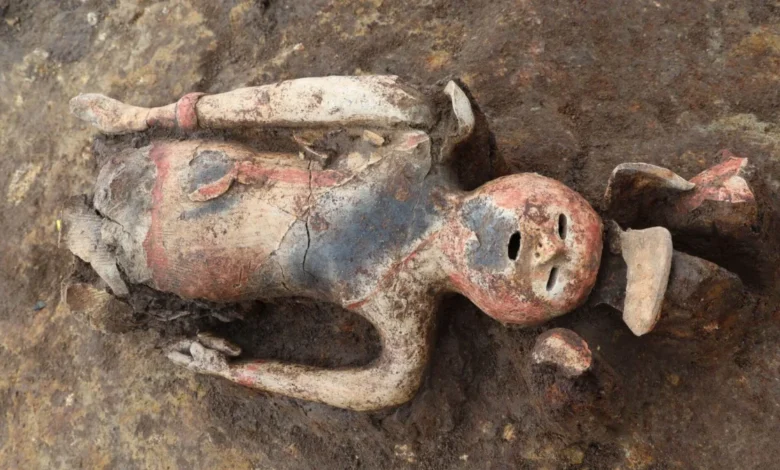
Archaeologists working at the Nishikaminomiya site in Gunma Prefecture, Japan, have recovered a rare and exceptionally well-preserved clay figurine that appears to depict a female shaman from the fifth century. The discovery, which occurred during a routine excavation of a Kofun-period burial mound, provides a tangible link to the spiritual and social hierarchies of ancient Japan. The figure, characterized by its ethereal, ghostly aesthetic and distinct human-like features, was positioned in a manner suggesting it served as a sentinel or ritual guardian for the tomb. This finding, officially documented by the Gunma Prefectural Board of Education, adds a significant piece to the puzzle of the Kofun period, a transformative era in Japanese history defined by the rise of powerful centralized polities and complex funerary customs.
The Nishikaminomiya Site and the Kofun Period Context
The Kofun period (c. 300–538 AD) marks a critical transition in the Japanese archipelago. It was an era characterized by the emergence of the Yamato polity and the construction of massive keyhole-shaped burial mounds known as "kofun," which served as final resting places for the elite and the burgeoning aristocracy. The Nishikaminomiya site, located in the northwestern reaches of the Kanto region, represents a localized cluster of these burial mounds, dating specifically to the fifth and sixth centuries.
The discovery of the clay figure—often referred to as a "haniwa"—within this specific geographical context is significant. Haniwa are terracotta clay figures that were arranged on top of or around these burial mounds. While many haniwa take the form of cylinders, houses, animals, or weapons, the discovery of a human-shaped figure—particularly one exhibiting characteristics of a shaman or ritual practitioner—is a rare occurrence that speaks to the specific spiritual functions of the Nishikaminomiya site. The site has long been a subject of interest for local historians, as it sits at a crossroads of ancient trade routes, suggesting that the individuals buried there held substantial influence over local commerce and religious life.
Chronology of the Discovery
Excavation efforts at the Nishikaminomiya site have been ongoing as part of a regional infrastructure development plan. The chronology of the find is as follows:
- Early 2024: Preliminary surveys of the Nishikaminomiya burial complex were initiated by the Gunma Prefectural Board of Education following plans for local land development.
- Mid-2024: Systematic excavation began, revealing a series of roughly a dozen distinct mounds, ranging in size and complexity.
- Late 2024: Archaeologists identified a concentrated deposit of artifacts near the base of one of the larger mounds.
- December 2024: The clay figurine was carefully extracted and stabilized. Initial analysis indicated that the figure was placed in the earth during the mid-to-late fifth century, consistent with the construction dates of the primary mound.
- January 2025: The Gunma prefectural government released an official statement confirming the discovery and categorizing the artifact as a "female shaman" due to the distinctive attire and facial features.
Analysis of the Artifact: Features and Symbolism
The figurine stands roughly 30 centimeters tall and is crafted from unglazed terracotta, the hallmark material for haniwa production during this period. What sets this particular piece apart is the level of detail etched into the clay. The figure features a distinct hairstyle, suggestive of high-status social standing, and a robe that aligns with historical depictions of early Japanese ritual practitioners.
Archaeologists have noted the "ghostly" appearance of the figure, which is largely attributed to the erosion of the outer slip and the specific way the clay has aged over 1,500 years. However, microscopic analysis of the surface reveals traces of red pigment, suggesting that the statue was originally painted in vibrant colors, perhaps to signify life or spiritual authority. The positioning of the figurine—facing outward from the tomb—leads researchers to conclude that it served a protective function. In the cosmology of the fifth-century Kofun society, it was believed that the deceased required protection from malevolent spirits; the placement of a shaman figure suggests that the individual buried within was someone of profound spiritual importance, possibly a high-ranking priestess or a member of the ruling family who held religious responsibilities.
Perspectives from the Scientific Community
Dr. Kenji Sato, a lead archaeologist associated with the excavation, stated in the official report that the figurine acts as a "bridge between the tangible reality of the tomb and the intangible belief systems of the time." According to Dr. Sato, the craftsmanship suggests that the figure was produced by a specialized workshop rather than a casual artisan, indicating that the burial site was funded by a wealthy benefactor or a prominent clan.
"The discovery is not merely about finding an object," noted an independent researcher familiar with the site. "It is about understanding the labor and the cultural investment that went into honoring the dead. The shaman figure implies a high level of social stratification where religious and political power were deeply intertwined."
Further analysis is expected to involve isotopic testing of the clay to determine its provenance, which could reveal whether the figurine was made locally or imported from a major craft center in the Yamato region. If the latter is true, it would confirm that the inhabitants of the Nishikaminomiya mounds were connected to the central power structures of early Japan.
Broader Implications and Historical Significance
The implications of this find extend far beyond the borders of Gunma Prefecture. The Kofun period is often cited as the foundation of the Japanese state. Understanding the religious practices of this time helps historians reconstruct how leaders legitimized their authority. By placing a female shaman figure at the entrance to a tomb, the society was making a statement about the role of women in spiritual leadership—a role that, in later periods of Japanese history, was often sidelined or suppressed.
Moreover, the density of the mounds at the Nishikaminomiya site suggests that this area was a "cemetery city," a place where the history of a ruling lineage was etched into the landscape. The preservation of the shaman figure provides a rare look at the aesthetic preferences and ritual life of a period that left behind very few written records. As the team continues to process the data from the site, the focus will shift to how this discovery aligns with other regional finds.
The Gunma Prefectural government has indicated that the figurine will undergo a multi-month conservation process to ensure its long-term stability. Once completed, it is expected to be put on public display at a local museum, allowing the public to engage directly with this remnant of Japan’s ancient past.
Future Research Directions
Looking ahead, the excavation team plans to conduct ground-penetrating radar (GPR) surveys of the remaining mounds to determine if there are other, as-yet-undiscovered artifacts. The presence of the shaman figure raises the possibility that other "guardians" exist at the site, potentially depicting male warriors, musicians, or court officials. Each additional find would contribute to a more comprehensive "tableau" of life in the fifth century.
Furthermore, comparative studies are being organized to analyze the "ghostly" aesthetic of the figure against other haniwa found in the Kanto region. If a consistent style is identified, it could lead to the identification of a specific "school" of pottery production that operated in the region for several generations. This would provide unprecedented insight into the economic networks of the fifth century, mapping the movement of goods and ideas across the Japanese archipelago.
In conclusion, the Nishikaminomiya shaman figurine is more than a relic; it is a vital piece of evidence in the ongoing study of early Japanese governance and spirituality. Its discovery underscores the importance of continued archaeological vigilance in Japan, as even small-scale excavations can yield findings that fundamentally shift our understanding of human history. As the scientific community awaits further results from the laboratory analysis, the figurine remains a silent but powerful witness to the beliefs and social structures of a vanished age.