London’s Autonomous Crucible: Baidu and Freenow Deploy RT6 Robotaxis as the UK Weighs Tariffs and Regulatory Hurdles

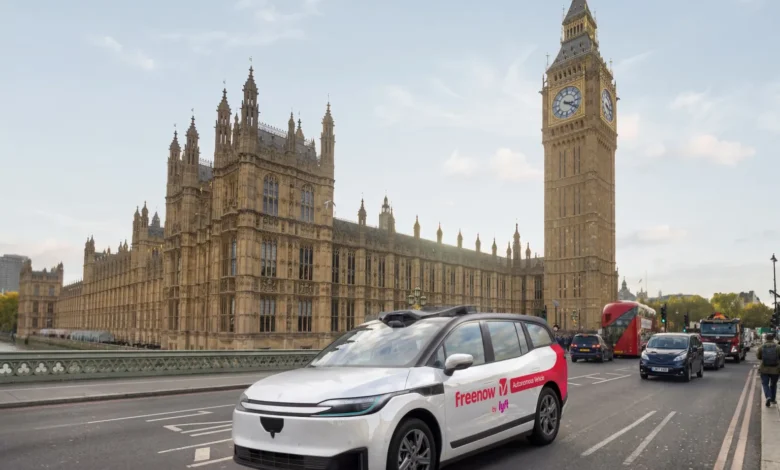
The streets of the British capital have quietly transformed into the primary Western proving ground for Chinese autonomous vehicle technology. As the United States moves decisively toward a permanent legislative ban on Chinese-manufactured connected and autonomous vehicles, London is taking a markedly different approach. Baidu, the Chinese artificial intelligence and search engine giant, has partnered with Freenow—the ride-hailing platform recently acquired by Lyft—to introduce its advanced RT6 robotaxi to the streets of London. This high-profile deployment arrives at a delicate geopolitical and economic juncture, coinciding directly with the United Kingdom’s ongoing deliberations regarding prospective tariffs on China-built electric vehicles.
The collaboration between Baidu and Freenow marks a significant escalation in the global race for autonomous ride-hailing dominance. Following a quiet launch of trials utilizing safety drivers in the north-west London borough of Brent in July, the partnership has outlined an aggressive timeline. The firms plan to scale their testing fleet to "tens of vehicles" over the next one to two years, paving the way for fully driverless trials by next year and an anticipated commercial launch by 2027.
Navigating the Labyrinth of London’s Streets
Training an autonomous vehicle to operate safely and efficiently within the confines of London presents an exceptionally rigorous engineering challenge. Unlike the grid-patterned, wide boulevards of many American sunbelt cities where autonomous fleets first proliferated, London’s historic urban layout offers a chaotic mixture of medieval street plans, narrow thoroughfares, unpredictable pedestrian behavior, and ubiquitous traffic-calming measures.
Danny O’Gorman, Freenow’s UK General Manager, colorfully likened the vehicle’s current developmental phase to a human preparing for a practical examination. According to O’Gorman, the RT6 is actively "learning the rules of the road much like you would do if you’re trying to pass your own driving test." The vehicles must constantly adapt to London’s myriad speed bumps, proliferating 20 mph zones, sudden cyclist maneuvers, and dense, multi-modal traffic that includes buses, delivery vans, and the city’s iconic black cabs.
To ensure compliance and safety, the consortium is coordinating closely with Transport for London (TfL). Industry insiders anticipate that localized regulatory guidelines addressing the next phase of autonomous testing will be formally issued within the coming week.
The Economics and Engineering of the Baidu RT6
A defining feature of Baidu’s market entry is the vehicle itself. Unlike the adapted consumer models favored by some Western competitors—such as Waymo’s fleet of modified Jaguar I-Pace SUVs—the Baidu RT6 has been purpose-built from the ground up specifically for commercial robotaxi deployment.
The vehicle features a utilitarian, passenger-centric interior and includes a notable engineering design: a detachable steering wheel. This modular capability allows the vehicle to transition seamlessly from a supervised testing vehicle operated with a safety driver to a completely unsupervised, cabin-only passenger vehicle.
Perhaps most critically for the economics of ride-hailing, the RT6 boasts a unit manufacturing cost of approximately US$37,000. This highly competitive price point provides Baidu and its operational partners with a structural cost base that few, if any, Western autonomous vehicle developers can currently match. High development and hardware costs—particularly regarding expensive LiDAR sensor arrays—have historically plagued Western robotaxi firms, leading to astronomical per-vehicle expenses. Baidu’s manufacturing efficiency could fundamentally disrupt the pricing models of the urban passenger transport market once commercial services are greenlit.
Freenow, which was acquired by ride-hailing giant Lyft in 2025 for approximately US$197 million, has emphasized that the introduction of robotaxis is designed to supplement, rather than supplant, the existing labor force of human drivers. O’Gorman explicitly reassured traditional transport providers, stating that the new fleet is not intended to replace London’s iconic black cabs or standard private-hire vehicles, but rather to operate alongside them as urban mobility demand continues to outstrip supply.
A Crowded and Contentious Capital Market
Baidu enters what has rapidly become one of the most fiercely contested urban autonomous ecosystems in the world. London is currently hosting multiple competing entities, each racing to establish technical viability and regulatory approval.
In September, Wayve and Uber made headlines by launching London’s inaugural self-driving taxi service, deploying an initial fleet of 15 vehicles equipped with safety drivers. Meanwhile, Alphabet-backed Waymo has expressed ambitions to roll out a fully driverless service accessible through its proprietary application by the close of the year. Furthermore, another prominent Chinese autonomous player, Pony.ai, has initiated testing programs within the city via a strategic partnership with Uber. Uber, maintaining a ubiquitous presence across the sector, has also established commercial ties with Baidu for deployment in various international markets outside the UK.
Beyond the corporate rivalry, these companies are divided by fundamental technological philosophies regarding how autonomous vehicles perceive and navigate the world. The debate broadly mirrors the ideological split seen in the wider automotive industry, reminiscent of the ongoing controversy surrounding Tesla’s camera-only approach versus multi-sensor suites.
Wayve relies on an end-to-end artificial intelligence model powered primarily by cameras and radar, trained to interpret unfamiliar environments dynamically without the crutch of high-definition (HD) pre-mapped data. Conversely, established players like Waymo and Baidu employ a more traditional, cautious methodology, heavily reliant on expensive LiDAR (Light Detection and Ranging) sensors coupled with hyper-detailed, pre-recorded 3D maps of the operating environment.
This technological scramble has inevitably sparked pushback from labor organizations and traditional transport unions. Groups such as the App Drivers and Couriers Union (ADCU) and the Licensed Taxi Drivers’ Association (LTDA) have voiced vocal opposition, actively challenging the issuance of driverless testing permits. Their concerns center primarily on the potential displacement of professional driving jobs, increased traffic congestion, and safety uncertainties on complex municipal roadways.
Regulatory Realities Versus Corporate Timelines
While technological milestones frequently dominate corporate press releases, regulatory compliance remains the ultimate arbiter of when these services will actually transport fare-paying members of the public.
Transport for London has confirmed that, to date, no autonomous operator has successfully registered vehicles with the Vehicle Certification Agency (VCA)—a mandatory prerequisite and the first formal step toward establishing an unsupervised commercial service. Additionally, industry analysts note that obtaining the requisite permits for fully driverless operation from the Driver and Vehicle Standards Agency (DVSA) is highly unlikely to occur within the current calendar year.
These regulatory bottlenecks cast considerable doubt on aggressive corporate scheduling. Waymo’s target to achieve a fully driverless public launch by the end of the year is increasingly viewed by logistics experts as overly ambitious. By contrast, Baidu’s more conservative timeline projecting commercial readiness by 2027 is widely regarded as a more realistic appraisal of the bureaucratic and safety validation processes required by British authorities.
The Geopolitical Crossroads: Trade Policy and Tariffs
For Baidu, the most profound variables threatening its London expansion are political rather than technical. The RT6 is an electric vehicle manufactured entirely within the People’s Republic of China. This provenance places it directly in the crosshairs of shifting international trade policies.
The United Kingdom is currently edging closer to implementing protective trade measures, closely tracking the European Union’s trajectory toward imposing steep tariffs on China-built electric vehicles. Unless specialized regulatory carve-outs are established specifically for autonomous public service vehicles, these impending tariffs threaten to apply directly to imported robotaxis like the RT6. Such levies would effectively neutralize the formidable cost advantage that makes Baidu’s hardware economics so deeply competitive against Western alternatives.
Consequently, London’s experiment with Chinese autonomous technology carries implications that extend far beyond municipal public transport. The capital’s streets will serve as a definitive litmus test, determining whether the British government ultimately categorizes Chinese robotaxis as restricted foreign imports subject to punitive protectionism, or as licensed public utilities welcomed for their technological and economic utility. As policymakers weigh these complex trade dynamics against the pressures of technological innovation, London remains the ultimate crossroads for the future of global urban mobility.
Related posts: